Context
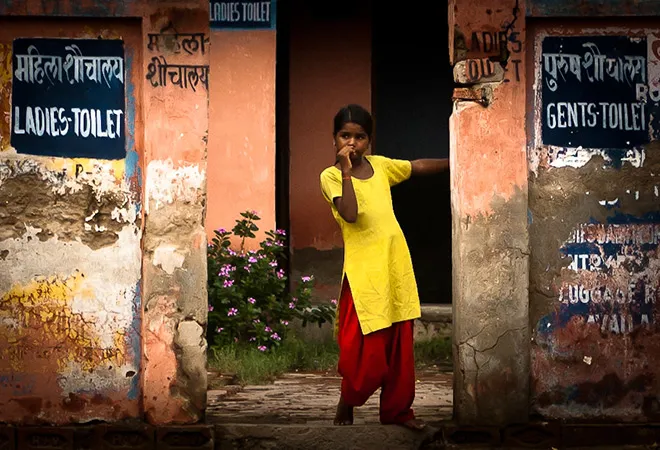
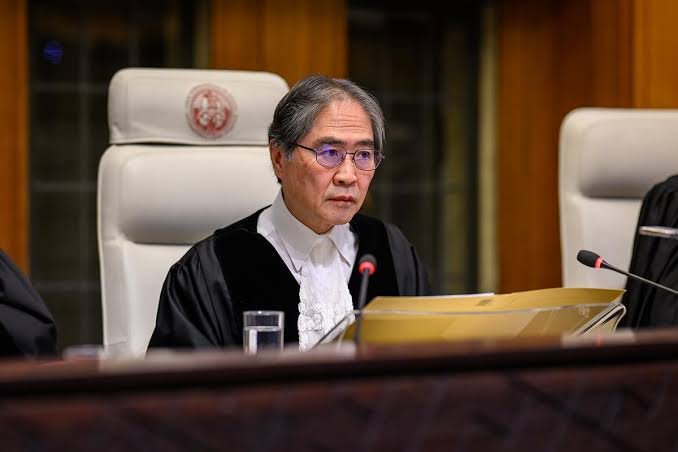
The International Court of Justice (ICJ) recently held Myanmar responsible for genocide against the Rohingya community during its 2017 military operations in Rakhine State, establishing a landmark precedent for State accountability under international law. Myanmar has rejected the ruling.
Background of the Rohingya Genocide Case
- Rohingya Community: A mostly Muslim ethnic minority in Myanmar’s Rakhine State, made largely stateless by Myanmar’s 1982 Citizenship Law.
- 2017 Military Operations: Severe violence, persecution, and forced displacement pushed large numbers of Rohingya refugees into Bangladesh.
- Case Filing (2019): The Gambia took Myanmar to the ICJ (International Court of Justice) for violating the 1948 Genocide Convention (acting in the common interest of all treaty members).
- Provisional Measures (2020): The ICJ ordered Myanmar to prevent genocidal acts and protect key evidence.
- Nature of Case: Focused on Myanmar’s responsibility as a country (State), not the criminal punishment of individual leaders.
Key Findings of the ICJ Judgment (2026)
On 19 November 2026, the ICJ ruled in The Gambia v. Myanmar, holding Myanmar responsible for genocide by a 9–6 majority:
- Direct State Responsibility: For the first time ever, the ICJ held a sovereign country directly responsible for committing genocide.
- Breach of Treaty Duties: Found that Myanmar failed to prevent and punish genocide, pass proper domestic laws, and follow evidence-preservation orders.
- Evidence Used: Relied on verified findings from UN (United Nations) fact-finding bodies, including the IIMM (Independent Investigative Mechanism for Myanmar).
- Reparations & Return: Ordered restitution and compensation, including steps for the safe, voluntary, and dignified return of displaced Rohingya.
- Preventing Future Crimes: Directed Myanmar to investigate and punish perpetrators and ensure such violations do not happen again.
- Compensation & Reporting: Exact compensation amounts and rules will be decided later; Myanmar must submit a compliance report within two years.
- Key Distinction: The Court did not find a separate violation for direct and public incitement to genocide by private individuals, though it held Myanmar responsible for genocide itself.
About the Genocide Convention, 1948 & Legal Elements
1. Official Name: Convention on the Prevention and Punishment of the Crime of Genocide.
2. Adoption & Enforcement: Adopted by the UNGA (United Nations General Assembly) on 9 December 1948; came into force on 12 January 1951.
3. Term Origin & India’s Status: The word “genocide” was coined by Raphael Lemkin in 1944; India ratified the treaty in 1959.
4. Meaning of Genocide: Specific acts committed with the intent to destroy, wholly or partly, a national, ethnic, racial, or religious group.
5. Five Acts of Genocide (Article II):
- Killing members of the targeted group.
- Causing serious physical or mental harm to group members.
- Creating harsh living conditions meant to physically destroy the group.
- Imposing steps to prevent births within the group.
- Forcibly transferring children of the group to another group.
6. Two Legal Requirements:
- Actus Reus (Prohibited Act): Carrying out any of the five acts under Article II.
- Dolus Specialis (Specific Genocidal Intent): Proven specific intent to destroy a protected group—the key factor separating genocide from other war crimes. If proven through a pattern of conduct, genocidal intent must be the only reasonable conclusion.
Evolution & Significance of Genocide Accountability
| Case / Tribunal | Key Legal Development |
| Nuremberg Tribunal (1945) | Established individual criminal responsibility for major international crimes. |
| ICTY (1993) & ICTR (1994) | UN tribunals for former Yugoslavia and Rwanda; strengthened individual trials for war crimes and genocide. |
| Rome Statute (1998) | Created the ICC (International Criminal Court) to prosecute individuals. |
| Bosnia v. Serbia (2007) | ICJ held Serbia responsible only for failing to prevent genocide, not directly committing it. |
| Croatia v. Serbia (2015) | ICJ rejected genocide claims due to lack of proof of specific genocidal intent. |
| The Gambia v. Myanmar (2026) | First ICJ ruling holding a country directly responsible for committing genocide. |
Significance of the 2026 Myanmar Verdict
- State Accountability: Proves that countries themselves, not just individual leaders, can be held directly guilty of genocide.
- Victims’ Right to Reparations: Strengthens legal recognition of compensation, restitution, and rehabilitation for victims.
- Military Action No Excuse: Clarifies that counter-insurgency or security operations do not excuse or rule out genocidal intent.
- Value of UN Investigations: Shows how independent UN bodies like the IIMM provide vital legal proof.
- Impact on Future Cases: May guide legal arguments in cases like South Africa v. Israel, though under Article 59 of the ICJ Statute, verdicts bind only the countries involved in that specific case.
About the International Court of Justice (ICJ)
- Basic Profile: Known as the World Court; set up in 1945 under the UN Charter (began work in 1946) as the main judicial organ of the UN.
- Headquarters & Languages: Based at the Peace Palace in The Hague, Netherlands; official languages are English and French.
- Judges & Election: Comprises 15 independent judges (no two from the same country) elected for 9-year terms (five elected every three years; eligible for re-election) by an absolute majority in both the UNGA and UNSC (United Nations Security Council)—with no permanent member veto. Countries may appoint ad hoc judges in specific disputes, and judges elect their President and Vice-President for 3-year terms.
- Membership: All UN member countries are automatically parties to the ICJ Statute under Article 93(1) of the UN Charter (non-UN States can join on UNGA/UNSC terms), though membership does not give automatic jurisdiction over every dispute.
| Feature | Contentious Jurisdiction (Article 36) | Advisory Jurisdiction (Article 65) |
| Purpose | Settles legal disputes between countries. | Gives legal advice/opinions on international law. |
| Who Can Approach | Sovereign countries only. | UNGA, UNSC, and approved UN agencies (under Article 96, UN Charter). |
| Basis | Needs State consent (via treaties or special agreements). | Request from an authorised UN body. |
| Legal Effect | Binding on disputing countries (Article 59); final with no appeal (Article 60). | Not legally binding, though carries strong moral weight. |
Key Limitations of the ICJ:
- Needs State Consent: Cannot hear disputes unless the countries involved have agreed to its jurisdiction.
- No Access for Citizens: Individuals, NGOs, and companies cannot file cases at the ICJ.
- Weak Enforcement & UNSC Veto: Under Article 94 of the UN Charter, non-compliance can be taken to the UNSC, where P5 veto power can block action.
- No Binding Precedent: Rulings apply only to the countries in that specific case (Article 59).
ICJ vs ICC (International Criminal Court)
| Parameter | ICJ (International Court of Justice) | ICC (International Criminal Court) |
| Established | 1945 (began work in 1946) | 2002 |
| Legal Basis | UN Charter & ICJ Statute | Rome Statute, 1998 |
| Headquarters | The Hague, Netherlands | The Hague, Netherlands |
| UN Link | Main judicial organ of the UN | Independent international court (outside the UN) |
| Who Is Tried / Suing | Disputes between sovereign countries | Criminal trials of individuals |
| Crimes / Subjects | Treaty breaches, border disputes, State responsibility | Genocide, war crimes, crimes against humanity, aggression |
| Judges | 15 judges | 18 judges |
| India’s Status | Member/Party (via UN membership) | Not a member (has not signed/ratified the Rome Statute) |
Way Forward
- Ensuring Compliance: Sustained regional (ASEAN) and global diplomatic pressure is needed so Myanmar meets its two-year compliance deadline and ensures safe Rohingya return.
- Early Prevention: Countries must align domestic laws with the 1948 Genocide Convention and act on UN early warnings before mass violence escalates.
- Stronger Enforcement: Expanding compulsory ICJ jurisdiction and limiting UNSC veto use in mass-atrocity cases are essential to protect vulnerable minorities.
FAQs
Q1. What are the two essential legal elements of genocide?
Ans. Actus reus (prohibited physical act) and dolus specialis (specific intent to destroy a protected group wholly or partially).
Q2. Are all decisions of the ICJ legally binding?
Ans. Contentious judgments bind the parties concerned, while advisory opinions are generally non-binding.
Q3. Which provision of the UN Charter deals with the enforcement of ICJ judgments?
Ans. Article 94, allowing a party to approach the UN Security Council in cases of non-compliance.
Q4. What is the fundamental difference between the ICJ and ICC?
Ans. The ICJ resolves legal disputes between States, while the ICC prosecutes individuals for international crimes.