Context
A dispute has emerged between Maharashtra and Gujarat over Geographical Indication (GI) recognition for Alphonso mangoes, as Gujarat growers seek a separate GI tag while Maharashtra’s Konkan region already holds the existing registration.
About Geographical Indication (GI) Tag
- Definition: A GI (Geographical Indication) is an IPR (Intellectual Property Right) identifying goods whose quality, reputation, or characteristics stem from their geographical origin.
- Collective Right: Protects the collective interests of eligible producers from a defined geographical area, rather than a single individual.
- Indian Law & Rules: Governed by the Geographical Indications of Goods (Registration and Protection) Act, 1999 (in force from September 2003) and the GI Rules, 2002 (amended in November 2025, cutting filing fees by about 80% and lowering renewal fees from ₹3,000 to ₹500).
- Nodal Body & Registry: Administered by the DPIIT (Department for Promotion of Industry and Internal Trade) under the Ministry of Commerce and Industry, with registration handled by the GI Registry in Chennai, Tamil Nadu.
- Validity & Renewal: Valid for 10 years and renewable indefinitely for successive 10-year terms.
- Eligible Goods: Covers agricultural, natural, and manufactured goods, including handicrafts, textiles, and foodstuffs.
- Global Framework & First Tag: Protected internationally under Articles 22–24 of the WTO (World Trade Organization) TRIPS (Trade-Related Aspects of Intellectual Property Rights) Agreement; Darjeeling Tea (2004–05) was India’s first GI tag.
Significance of GI Tags
- Market Value & Exports: Supports better prices, brand identity, and export access (including through FTAs (Free Trade Agreements)).
- Legal Shield: Stops unauthorised commercial misuse or imitation of a protected regional name.
- Heritage & Livelihoods: Preserves traditional knowledge, local crafts, and indigenous skills, while raising farmer and artisan incomes and rural jobs.
- Buyer Trust: Helps consumers spot genuine origin-linked goods.
About Alphonso Mango
- Botanical Name & Local Name: Mangifera indica (Alphonso cultivar), widely called Hapus (or Hafus).
- GI Tag & Area: Registered in 2018 for five districts of Maharashtra’s Konkan region—Ratnagiri, Sindhudurg, Raigad, Thane, and Palghar.
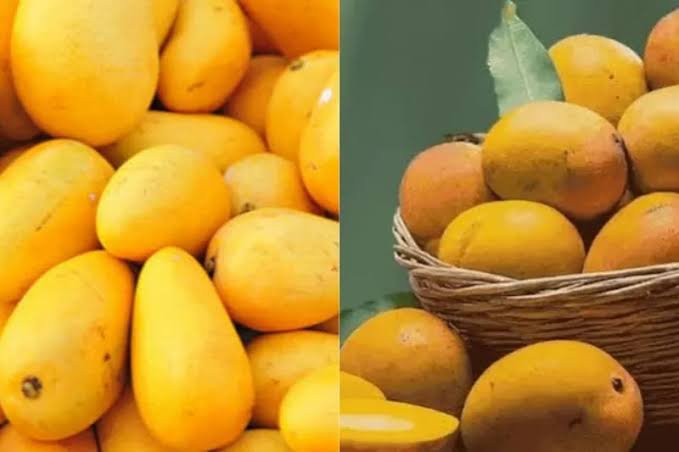
- Distinctive Traits: Known for rich aroma, sweetness, saffron-hued pulp, and low fibre.
- Growing Conditions: Coastal humidity, lateritic soils, and tropical climate shape its distinctive quality.
- Economic Role: High-value horticultural crop with strong domestic and export demand.
Maharashtra–Gujarat Alphonso Mango GI Dispute
- Gujarat’s Claim: Farmers in Valsad (south Gujarat) applied (in February 2023, after efforts starting in 2022) for a separate GI (Geographical Indication) tag for Valsad Hapus, pointing to similar coastal and Sahyadri growing conditions and long-standing local farming.
- Maharashtra’s Stand: Konkan growers and farm groups opposed the request to protect their existing Alphonso GI tag, worried it could confuse buyers and weaken their brand name.
- Livelihood Stakes: The dispute affects brand identity, export demand (including Gulf markets), higher prices, and farmer earnings.
- Legal Principle: Growing the same mango variety outside a GI zone does not automatically grant the right to use the protected GI name (while Section 10 of the GI Act covers homonymous GIs—same or similar names for different places—only where clear differences prevent buyer confusion).
- Current Status: Final hearings are over, and the GI Registry in Chennai has reserved its decision.
Important Recent GI Tags (2025–26)
| GI Product | State | Key Feature |
| Ponduru Khadi | Andhra Pradesh | Handspun and handwoven cotton |
| Uttarakhand Bedu | Uttarakhand | Himalayan wild fig |
| Surat Cut Diamond | Gujarat | Traditional diamond cutting and polishing |
| Uttarakhand Badri Cow Ghee | Uttarakhand | Ghee from indigenous Badri cattle |
| Lepcha Pumtong Pulit | Sikkim | Traditional Lepcha flute |
| Kannadippaya | Kerala | Handwoven bamboo mat |
| Panruti Cashew | Tamil Nadu | Region-specific cashew nuts |
| Puliyankudi Acid Lime | Tamil Nadu | Locally grown citrus fruit |
| Radhunipagal Rice | West Bengal | Traditional aromatic rice |
| Chettikulam Small Onion | Tamil Nadu | Region-specific small onion |
FAQs
Q1. Which legislation governs GI registration in India?
Ans. The Geographical Indications of Goods (Registration and Protection) Act, 1999.
Q2. What is the validity period of a GI tag in India?
Ans. 10 years, renewable indefinitely for successive 10-year periods.
Q3. Where is the Geographical Indications Registry located?
Ans. Chennai, Tamil Nadu.
Q4. Which product received India’s first GI tag?
Ans. Darjeeling Tea, from West Bengal, in 2004–05.
Q5. Which international agreement provides protection to geographical indications?
Ans. The WTO’s TRIPS Agreement, particularly Articles 22–24.