Context
- India’s ongoing Census exercise has renewed debate over the changing linguistic profile of the country and the future of smaller Indian languages.
- According to Census data, the proportion of Indians reporting Hindi as their mother tongue increased from about 37% in 1971 to 43.63% in 2011. During the same period, several other major languages recorded a decline in their share of the total population.
Demographic Trends Influence Language Shares
Differences in population growth across regions can alter the relative share of linguistic groups.
- The source cites NFHS-5 Total Fertility Rate (TFR) levels of around 3.0 in Bihar and 2.44 in Uttar Pradesh, compared with 1.8 in Kerala.
- A language may gain speakers in absolute numbers while its percentage share of the population declines.
- Tamil illustrates this distinction. Its mother-tongue speakers increased from about 6.08 crore in 2001 to 6.9 crore in 2011, while its population share fell from 5.91% to 5.70%.
Therefore, a decline in population share does not necessarily mean a decline in the absolute number of speakers.
Census Classification Shapes the Hindi Category
- The way mother tongues are grouped is another important factor.
- The source describes Hindi as an umbrella covering around 57 mother tongues and dialects, including Bhojpuri, Rajasthani, Chhattisgarhi and Bundeli.
- Thus, the Census figure for Hindi represents a broader linguistic category and does not correspond only to speakers of standard Hindi.
- The source also indicates that much of this movement concerns northern Indian linguistic varieties. It therefore does not represent a straightforward process in which southern or eastern languages are simply being replaced by Hindi.
Smaller Languages Face Greater Vulnerability
- India’s linguistic challenge extends beyond the changing shares of major languages. Smaller linguistic communities face risks of marginalisation and extinction.
- The 1961 Census recorded 1,652 mother-tongue entries. From 1971 onwards, mother tongues with fewer than 10,000 speakers were not separately presented in the published language tables and were grouped under broader categories. Hence, a reduction in separately reported entries cannot by itself be treated as evidence of language extinction.
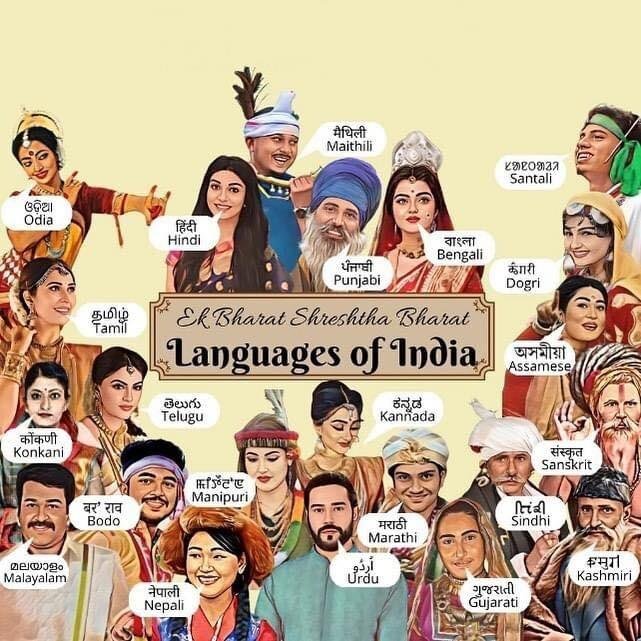
- The source refers to 121 named languages in the 2011 Census, comprising 22 Scheduled and 99 non-Scheduled Languages, apart from people whose languages were not separately identified in the published list.
- At the same time, genuine language extinction does occur. Bo, an Andamanese language, became extinct in 2010 after the death of its last speaker.
- This highlights the distinction between statistical classification, linguistic decline and actual extinction.
Intergenerational Transmission Determines Language Survival
Languages generally weaken when they are no longer consistently transmitted from one generation to the next.
Key pressures include:
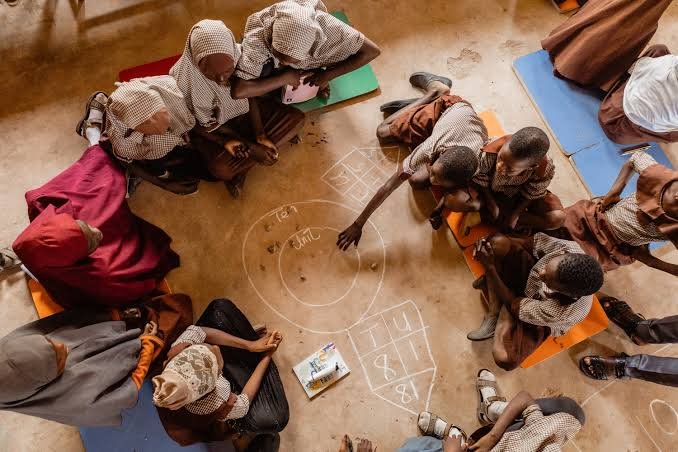
- Education: Families may prioritise languages associated with formal schooling.
- Employment: Languages linked with better career opportunities tend to receive greater importance.
- Literacy: A language may survive in speech while declining in reading and writing.
- Urbanisation and social mobility: Families may increasingly adopt languages associated with education and upward mobility.
- Media and technology: Languages with a strong presence in films, television, digital platforms and electronic interfaces have greater everyday visibility.
Language survival therefore depends not only on cultural attachment but also on whether a language remains useful in everyday social, educational and economic life.
Institutional Support Strengthens Linguistic Resilience
- The contrasting experiences of Tamil and Bhojpuri illustrate the importance of institutional support.
- Tamil has a strong presence in State administration, education, universities, courts, employment and cultural production. Bhojpuri, despite its large speaker base, has comparatively limited institutional use in administration and education.
- This shows that a large speaker population alone does not ensure long-term linguistic resilience. Languages also require institutional spaces in which they can be taught, written, used professionally and transmitted to younger generations.
Constitutional and Policy Framework
- India’s language framework has developed around the coexistence of Hindi, regional languages and English.
- Article 343 established Hindi as the official language of the Union, while English was initially intended to continue for a transitional period. The Official Languages Act, 1963 subsequently permitted the continued use of English alongside Hindi for official purposes.
- The linguistic challenge is therefore not limited to Hindi. English also exerts pressure on Indian languages, including Hindi, particularly in urban and aspirational households.
Measures to Preserve Linguistic Diversity
Preserving linguistic diversity requires languages to remain functional in modern life.
- Mother-tongue-based early education: Children should have meaningful access to their mother tongue during foundational learning.
- Appropriate recognition: Large linguistic communities should be assessed according to their distinct linguistic characteristics rather than automatically absorbed into broader categories.
- Economic opportunities: Languages should have meaningful roles in administration, employment and local economic activity.
- Digital inclusion: Keyboards, software interfaces and digital services should support a wider range of Indian languages.
- Cultural production: Films, literature, television and digital content can strengthen everyday use.
- Community participation: Sustained use within families remains essential for intergenerational transmission.
Conclusion
- India’s changing linguistic profile should not be reduced to a simple Hindi-versus-regional-languages The available trends reflect a combination of demographic change, Census classification, language choices, economic incentives and institutional support.
- The policy priority should be to create a multilingual environment in which Indian languages remain relevant to education, employment, administration, culture and technology. Linguistic diversity can remain a living part of India’s social fabric only when communities have both the incentive and the opportunity to use their languages across generations.
FAQs
- Why can a language have more speakers but a lower population share?
Its speaker population may increase, but if the overall population or other linguistic groups grow faster, its percentage share can still decline.
- Why are Census language figures not always a direct count of India’s languages?
The Census groups numerous reported mother tongues into broader language categories. Therefore, the number of separately reported entries does not automatically represent the total number of distinct living languages.
- Why is the Bhojpuri case important?
It illustrates that a large speaker base does not automatically translate into institutional strength. A language also needs opportunities in education, administration, employment and public life.
- How does English affect India’s linguistic diversity?
English can become the preferred language for education, employment and upward mobility, encouraging households to reduce their use of Indian languages even when those languages continue to have cultural importance.
- What is the most critical stage in preventing language loss?
The decisive stage is intergenerational transmission. A language becomes increasingly vulnerable when children stop learning and regularly using it within their families and communities.
- Why is digital accessibility important for language preservation?
Digital tools such as keyboards, interfaces and online content bring languages into everyday communication and make their continued use easier for younger generations.
- What does the experience of Tamil suggest for language policy?
It suggests that languages are more resilient when they have sustained support across administration, education, employment and cultural life, rather than being confined mainly to private or informal use.