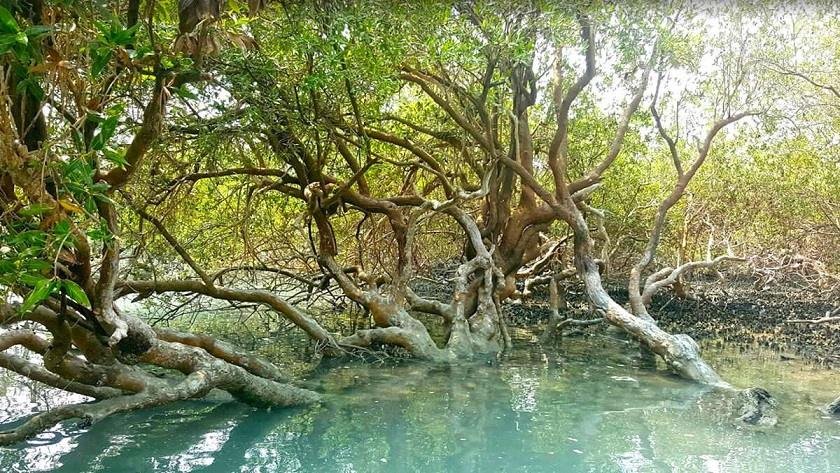
Context
Satellite observations have detected oil pollution reaching the Hara mangrove ecosystem on Qeshm Island, Iran, following an oil spill along the island’s southern coast.
About Hara Mangrove Forest
- Location: Situated around the Mehran River delta, near the Strait of Khuran, between Qeshm Island and mainland Iran, in the Strait of Hormuz region of the Persian Gulf.
- Vegetation: Dominated by the grey/black mangrove known locally as Hara or Harra (Avicennia marina), which is well adapted to saline coastal conditions.
- International Recognition: Designated as a Protected Area (1972), a Ramsar Wetland Site (1975), and a UNESCO Biosphere Reserve (1976).
- The Strait of Khuran is also recognised as a Ramsar wetland site.
Ecological Significance
- Salinity tolerance: Specialised roots help mangroves survive in salty, tidal waters.
- Coastal protection: They reduce coastal erosion and act as a natural barrier against waves and storms.
- Blue Carbon: They absorb and store large amounts of carbon in biomass and sediments, helping mitigate climate change.
- Fisheries: Mangrove waters provide nursery and breeding grounds for fish, shrimp and crabs.
- Biodiversity: They support migratory birds and marine species, including green and hawksbill turtles.
- Livelihoods: They support fisheries and eco-tourism in the region.
UPSC FAQs
Q1. Where is the Hara Mangrove Forest located?
Ans. It is located in southern Iran, mainly around the Mehran River delta and Strait of Khuran, near Qeshm Island in the Persian Gulf.
Q2. When was the Hara Biosphere Reserve designated by UNESCO?
Ans. The Hara Biosphere Reserve was designated in 1976 under UNESCO’s Man and the Biosphere Programme.
Q3. What is Blue Carbon?
Ans. Blue Carbon refers to carbon captured and stored by coastal and marine ecosystems such as mangroves, salt marshes and seagrass beds, especially in their sediments.
Q4. Why is an oil spill particularly harmful to mangrove ecosystems?
Ans. Oil can contaminate mangrove roots and sediments, damage vegetation and marine organisms, and disrupt biodiversity and fisheries.