Context
Scientists are exploring gene silencing therapy as a potential treatment for Hepatitis B, a viral infection that primarily affects liver cells (hepatocytes). An experimental therapy, CRMA-1001, developed by nChroma Bio, uses epigenetic mechanisms to suppress the activity of Hepatitis B viral genes. This development highlights the growing role of gene silencing in modern medicine.
Gene Silencing
- Gene silencing is a process through which the expression of a particular gene is reduced or switched off.
- It prevents or reduces the production of proteins associated with that gene.
- It can occur naturally in cells or be induced artificially for therapeutic purposes.
- Unlike gene editing, gene silencing does not necessarily alter the underlying DNA sequence.
Working of Gene Silencing
Gene silencing primarily operates through the following mechanisms:
- RNA Interference (RNAi)
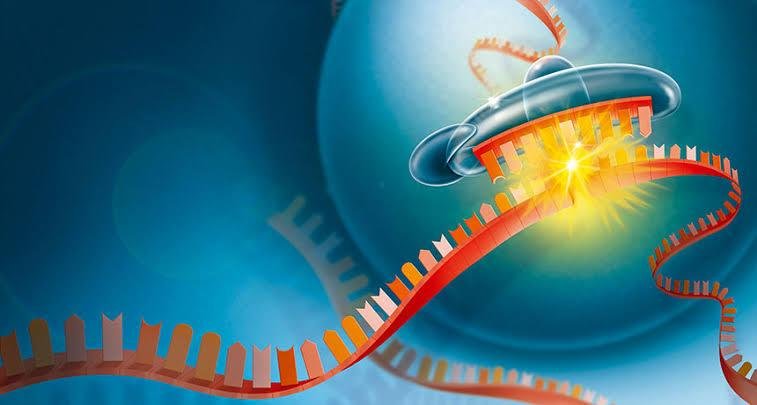
- A disease-causing gene produces messenger RNA (mRNA), which carries instructions for making proteins.
- Small interfering RNA (siRNA) molecules are designed to target the specific mRNA.
- The siRNA guides cellular machinery to recognise and destroy the target mRNA.
- As a result, the production of the harmful protein is reduced or stopped.
- Epigenetic Silencing
- Chemical modifications are made to DNA or associated proteins without changing the underlying DNA sequence.
- One such modification is DNA methylation, in which methyl groups are added to DNA, commonly at cytosine bases.
- This can suppress the activity of specific genes by preventing their transcription.
- Consequently, the production of proteins encoded by those genes is reduced.
Application in Hepatitis B Treatment
- Hepatitis B virus (HBV) infects liver cells and uses its genetic material to produce viral proteins and replicate.
- A major challenge in treating chronic Hepatitis B is the persistence of viral genetic material inside infected liver cells.
CRMA-1001: An experimental epigenetic silencing therapy
- Developed by nChroma Bio, CRMA-1001 aims to suppress the expression of Hepatitis B viral genes through targeted epigenetic modifications.
- It targets two important forms of viral genetic material:
- cccDNA (Covalently Closed Circular DNA): A stable form of viral DNA that persists inside liver cells and acts as a reservoir for viral replication.
- Integrated HBV DNA: Viral DNA that becomes incorporated into the genetic material of the host cell.
- By suppressing viral gene expression, the therapy aims to reduce the production of viral proteins and potentially contribute to a functional cure.
Inclisiran
- Inclisiran is an approved RNA interference-based therapy used to reduce low-density lipoprotein (LDL) cholesterol.
- It targets the messenger RNA responsible for producing PCSK9 (Proprotein Convertase Subtilisin/Kexin Type 9) in liver cells.
- This reduces PCSK9 protein production, allowing more LDL receptors to remain available on liver cells.
- Consequently, the liver removes more LDL cholesterol from the bloodstream.
Gene Silencing vs Gene Editing
| Basis | Gene Silencing | Gene Editing |
| Meaning | Reduces or switches off gene expression. | Changes the DNA sequence itself. |
| Target | DNA or RNA, depending on the mechanism. | DNA sequence. |
| Effect | Reduces production of a particular protein. | Can modify, remove or insert genetic material. |
| Example | RNA interference and epigenetic silencing. | CRISPR-Cas9 technology. |
Applications of Gene Silencing
- Treatment of viral infections: Helps suppress the expression of viral genes, as being explored for Hepatitis B.
- Management of cardiovascular diseases: Inclisiran reduces LDL cholesterol through RNA interference.
- Cancer treatment: Can potentially suppress genes responsible for uncontrolled cell growth.
- Genetic disorders: May reduce the production of harmful proteins associated with certain inherited diseases.
- Agriculture: Can help develop crops resistant to viruses, pests and diseases.
Challenges
- Delivering therapeutic molecules safely to specific cells and tissues.
- Ensuring long-term effectiveness of gene silencing.
- Avoiding unintended effects on other genes.
- Addressing high treatment costs and accessibility.
- Establishing long-term safety through clinical trials.
FAQs
Q1. What is gene silencing?
Ans: It is the process of reducing or switching off the expression of a particular gene.
Q2. What is RNA interference?
Ans: It is a biological mechanism in which small RNA molecules target messenger RNA and prevent it from producing proteins.
Q3. What is DNA methylation?
Ans: It is an epigenetic modification in which methyl groups are added to DNA, potentially suppressing gene expression.
Q4. What is CRMA-1001?
Ans:It is an experimental epigenetic silencing therapy developed by nChroma Bio to suppress Hepatitis B viral gene expression.
Q5. What is inclisiran?
Ans: It is an RNA interference-based medicine that reduces LDL cholesterol by suppressing the production of PCSK9 protein in the liver.
Q6. How is gene silencing different from gene editing?
Ans: Gene silencing reduces gene expression, whereas gene editing directly modifies the DNA sequence.