Context
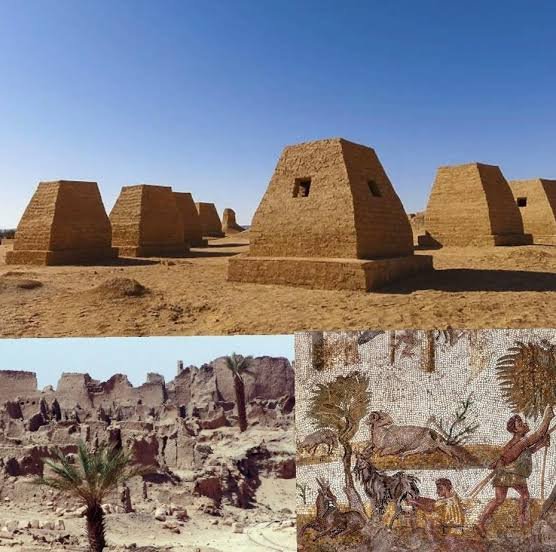
- Satellite imagery and historical aerial photographs have revealed over 100 fortified farms, walled villages and several towns associated with the Garamantes in the Fezzan region of south-western Libya.
- Many identified settlements date broadly to 1–500 CE, revealing a much denser settlement network than previously recognised.
- The findings challenge older portrayals of the Garamantes as merely desert nomads and point towards an organised oasis-based society with urban settlements, agriculture and long-distance trade.
Who Were the Garamantes?
- The Garamantes were an ancient Saharan people whose civilisation developed in the Fezzan region of present-day Libya, beginning around the first millennium BCE.
- Their political and economic centre was Garama (modern Germa/Jarma), surrounded by numerous oasis settlements.
- They developed permanent settlements and agricultural systems capable of supporting communities in an extremely arid desert environment.
- Archaeological evidence suggests that the Garamantes formed an important early state in the central Sahara rather than simply living as scattered nomadic groups.
How Did They Sustain Agriculture in the Sahara?
A major foundation of Garamantian society was the foggara irrigation system.
Groundwater → Underground channels → Gravity-driven flow → Oasis agriculture
- Foggaras were underground channels that tapped groundwater and transported it towards cultivated areas.
- Underground movement reduced evaporation losses, an important advantage in the hot and dry Sahara.
- This supported oasis cultivation and helped sustain permanent settlements despite extremely low rainfall.
Thus, groundwater management converted an environmental constraint into the basis of settled agriculture and urban development.
Why Is the Discovery Significant?
- Rewriting Saharan history: Extensive settlements challenge the image of the Sahara as merely an empty barrier and reveal an organised, settled society.
- Environmental adaptation: Fortified settlements and foggara irrigation show how water-management technology supported agriculture and permanent habitation in an arid environment.
- Trans-Saharan connectivity: The Garamantes participated in networks connecting the Mediterranean, North Africa and regions south of the Sahara, highlighting early long-distance trade and mobility.
Why Did the Garamantian System Decline?
The civilisation’s prosperity depended heavily on fossil groundwater. Long-term exploitation and changing environmental conditions placed pressure on this resource.
The Garamantes therefore illustrate both the potential and limits of technological adaptation to resource-scarce environments.
FAQs
Q1. Where did the Garamantes civilisation develop?
In the Fezzan region of south-western Libya in the Sahara Desert.
Q2. What was Garama?
Garama (Germa/Jarma) was the principal political and urban centre of the Garamantes.
Q3. What is a foggara?
It is an underground irrigation channel used to transport groundwater for agriculture.
Q4. Why were foggaras useful in the Sahara?
Underground water transport helped reduce evaporation losses in the arid environment.
Q5. Why is remote sensing useful in archaeology?
It helps detect and map archaeological features across large or inaccessible landscapes before detailed ground investigation.