Context
Supreme Court Judge Justice Ujjal Bhuyan recently emphasised that scientific temper is essential for upholding the rule of law while delivering the 12th convocation address at the University of Science and Technology Meghalaya.
Key Observations by Justice Ujjal Bhuyan
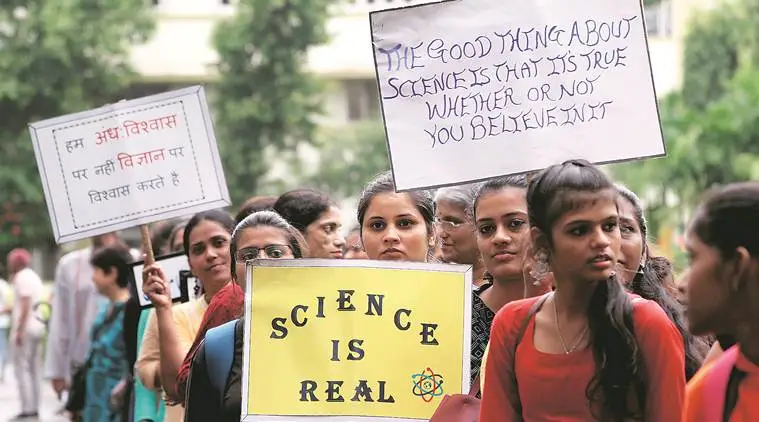
- Scientific Temper Beyond Laboratories: Scientific temper is not limited to scientists or research institutions; it requires every citizen to think rationally and base opinions on reason and evidence.
- Combating Misinformation: A society that accepts claims without evidence becomes vulnerable to superstition and misinformation.
- Preventing Authoritarianism: A society that fears questioning becomes vulnerable to arbitrary exercise of power and authoritarian tendencies.
- Promoting Social Reform: Treating traditions as beyond scrutiny can prevent society from reforming unjust practices.
- Connection Between Science and Law: Both science and law rely on reasoning and evidence. Therefore, they are partners in India’s constitutional journey.
Constitutional Provisions
- Fundamental Duties are provided under Part IV-A, Article 51A of the Constitution.
- They were added by the 42nd Constitutional Amendment Act, 1976, on the recommendation of the Swaran Singh Committee.
- Originally, ten Fundamental Duties were added. The 86th Constitutional Amendment Act, 2002 added the eleventh duty under Article 51A(k), relating to providing educational opportunities to children aged 6–14 years.
- They are non-justiciable, meaning they cannot ordinarily be directly enforced through courts. However, Parliament can enact laws to give effect to certain duties, and courts may consider them while interpreting constitutional provisions and laws
Significance of Scientific Temper
- Promotes a Knowledge-Based Society: Encourages scientific research, innovation and technological advancement, supporting India’s transition towards a knowledge economy.
- Combats Superstition and Misinformation: Helps citizens question unverified claims, pseudoscience, rumours and fake news, particularly in the digital age.
- Promotes Social Reform: Encourages questioning of caste discrimination, gender inequality, untouchability and other practices that undermine human dignity.
- Strengthens Democracy: Informed citizens can critically evaluate public policies, political claims and government decisions, leading to more meaningful democratic participation.
- Improves Public Health: Evidence-based thinking encourages acceptance of scientific healthcare practices, vaccination and public-health advisories.
- Supports Environmental Protection: Scientific understanding helps citizens recognise climate change, pollution and biodiversity loss and adopt sustainable practices.
- Encourages Innovation and Entrepreneurship: A questioning and experimental mindset promotes problem-solving, research and the development of new technologies.
Challenges to Developing Scientific Temper
- Superstition and Blind Faith: Unquestioned beliefs and irrational practices can discourage evidence-based thinking.
- Spread of Misinformation: Social media platforms can rapidly circulate fake news, pseudoscientific claims and manipulated content.
- Weak Scientific Literacy: Inadequate emphasis on practical learning, experimentation and critical thinking in education limits scientific understanding.
- Social and Cultural Resistance: Questioning established customs may face resistance where traditions are treated as beyond scrutiny.
- Commercial Exploitation: Misleading advertisements, miracle cures and unverified health claims exploit people’s lack of scientific awareness.
- Limited Research Culture: Insufficient investment in research, development and scientific institutions can restrict opportunities for innovation.
Measures to Promote Scientific Temper
- Reforming Education: Integrate critical thinking, practical experiments, scientific reasoning and problem-solving into school and higher education.
- Promoting Scientific Communication: Strengthen public science outreach through museums, science centres, media and regional-language content.
- Combating Misinformation: Improve digital and media literacy and encourage verification of information through credible sources.
- Strengthening Research Institutions: Increase investment in research and development and promote collaboration between universities, industry and scientific institutions.
- Encouraging Public Participation: Organise science fairs, citizen-science programmes, innovation challenges and community-level awareness campaigns.
- Promoting Constitutional Values: Encourage citizens to practise rational inquiry, humanism, tolerance and respect for evidence in everyday life.
- Supporting Social Reformers: Recognise and support individuals and organisations working to challenge superstition and discriminatory practices through peaceful, evidence-based methods.
Conclusion
Scientific temper is not merely a scientific requirement but a constitutional and ethical responsibility essential for a progressive society. As India aspires to become a developed nation by 2047, nurturing curiosity over conformity, evidence over misinformation and reform over discrimination will be crucial for building an inclusive, innovative and rational society.
FAQs
Q1. Which Article of the Indian Constitution promotes scientific temper?
Ans: Article 51A(h), which makes it a fundamental duty of every citizen to develop scientific temper, humanism and the spirit of inquiry and reform.
Q2. What is the recent Supreme Court observation on scientific temper?
Ans: Justice Ujjal Bhuyan recently emphasised that scientific temper is essential for upholding the rule of law and that arbitrary power thrives on ignorance, fear and unexamined beliefs.
Q3. How is scientific temper connected with the rule of law?
Ans: Scientific temper promotes rational thinking, questioning and evidence-based reasoning, which help citizens resist arbitrary authority and demand accountability.
Q4. Does scientific temper mean rejecting religious beliefs and cultural traditions?
Ans: No. It encourages critical examination of beliefs and practices without denying freedom of conscience or disrespecting cultural diversity.
Q5. What is the difference between scientific temper and scientific knowledge?
Ans: Scientific knowledge refers to established facts, theories and discoveries, whereas scientific temper is a mindset based on curiosity, rationality, evidence and willingness to question assumptions.