Context
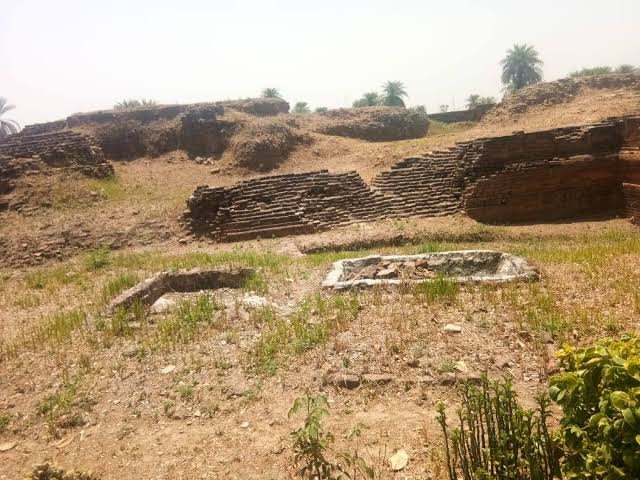
The Archaeological Survey of India (ASI) has begun fresh excavation at the archaeological mound near Drona Sagar, Kashipur, Uttarakhand, a site traditionally associated with Dronacharya and the Pandavas. The excavation seeks to establish a clearer cultural and chronological sequence through stratigraphic evidence.
Kashipur and Ancient Govishana
- Kashipur is located in Udham Singh Nagar district of Uttarakhand and contains an important archaeological mound around Drona Sagar.
- Alexander Cunningham, the first Director-General of ASI, identified Kashipur with Kiu-pi-shwang-na or Govishana, mentioned by the Chinese traveller Xuanzang.
- Xuanzang travelled through India in the 7th century CE, during the period of Harshavardhana, making his account important for reconstructing historical geography.
- Cunningham also noted structural remains at Bhim-Gaja, one of the prominent parts of the site.
Archaeological Sequence and Temple Remains
- ASI had earlier excavated the site in 1939–40, 1965–66 and 1970–71, mainly to study its structural remains.
- The earliest temple phase included a brick-built platform, probably associated with a sanctum, during the Gupta period.
- Around the 6th–7th centuries CE, additional structures developed into an extensive Panchayatana-type temple complex.
- Pottery and other finds indicate occupation across several phases, from the Painted Grey Ware horizon to the early medieval period.
- Material associated with Kushan, Gupta and later phases indicates the site’s long archaeological history.
Painted Grey Ware and Mahabharata Tradition
- Painted Grey Ware (PGW) is a fine grey pottery decorated mainly with black geometric designs and is associated with Iron Age settlements of northern India.
- Important PGW sites include Hastinapur, Ahichchhatra, Bhagwanpura and Kashipur.
- B.B. Lal’s excavations at Hastinapur drew attention to PGW at sites associated in literary tradition with the Mahabharata.
- Local tradition connects Kashipur with Dronacharya, while Drona Sagar is believed to have been offered by the Pandavas as guru dakshina.
- However, PGW establishes an Iron Age archaeological horizon; it does not independently prove specific Mahabharata events or characters.
Archaeological Significance
- Stratigraphy: Successive archaeological layers help reconstruct the chronological sequence of occupation.
- Multi-period evidence: Kashipur preserves material from the Iron Age, Kushan, Gupta and early medieval phases.
- Text–archaeology interface: The site allows comparison of literary traditions, travellers’ accounts and material evidence without treating tradition as historical proof.
- Fresh excavation: Further excavation may clarify the site’s earliest occupation and strengthen its cultural chronology.
FAQs
Q1. Where is the Kashipur archaeological site located?
In Udham Singh Nagar district, Uttarakhand.
Q2. Kashipur has been identified with which ancient settlement?
Govishana, mentioned in Xuanzang’s account.
Q3. Painted Grey Ware is associated with which period?
The Iron Age of northern India.
Q4. What is Panchayatana temple architecture?
A temple plan with a main shrine accompanied by four subsidiary shrines.
Q5. Does PGW prove the historicity of the Mahabharata?
No. It establishes an archaeological cultural horizon, not specific epic events.