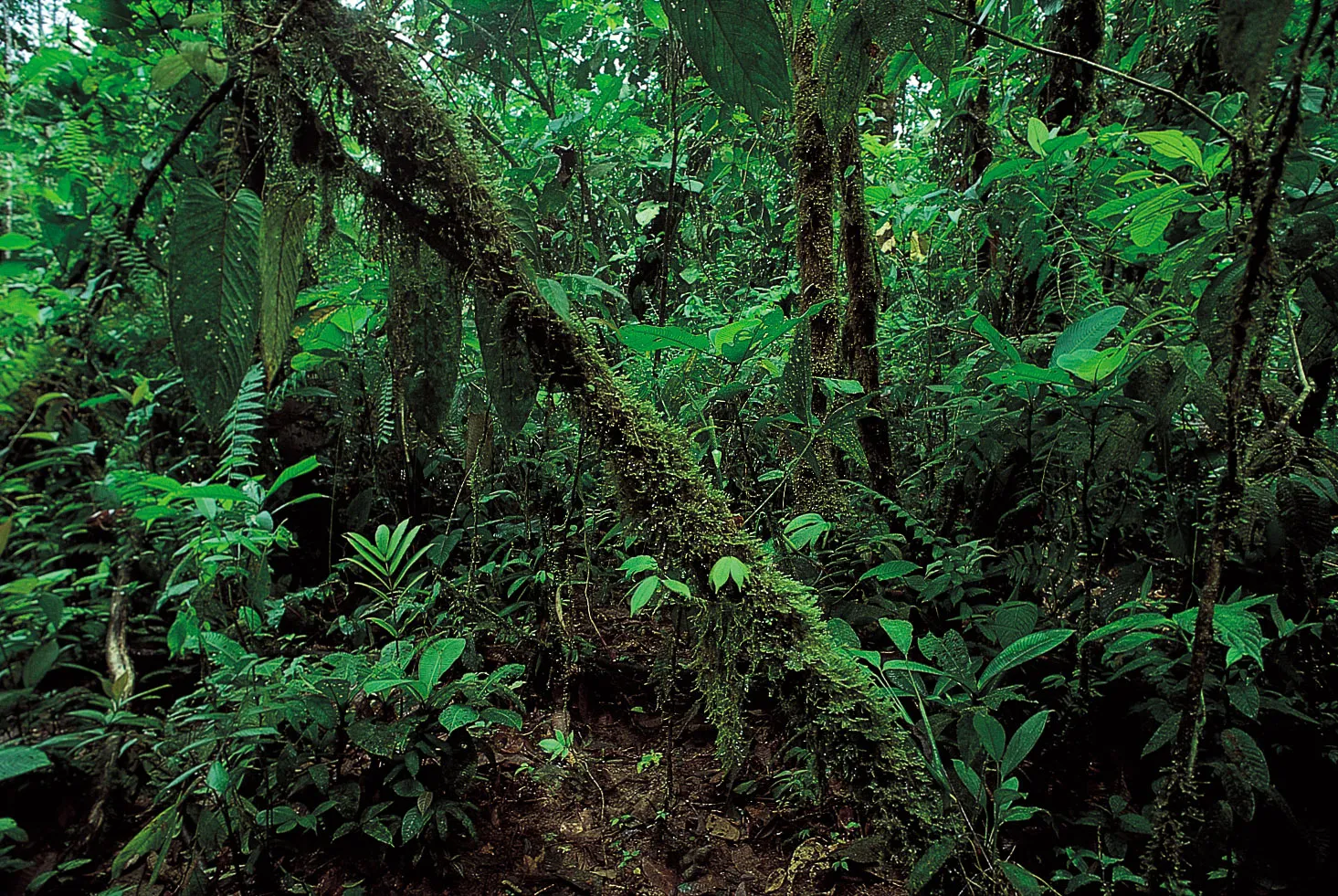
The equatorial climate occurs mainly around the Equator, generally between 10°N and 10°S. It is characterised by high temperatures, heavy rainfall and high humidity throughout the year, with little seasonal variation. These conditions support dense tropical evergreen forests.
Climatic Characteristics
Strong solar heating keeps temperatures high throughout the year. The Inter-Tropical Convergence Zone (ITCZ), where the trade winds meet, causes warm, moisture-laden air to rise and produces frequent convectional rainfall.
- Temperature: Generally around 25–30°C, with a small annual range.
- Rainfall: Usually exceeds 1,500 mm annually and occurs during most months.
- Humidity: Remains high because of continuous evaporation and evapotranspiration, the combined transfer of water vapour through evaporation from land and water surfaces and transpiration by plants.
- Vegetation: Dense, multi-layered evergreen forests develop because heat and moisture remain available throughout the year.
Global Distribution
The main regions with equatorial climate include:
- Amazon Basin: Covers large parts of Brazil, Peru, Colombia, Bolivia, Ecuador, Venezuela, Guyana and Suriname and contains the world’s largest tropical rainforest.
- Congo Basin: Extends across parts of Central Africa, particularly the Democratic Republic of the Congo, Republic of the Congo, Gabon and Cameroon. It contains the world’s second-largest tropical rainforest.
- Southeast Asia: Prominent in Indonesia, Malaysia and Papua New Guinea, especially across Sumatra, Borneo and New Guinea.
- Smaller areas occur in Central America and northern Australia. In India, tropical evergreen forests are mainly found in the Western Ghats and Andaman and Nicobar Islands.
Soil and Vegetation
Equatorial forests have dense vegetation arranged in several layers, including a tall canopy and understorey. Their soils are generally highly weathered and heavily leached because of persistent rainfall.
Despite rapid plant growth, many nutrients are stored in living vegetation and organic matter rather than remaining in the soil. Rapid decomposition and nutrient recycling help sustain forest productivity.
Ecological and Economic Significance
Equatorial regions support some of the world’s most diverse terrestrial ecosystems and numerous endemic species.
- Biodiversity: Dense rainforests provide habitats for a wide range of plant and animal species.
- Indigenous communities: Groups such as the Yanomami in the Amazon Basin, Pygmy communities in the Congo Basin and Dayak communities in Borneo have traditionally depended on forests for food, shelter and livelihoods.
- Carbon storage: Forest vegetation and soils store substantial amounts of carbon.
- Water cycle: Evapotranspiration transfers moisture to the atmosphere and influences regional rainfall.
- Freshwater and hydropower: Major rivers such as the Amazon and Congo provide important water and energy resources.
- Agriculture: The climate supports cocoa, coffee, bananas, rubber and oil palm.
- Forest resources: Timber, medicinal plants, fruits and other forest products support local economies and livelihoods.
Major Challenges
Equatorial ecosystems face increasing pressure from human activities and climate change.
- Deforestation: Logging, mining and agricultural expansion cause forest loss and reduce carbon storage.
- Land-use change: Conversion of natural forests into plantations can reduce biodiversity and degrade soils.
- Habitat fragmentation: Roads, dams and settlements divide forests and disrupt wildlife movement.
- Climate change: Changes in temperature and rainfall patterns can increase ecological stress, floods and droughts.
- Pollution: Mining, industrial activities and agricultural chemicals can contaminate rivers and soils.
- Invasive species: Non-native species can disturb native ecosystems and threaten local biodiversity.
Conservation Measures
- Strengthen forest protection, reforestation and wildlife corridors.
- Regulate logging, mining and agricultural expansion in ecologically sensitive areas.
- Involve indigenous and local communities in forest management and support sustainable livelihoods.
- Promote sustainable agriculture, biodiversity research and ecotourism.
- Strengthen international cooperation for forest conservation, carbon storage and climate action.
Conclusion
The equatorial climate supports highly diverse ecosystems and sustains millions of people through forest resources, agriculture and other livelihood activities. Protecting these regions requires sustainable resource use, effective forest conservation and meaningful participation of indigenous and local communities.
FAQs
- What is the equatorial climate?
The equatorial climate is a hot and humid climate found mainly around the Equator, generally between 10°N and 10°S. It has high temperatures and heavy rainfall throughout the year.
- What are the main climatic features of the equatorial region?
It is characterised by high temperatures, heavy rainfall, high humidity and a small annual temperature range. Rainfall is mainly caused by rising moist air near the ITCZ.
- Where is the equatorial climate mainly found?
The major regions are the Amazon Basin in South America, Congo Basin in Africa and parts of Southeast Asia. Smaller areas occur in Central America and northern Australia.
- Why are equatorial forests evergreen?
High temperature and adequate moisture are available throughout the year. Therefore, trees do not experience a prolonged dry or cold season and generally retain their leaves.
- Why are equatorial soils often nutrient-poor?
Heavy rainfall causes leaching, which removes nutrients from the soil. Much of the available nutrient content is stored in vegetation and rapidly recycled through decomposition.
- What is the role of the ITCZ in equatorial rainfall?
The Inter-Tropical Convergence Zone (ITCZ) is a region where trade winds converge. Moist air rises there, cools and produces frequent convectional rainfall.
- Why are equatorial regions important?
They support exceptional biodiversity, store large amounts of carbon, influence the water cycle and provide resources and livelihoods to local and indigenous communities.