Context
The Supreme Court has directed the Union Government to conduct a fresh nationwide survey of elephant corridors and assess measures to keep these routes free from obstruction.
Elephant Corridors
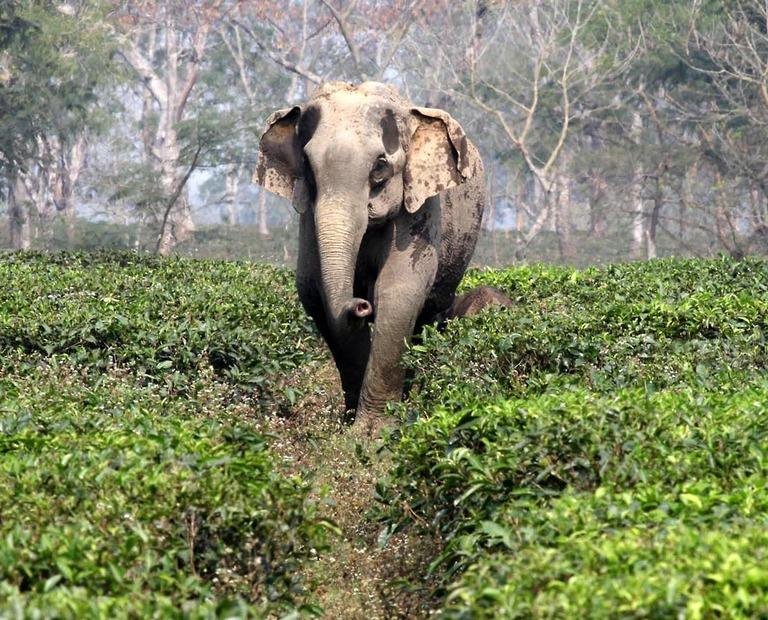
- Elephant corridors are natural pathways connecting different habitat patches and enabling elephants to move between them.
- Asian elephants have large movement ranges and depend on the seasonal availability of food, water and shelter.
- Changes in resource availability can alter their movement and increase encounters with human settlements.
- Research by the National Centre for Biological Sciences (NCBS) and Wildlife Institute of India (WII) highlights the role of seasonal food and water availability in determining elephant movement.
Elephant Population and Major Landscapes
The Synchronous All India Elephant Estimation (SAIEE) 2021–25 estimates India’s elephant population at 22,446.
The population is distributed across four major landscapes:
- Western Ghats: 11,934 elephants (53.2%)
- North-Eastern Hills and Brahmaputra floodplains: 6,559 (29.2%)
- Shivalik Hills and Gangetic Plains: 2,062 (9.2%)
- Central India and Eastern Ghats: 1,891 (8.4%)
Major Threats
- Linear infrastructure: Roads, railway lines and power infrastructure can obstruct traditional elephant routes.
- Mining and land-use change: Mining, agriculture and expanding settlements fragment habitats.
- Fencing and development: Electric fences, plantations, quarries and tourism infrastructure can narrow or block corridors.
- The Western Ghats face significant fragmentation, while mining and habitat loss have affected elephant distribution in parts of Central India and the Eastern Ghats.
Conservation Significance
- Corridors provide elephants access to seasonal food and water resources across their range.
- They enable gene flow between separated populations, helping maintain genetic diversity.
- Maintaining these routes can reduce elephant movement through farmland and settlements, supporting human-elephant conflict management.
Corridor Mapping
- The Elephant Corridors of India 2023 assessment, conducted under Project Elephant with State Forest Departments, identified 150 corridors across 15 elephant-range States.
- West Bengal recorded the highest number, with 26 corridors.
- The fresh survey ordered by the Supreme Court can help identify corridors that have been blocked, narrowed or affected by subsequent development.
Way Forward
- Complete the fresh nationwide survey and identify critical and vulnerable corridors.
- Integrate identified corridors into infrastructure, mining and land-use planning at the project-design stage.
- Strengthen inter-State and transboundary coordination for corridors crossing administrative boundaries.
- Replace harmful deterrents with science-based conflict-management measures.
- Involve local communities in corridor protection, early warning and habitat restoration.
Conclusion
Elephant corridors should be recognised as essential ecological infrastructure in development planning. Protecting them through coordinated land-use decisions can support elephant conservation while reducing human-elephant conflict.
FAQs
Q1. What are elephant corridors?
Elephant corridors are natural movement routes connecting separate habitat patches, allowing elephants to move between areas required for their survival.
Q2. What is India’s estimated elephant population?
The SAIEE 2021–25 assessment estimates India’s elephant population at 22,446, with the Western Ghats accounting for the largest share.
Q3. How many elephant corridors were identified in the 2023 assessment?
The Elephant Corridors of India 2023 assessment identified 150 corridors across 15 elephant-range States.
Q4. Why are elephant corridors important for conservation?
They provide access to seasonal resources and facilitate gene flow between populations, helping address the effects of habitat fragmentation.
Q5. What are the major threats to elephant corridors?
Major threats include roads, railways, mining, power infrastructure, agriculture, fencing, plantations and expanding settlements.
Q6. Why has the Supreme Court ordered a fresh survey?
The Court seeks to identify obstructions in elephant corridors and assess measures to prevent their blockage and the use of harmful deterrents.
Q7. Why is inter-State coordination necessary?
Elephant movement often crosses administrative boundaries. Effective corridor protection therefore requires coordinated action among States and concerned forest authorities.