Context
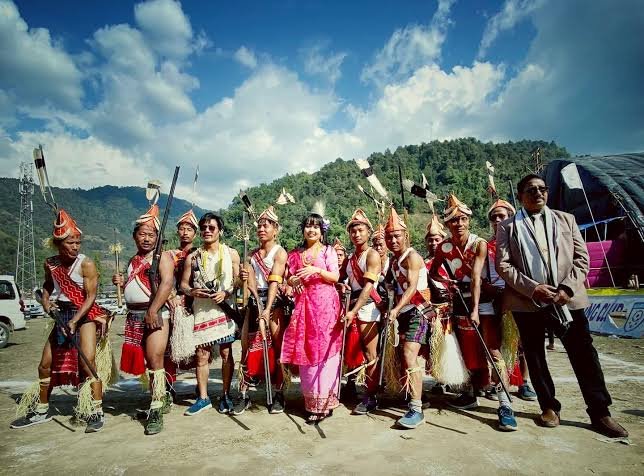
The West Bengal Chief Minister recently supported the inclusion of the Rajbongshi language in the Eighth Schedule of the Constitution, highlighting the need for constitutional recognition, linguistic identity and preservation of regional cultural heritage.
About the Eighth Schedule & Constitutional Provisions
- Purpose: Grants constitutional recognition to specified Indian languages and supports their growth and preservation.
- Constitutional Link & Expansion: Linked to Articles 344(1) and 351; grew from 14 original languages to 22 via constitutional amendments under Article 368.
| Article | Key Provision |
| Article 343 | Declares Hindi in Devanagari script as the official language of the Union. |
| Article 344 | Provides for the Official Language Commission and a Parliamentary Committee on official language. |
| Article 345 | Lets a State Legislature adopt one or more languages used in the State, or Hindi, for official State work. |
| Article 347 | Empowers the President to direct official recognition of a language spoken by a sizeable section of a State’s population. |
| Article 350A | Directs States and local authorities to provide primary education in the mother tongue for children of linguistic minorities. |
| Article 350B | Provides for a Special Officer for Linguistic Minorities, appointed by the President. |
| Article 351 | Directs the Union to promote and enrich Hindi by drawing from India’s composite culture and Eighth Schedule languages. |
Evolution of the Eighth Schedule
| Constitutional Amendment | Languages Added | Total Languages |
| Original Constitution (1950) | Assamese, Bengali, Gujarati, Hindi, Kannada, Kashmiri, Malayalam, Marathi, Oriya (now Odia), Punjabi, Sanskrit, Tamil, Telugu, and Urdu | 14 |
| 21st Amendment Act (1967) | Sindhi | 15 |
| 71st Amendment Act (1992) | Konkani, Manipuri, and Nepali | 18 |
| 92nd Amendment Act (2003) | Bodo, Dogri, Maithili, and Santhali | 22 |
Renaming Note: The 96th Constitutional Amendment Act, 2011 changed the spelling/name from Oriya to Odia without adding a new language.
Official Language Commission
- Constitutional Basis & Timing: Set up under Article 344(1) by the President at the end of 5 years and again after 10 years from the Constitution’s commencement.
- Composition & Role: Comprises a Chairman and members representing Eighth Schedule languages; recommends steps for the progressive use of Hindi and restrictions on English in Union work.
- Parliamentary Review: Under Article 344(4), a 30-member Parliamentary Committee (20 from Lok Sabha and 10 from Rajya Sabha) examines the Commission’s report and advises the President.
About Rajbongshi Language and Community
- Language Family & Spread: Belongs to the Indo-Aryan language family (also spelled Rajbanshi); spoken mainly in northern West Bengal (especially Cooch Behar), lower Assam, parts of Bihar, and Nepal.
- Community & History: The Rajbongshi (Koch-Rajbongshi) community is a major SC (Scheduled Caste) group in West Bengal, historically linked to the Koch Kingdom of northern Bengal and Assam.
- Demand & Current Status: Inclusion is sought to protect linguistic heritage, cultural identity, and education access; after the West Bengal Chief Minister backed the demand on 25 November 2026, formal entry still requires a Constitutional Amendment passed by Parliament.
Criteria & Significance of Inclusion
- No Fixed Criteria: The Constitution lays down no fixed rules for adding a language; both the Pahwa Committee (1996) and the Sitakant Mohapatra Committee (2003) could not set uniform benchmarks due to India’s vast linguistic diversity.
- Other Pending Demands: Bhojpuri, Rajasthani, Tulu, Kudmali, Bhoti, and Sambalpuri (Kosali) are among languages seeking inclusion.
- Identity & Cultural Protection: Strengthens constitutional status and cultural pride, helping safeguard endangered linguistic heritage.
- Exams, Literature & Education: Facilitates use as a competitive exam medium (as per exam rules), boosts books, translations, and research, and encourages regional-language study material.
- Institutional Voice: Gives the language representation on the Official Language Commission under Article 344.
Challenges in Expanding the Eighth Schedule
- No Fixed Rules: Without clear constitutional benchmarks—and after both the Pahwa Committee (1996) and Sitakant Mohapatra Committee (2003) failed to set firm standards—decisions often turn political.
- Chain Reaction of Demands: Adding one language sparks similar demands from over 30 other groups (like Bhojpuri, Rajasthani, Tulu, and Kudmali), fueling regional pressures.
- High Cost & Workload: More scheduled languages mean higher expenses and heavy workload for official translations, parliamentary records, currency notes, and holding UPSC/competitive exams in extra scripts.
- Limited Real-Life Benefit: Being in the Eighth Schedule does not automatically bring official language status, jobs, or mother-tongue schooling unless State Governments fund local schools and staff.
- Rise of Identity Politics: Language-based campaigns can sometimes sharpen local identity divides or separate-state demands, straining cooperative federalism.
Way Forward
- Fix Clear, Fair Rules: Create transparent, objective standards (such as speaker numbers, script/written history, and preservation need) via an expert language panel so choices are fair and non-political.
- Boost Mother-Tongue Schooling: Implement Article 350A and the NEP (National Education Policy) 2020 by funding primary schools, textbooks, and teachers in local languages even outside the Eighth Schedule.
- Use Digital & AI Support: Use tools like BHASHINI and online archives to record, digitise, and translate smaller or endangered languages at low cost.
- Strengthen State Language Bodies: Back State Sahitya Akademis, tribal research institutes, and universities to grow local literature without waiting only for a constitutional amendment.
- Offer Tiered Support: Keep cultural and literary funding separate from heavy official and exam-medium duties so smaller languages get protection without overburdening government systems.
Key Constitutional & Legal Distinctions
- No National Language: The Constitution of India does not declare any language as the “national language”; Hindi in Devanagari script is only the official language of the Union under Article 343(1).
- Special Position of English: English is not listed in the Eighth Schedule, yet it continues to be used for Union official purposes alongside Hindi under the Official Languages Act, 1963.
- Scheduled Language vs. Official Language: Adding a language to the Eighth Schedule does not automatically make it an official language of the Central Government or any State Government.
- Classical Language Status Is Separate: Being in the Eighth Schedule does not grant Classical Language status, which is a separate recognition given by the Union Ministry of Culture based on antiquity and literary heritage.
- Sahitya Akademi Recognition: The Sahitya Akademi (India’s National Academy of Letters) recognises 24 languages for its literary awards — all 22 Eighth Schedule languages plus English and Rajasthani.
FAQs
Q1. How many languages were originally included in the Eighth Schedule?
Ans. Originally 14 languages, subsequently increased to 22.
Q2. Which languages were added through the 92nd Constitutional Amendment Act, 2003?
Ans. Bodo, Dogri, Maithili and Santhali.
Q3. Is English included in the Eighth Schedule?
Ans. No, but it continues as an official language of the Union under the Official Languages Act, 1963.
Q4. Where is the Rajbongshi language primarily spoken?
Ans. Northern West Bengal, lower Assam and parts of Bihar and Nepal.
Q5. Does inclusion in the Eighth Schedule automatically confer official language status?
Ans. No, constitutional recognition as a scheduled language does not automatically confer official language status.