Context
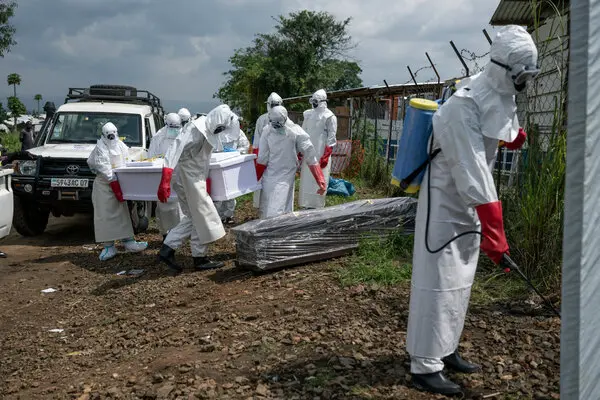
- The Democratic Republic of the Congo (DRC) is facing a rapidly expanding outbreak of Ebola Bundibugyo virus disease (BVD).
- As of August 2026, WHO reported 5,794 confirmed cases and 2,786 deaths across 60 health zones in six provinces. The outbreak remains a Public Health Emergency of International Concern (PHEIC).
About Ebola
- Ebola is a severe viral disease caused by viruses of the Filoviridae family and spreads mainly through direct contact with infected body fluids.
- Symptoms: It can cause high fever, weakness, vomiting, diarrhoea and, in severe cases, bleeding, organ failure and death.
- Current outbreak: The DRC outbreak is caused by Bundibugyo virus, a species of Ebola virus.
- Animal link: Fruit bats are considered important natural hosts/reservoirs for Ebola viruses, while humans can become infected through animal-to-human spillover.
- Human transmission: Once introduced into humans, transmission can occur through caregiving, healthcare exposure and unsafe burial practices.
Governance Challenges in Containing Emerging Epidemics:
- Weak health infrastructure: Limited healthcare facilities and trained personnel can delay diagnosis, isolation and treatment.
- Surveillance gaps: Insecurity and remote locations can leave transmission chains undetected.
- Cross-border movement: Movement between DRC, Uganda and neighbouring areas increases the risk of cross-border spread.
- Community mistrust: Fear and misinformation can reduce cooperation with health authorities and response teams.
- Medical-countermeasure gap: Bundibugyo virus has fewer approved vaccines and specific treatments than Zaire Ebola.
- Global health inequality: Limited access to advanced diagnostics, vaccines and therapeutics can slow outbreak control.
- Conflict & insecurity: Fighting involving the M23 armed group has caused instability in eastern DRC, restricting access of health teams to affected areas.
- Displacement: Conflict-driven displacement makes contact tracing, vaccination and case monitoring difficult.
India’s Support to the DRC’s Ebola Response:
- Medical assistance: India provided urgent medical assistance to the Africa CDC (Africa Centres for Disease Control and Prevention) to support the Ebola response.
- Response supplies: Assistance included diagnostics, therapeutics and infection-prevention supplies.
- Health diplomacy: The assistance reflects India’s role in South–South cooperation and global health diplomacy.
India’s Domestic Preparedness for Ebola:
- Disease surveillance: NCDC (National Centre for Disease Control) and IDSP (Integrated Disease Surveillance Programme) monitor emerging infectious diseases.
- Point-of-entry surveillance: Airports and other international entry points have systems for screening, referral and isolation of suspected cases.
- Laboratory preparedness: Suspected cases can be referred to designated laboratories for confirmation.
- Risk monitoring: India is monitoring the DRC Ebola outbreak and assessing the risk of imported cases.
What Should Be Done in an Era of Emerging Epidemics?
- Strengthen One Health: Integrate human, animal and environmental surveillance to detect outbreaks early.
- Improve early detection: Expand rapid testing and decentralised laboratories.
- Build community trust: Counter misinformation through local leaders and transparent communication.
- Strengthen health systems: Ensure adequately trained staff, PPE (Personal Protective Equipment) and infection-control facilities.
- Accelerate R&D: Develop vaccines and therapeutics for neglected and emerging pathogens.
- Enhance regional cooperation: Strengthen cross-border surveillance and data sharing.
- Promote global health equity: Ensure timely and affordable access to diagnostics, vaccines and treatments.
FAQs
Q1. What is Ebola?
Ans: Ebola is a viral disease caused by viruses of the Filoviridae family and can cause severe illness and death.
Q2. What is causing the current Ebola outbreak in the DRC?
Ans: The outbreak is caused by Bundibugyo virus, a species of Ebola virus.
Q3. How does Ebola spread?
Ans: It spreads mainly through direct contact with infected body fluids, including during caregiving and healthcare.
Q4. What is PHEIC?
Ans: PHEIC (Public Health Emergency of International Concern) is a WHO declaration for an extraordinary event that poses a risk of international disease spread.
Q5. Is PHEIC the same as a pandemic?
Ans: No. PHEIC is an international health-emergency designation; it does not necessarily mean a disease has become a pandemic.
Q6. Why is Bundibugyo virus significant?
Ans: It is a distinct Ebola species for which medical countermeasures are more limited than those available for Zaire ebolavirus.