Context
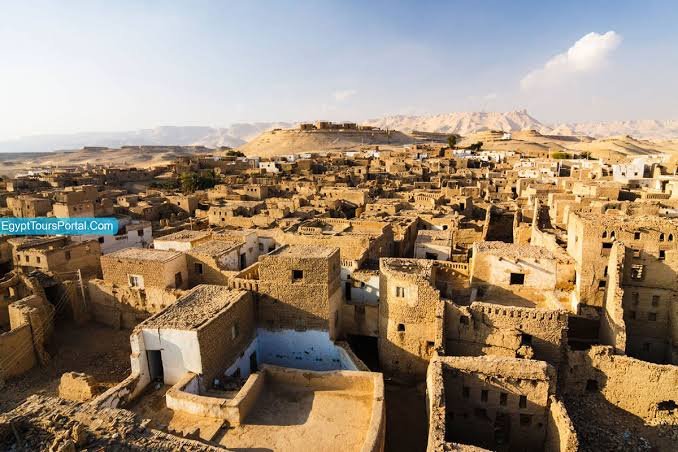
A pyramid-shaped Roman-era tomb was recently discovered at Bir Al-Shaghala in Egypt’s Dakhla Oasis, highlighting the region’s archaeological significance.
About Dakhla Oasis
- Location: Situated in Egypt’s Western Desert, west of the Nile River, between Cairo and Luxor.
- Area: Covers about 2,000 sq. km; the Western Desert itself occupies nearly two-thirds of Egypt’s land area.
- Early Settlement: Evidence of hunter-gatherer settlement dates back around 12,000 years.
- Historical Importance: Served as a North African crossroads, with ancient routes connecting Egypt, the Sahara and Libya.
- Petroglyphs: Contains rock carvings depicting animals, people, hunting scenes and symbols from different periods.
- Connectivity: Road access to the outside world improved in the 1980s with the Great Desert Loop.
Agriculture and Important Sites
- Agriculture: Fertile soil and groundwater support farming in the desert region, with dates and olives as major crops.
- Hot Springs: Bir Tarfawi and Bir Al-Gebel are notable natural hot springs.
- Heritage Sites: Key sites include Mut, Al-Qasr village and the Dakhla Oasis Heritage Museum.
What is an Oasis?
- An oasis is a fertile area in a dry region, supported by available water.
- Water Sources: Most oases depend on aquifers and receive water through natural springs or wells.
- Human Use: Water availability supports settlements and irrigated agriculture.
- Common Crops: Dates, olives, figs, citrus fruits, wheat, maize and cotton are commonly grown.
FAQs
Q1. Where is Dakhla Oasis located?
Ans: Dakhla Oasis is located in Egypt’s Western Desert, west of the Nile River.
Q2. What are petroglyphs?
Ans: Petroglyphs are carvings made on rock surfaces, often showing animals, people, hunting scenes and symbols.
Q3. What is an aquifer?
Ans: An aquifer is an underground geological formation that stores and allows the movement of groundwater, supplying water to many oases.
Q4. Name two important sites in Dakhla Oasis.
Ans: Important sites include Al-Qasr village, Mut and the Dakhla Oasis Heritage Museum.