Context
A fire recently damaged the Reikado Hall of the Daishoin Temple, which was known for preserving Japan’s ‘eternal flame’ for nearly 1,200 years, drawing attention to the conservation of cultural heritage sites in Japan.
About Daishoin Temple
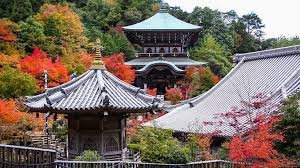
- Daishoin Temple is a Buddhist temple of the Shingon sect located at the foothills of Mount Misen on Miyajima Island in Japan’s Chugoku region.
- The temple was founded in 806 CE by Kobo Daishi after returning from China following the practice of gumonji-ho, a 100-day Buddhist spiritual discipline.
- The temple complex contains several halls, statues, and Buddhist religious structures.
- Miyajima Island, also known as Itsukushima, is situated in the Seto Inland Sea near Hiroshima and is regarded as an important centre of Japan’s Buddhist and Shinto traditions.
- The island is internationally known for its floating red torii gate, which appears to float on water during high tide.
- Built around 1168 CE, Itsukushima Shrine is constructed over water with stilt-supported structures connected by wooden walkways.
- The shrine includes the main hall, prayer hall, and Noh theatre and is recognised as a UNESCO World Heritage Site.