Context
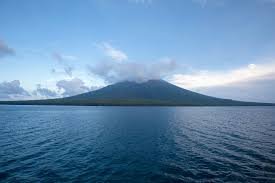
A submarine volcanic eruption in the Bismarck Sea near Papua New Guinea has brought focus to the limited mapping and scientific understanding of the deep ocean floor.
About Bismarck Sea
- The Bismarck Sea is located in the southwestern Pacific Ocean near Papua New Guinea and is surrounded by the Bismarck Archipelago, including the Admiralty Islands, New Ireland, and New Britain.
- It is connected to the Pacific Ocean in the north and to the Solomon Sea through the Vitiaz and Dampier Straits and St. George’s Channel.
- The sea extends over nearly 40,000 sq. km and has an average depth of around 2,000 metres, with deeper sections reaching about 2,500 metres.
- An underwater ridge divides the basin into eastern New Ireland and western New Guinea sections.
- The region forms part of the tectonically active Pacific Ring of Fire and is therefore vulnerable to volcanic and seismic activity.
- The region remained under German control from 1885 to 1914 and derives its name from Otto von Bismarck.
- During the Second World War, the region became an important theatre of naval conflict between Allied and Japanese forces, including the Battle of the Bismarck Sea in 1943.
- Today, the region is explored for submerged Second World War-era ships and aircraft.