Context
Thousands of residents and tourists were recently evacuated after wildfires, intensified by strong winds, spread across parts of Crete Island, threatening several tourist destinations in Greece.
About Crete Island
- Crete is the largest island of Greece and the fifth-largest island in the Mediterranean Sea, covering an area of about 8,336 sq. km.
- It is located in the southern Aegean Sea, approximately 160 km south of mainland Greece, and forms the southern boundary of the Aegean Sea.
- The island is bounded by the Sea of Crete to the north, the Libyan Sea to the south, the Myrtoan Sea to the west, and the Carpathian Sea to the east.
- It extends for about 260 km from east to west and reaches a maximum width of about 60 km.
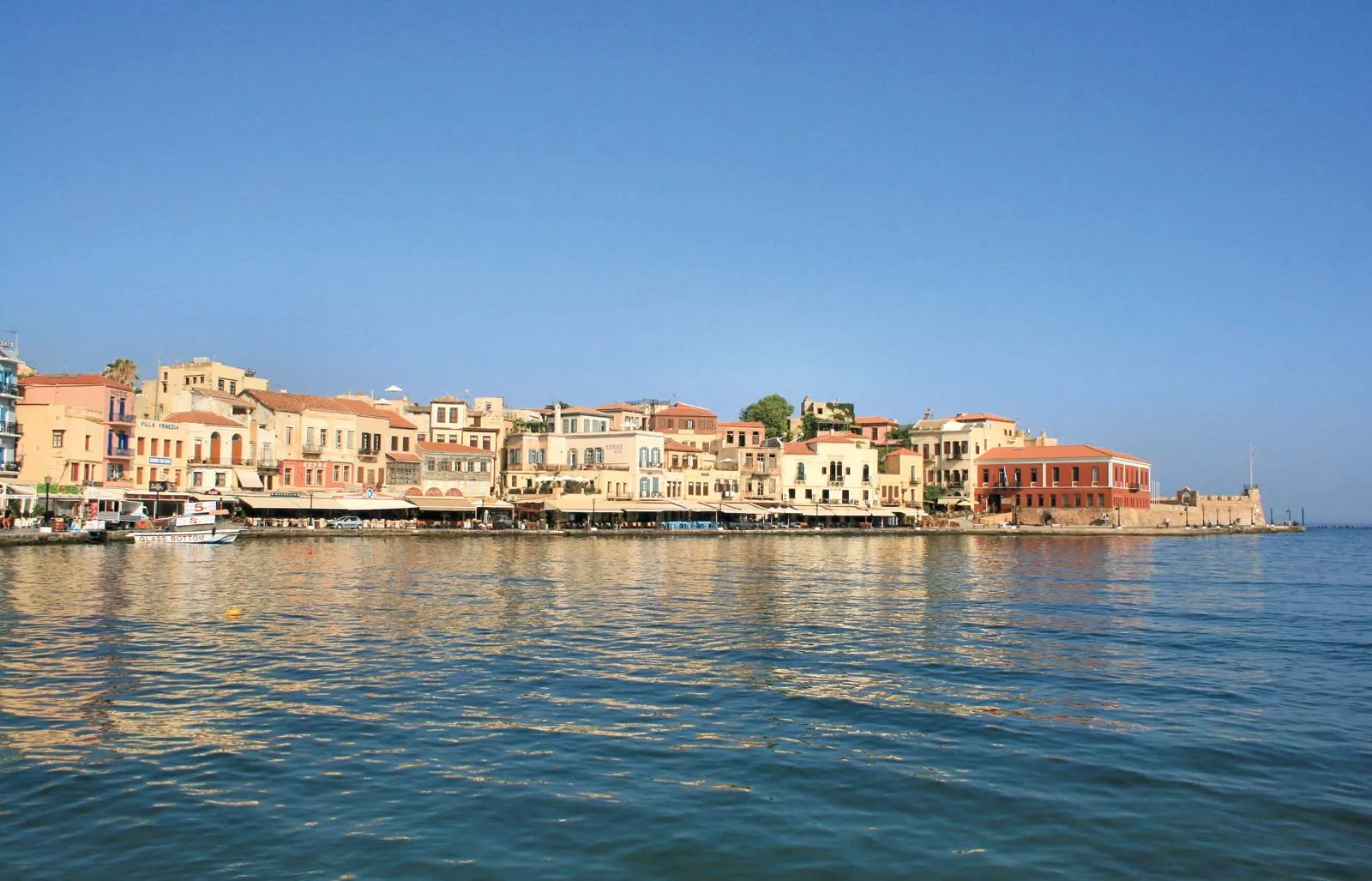
- The terrain comprises mountain ranges, fertile plains, and an extensive coastline with sandy beaches, supporting diverse ecosystems and human settlements.
- Heraklion is the capital as well as the largest city of the island.
- The economy is primarily driven by tourism, agriculture, and shipping.
Historical Background
- Crete has been inhabited since the Palaeolithic Age, making it one of the earliest centres of human settlement in Europe.
- It was the birthplace of the Minoan Civilization (c. 2700–1420 BCE), widely regarded as the earliest advanced civilisation in Europe.
- The decline of the Minoan Civilization, following a major earthquake and other contributing factors, was succeeded by the rise of the Mycenaean Civilization.
- Over time, the island came under the rule of the Romans, Byzantines, Andalusians, Venetians, and the Ottoman Empire.
- Following its independence from Ottoman rule, Crete was integrated into Greece.
- During the Second World War, the island was occupied by Nazi Germany and became the site of the historic Battle of Crete.
UPSC FAQs
Q1. Where is Crete Island located?
Ans: Crete is located in the southern Aegean Sea, about 160 km south of mainland Greece. It is the largest island of Greece and the fifth-largest island in the Mediterranean Sea.
Q2. Why is Crete historically significant?
Ans: Crete was the centre of the Minoan Civilization (c. 2700–1420 BCE), regarded as the earliest advanced civilisation in Europe. It later came under the rule of the Romans, Byzantines, Venetians, Ottomans, and eventually became part of Greece.
Q3. Which seas surround Crete Island?
Ans: Crete is bordered by the Sea of Crete to the north, the Libyan Sea to the south, the Myrtoan Sea to the west, and the Carpathian Sea to the east.
Q4. What are the major economic activities on Crete?
Ans: The island’s economy is primarily based on tourism, agriculture, and shipping, making it an important contributor to Greece’s economy.
Q5. Why is the Battle of Crete important?
Ans: During the Second World War, Crete was occupied by Nazi Germany and witnessed the Battle of Crete, one of the major military campaigns in the Mediterranean theatre.
Q6. Why is Crete strategically important?
Ans: Crete’s location at the junction of Europe, Asia, and Africa gives it strategic importance in the eastern Mediterranean. It serves as a key maritime link and has historically been significant for trade, defence, and regional connectivity.