Context
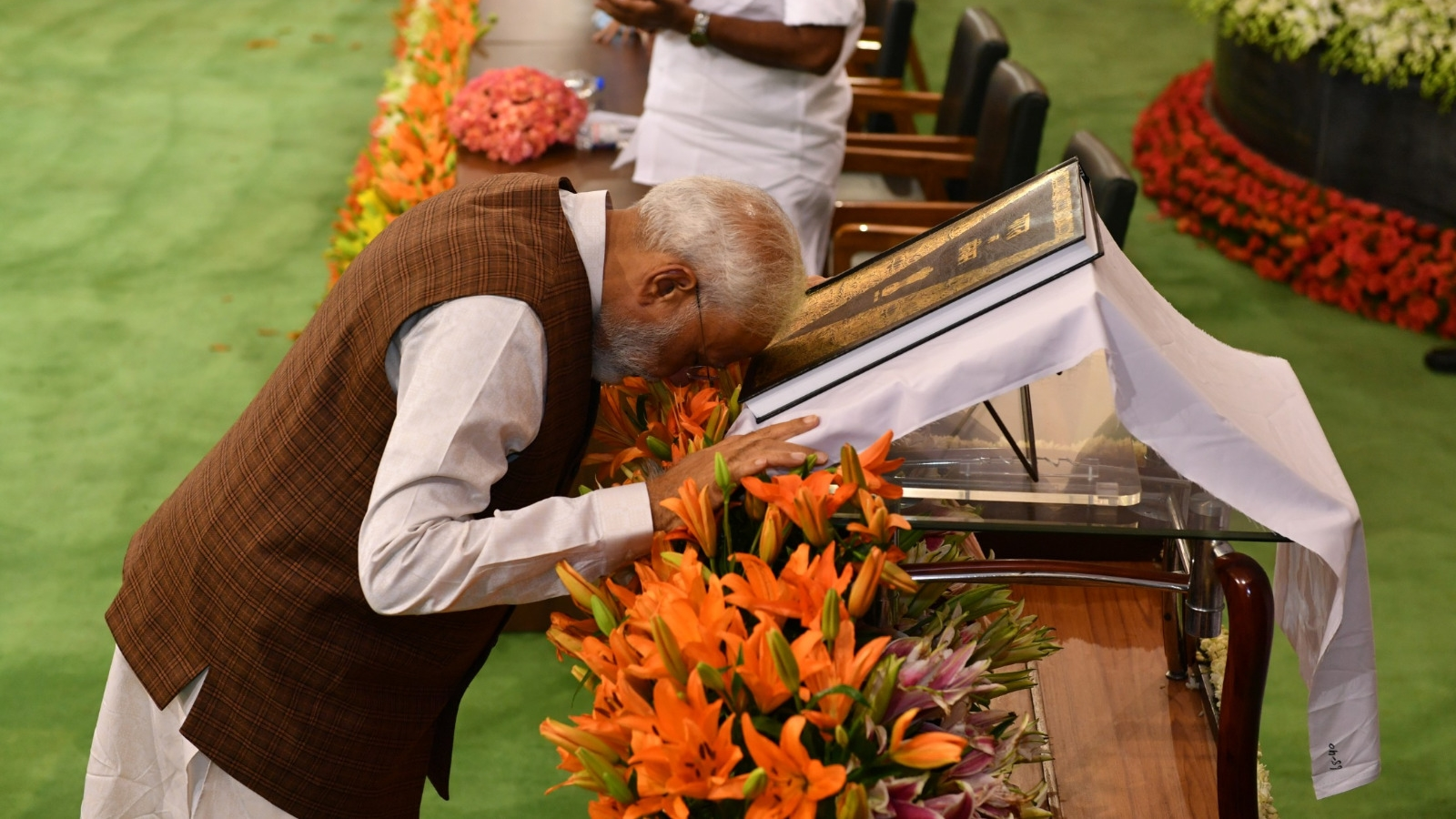
On Constitution Day (26 November 2026), India marked 77 years since the adoption of its Constitution, highlighting the importance of constitutional morality, constitutional patriotism and responsible citizenship in translating constitutional ideals into everyday governance and society.
Constitution Day & Making of the Constitution
- Constituent Assembly: Formed under the Cabinet Mission Plan (1946) with 389 members, later reduced to 299 after Partition.
- Key Dates: First met on 9 December 1946; adopted on 26 November 1949 after nearly three years of debate; came into force on 26 January 1950 to mark Poorna Swaraj Day (1930).
- Samvidhan Divas: Observed as Constitution Day (Samvidhan Divas) since 2015 to build awareness of constitutional values.
Core Concepts & Thinkers
| Concept | Simple Meaning |
| Constitution | Basic legal rulebook setting up government bodies, powers, and citizens’ rights. |
| Constitutionalism | Putting limits on government power through rules so authority cannot become arbitrary. |
| Constitutional Morality | Following the values, principles, and spirit of the Constitution in public life and institutions. |
| Constitutional Patriotism | Loyalty to shared constitutional values, equal citizenship, and democracy, over narrow group or religious identities. |
- Constitutional Morality Thinkers: George Grote stressed respect for law, constitutional rules, and free criticism; Dr. B.R. Ambedkar said it is not an automatic instinct and must be consciously built to tackle caste, gender, and social inequality.
- Constitutional Patriotism Thinkers: Karl Jaspers (The Question of German Guilt, 1946) emphasised personal and political responsibility; Dolf Sternberger linked loyalty to democratic institutions and freedom; Jürgen Habermas highlighted human rights and democratic rules for uniting diverse societies.
Constitutional Provisions & Ambedkar’s Vision
1. Key Constitutional Provisions: Though constitutional morality is not defined as a single term in the text, its spirit shapes major articles:
- Preamble: Guarantees justice, liberty, equality, fraternity, and dignity.
- Fundamental Rights (Part III): Article 13 (supremacy of Constitution), Article 14 (equality before law), Articles 15–16 (no discrimination; equal opportunity), Article 17 (abolition of untouchability), Article 19 (key freedoms), Article 21 (life, personal liberty, and dignity), Articles 25–30 (religious and cultural/educational rights), and Articles 32 & 226 (court remedies).
- Welfare, Separation & Duties: Article 38 (welfare and reducing inequality), Article 50 (separating judiciary from executive), and Article 51A (Fundamental Duties).
2. Ambedkar’s Warnings (25 November 1949 Address):
- Political Hero-Worship: Blind devotion (Bhakti) to leaders weakens democratic institutions.
- Political vs. Social Equality: Voting equality alone cannot sustain democracy without social and economic equality.
- Grammar of Anarchy: Giving up peaceful constitutional methods leads to chaos; democracy needs social democracy (liberty, equality, and fraternity).
Role of the Judiciary
| Landmark Case | Key Constitutional Impact |
| Kesavananda Bharati v. State of Kerala (1973) | Laid down the Basic Structure Doctrine, curbing Parliament’s power to alter core constitutional features. |
| S.R. Bommai v. Union of India (1994) | Strengthened secularism, federalism, and judicial review over Article 356 (President’s Rule). |
| NALSA v. Union of India (2014) | Upheld gender self-identification, dignity, and equality for transgender persons. |
| K.S. Puttaswamy v. Union of India (2017) | Recognised the Right to Privacy as a Fundamental Right under Article 21. |
| Govt. of NCT of Delhi v. Union of India (2018) | Highlighted constitutional morality, collaborative federalism, and elected governance. |
| Navtej Singh Johar v. Union of India (2018) | Decriminalised consensual same-sex acts, putting constitutional morality above social morality. |
| Indian Young Lawyers Association v. State of Kerala (2018) | Examined religious practices alongside gender equality and dignity in the Sabarimala case. |
Constitution for Social Transformation
- Social Document: Constitutional scholar Granville Austin called the Constitution a “social document” meant to end historical unfairness and drive inclusive growth.
- Schemes Backing DPSPs (Directive Principles of State Policy): PM Awas Yojana (PMAY) (housing and dignity), PM Ujjwala Yojana (PMUY) (clean cooking fuel for women), Ayushman Bharat (healthcare access), MUDRA Yojana & PM SVANidhi (livelihood support), UPI & DPI (Digital Public Infrastructure) (financial inclusion), and Swachh Bharat Mission (sanitation and public health).
- Inclusion-Related Amendments:
- 101st Amendment (2016): Brought in GST (Goods and Services Tax) and the GST Council for cooperative fiscal federalism.
- 102nd Amendment (2018): Gave constitutional status to the NCBC (National Commission for Backward Classes) under Article 338B.
- 103rd Amendment (2019): Provided up to 10% reservation for EWS (Economically Weaker Sections) under Articles 15(6) and 16(6).
- 106th Amendment (2023): Provided one-third reservation for women in the Lok Sabha, State Assemblies, and Delhi Assembly (subject to census and delimitation).
Major Challenges & Historical Lessons
1. Institutional & Political Challenges:
- Electoral Majoritarianism & Autocratic Legalism: Using majority support or formally legal laws/amendments to weaken Fundamental Rights, minority rights, and checks and balances.
- Institutional & Process Weakening: Politicisation of institutions, thin legislative debate, rushing decisions for convenience over due process, and past misuse of Article 356 and Emergency powers.
2. Social & Civic Challenges:
- Social vs. Constitutional Morality: Caste discrimination, gender bias, and economic gaps clash with equal rights, while exclusionary nationalism can hurt plural citizenship.
- Low Awareness & Symbolic Habits: Treating the Constitution as a mere ritual while lacking awareness of rights/remedies, scientific temper, and civic sense.
3. Historical Lessons:
- Weimar Republic (1919–1933): Showed how democratic rules can be bent to dismantle democracy from within.
- Indian Emergency (1975–1977): Exposed risks to civil liberties through the 38th and 39th Amendments (1975) and 42nd Amendment (1976) (limiting judicial review), later balanced by the 44th Amendment (1978).
- Key Takeaway: Laws on paper need independent institutions and alert citizens to survive.
Citizens’ Duties & Way Forward
- Fundamental Duties (Part IVA, Article 51A): Added via the 42nd Amendment (1976), with the 11th duty added by the 86th Amendment (2002). Key duties cover respecting the Constitution [51A(a)], giving up practices insulting to women [51A(e)], protecting composite culture [51A(f)], safeguarding nature [51A(g)], building scientific temper [51A(h)], and protecting public property [51A(i)]. (Fundamental Rights are not legally tied to performing Fundamental Duties, though both matter for democracy.)
- Way Forward for Viksit Bharat 2047:
- Constitutional Literacy & Education: Build everyday understanding through schools, Panchayats, Gram Sabhas, and workplaces.
- Strong Institutions & Fair Governance: Protect judicial independence, federalism, and parliamentary checks, and promote honest, empathetic administration.
- Everyday Constitutionalism & Inclusion: Narrow caste, gender, and economic divides through education, health, and jobs, supported by informed citizens, civil society, and media.
FAQs
Q1. What is constitutional morality?
Ans. Adherence to constitutional principles and values, including justice, liberty, equality, fraternity and institutional restraint.
Q2. What is the difference between constitutionalism and constitutional morality?
Ans. Constitutionalism limits government power, while constitutional morality promotes adherence to constitutional values in public and individual conduct.
Q3. What three concerns regarding democracy were highlighted by Dr. B.R. Ambedkar?
Ans. Political hero-worship, political equality amid socioeconomic inequality, and abandonment of constitutional methods.
Q4. What is autocratic legalism?
Ans. The gradual weakening of democratic institutions and safeguards through formally lawful mechanisms.
Q5. Is constitutional morality explicitly defined in the Indian Constitution?
Ans. No, it derives from constitutional principles, Constituent Assembly debates and judicial interpretations.