Context
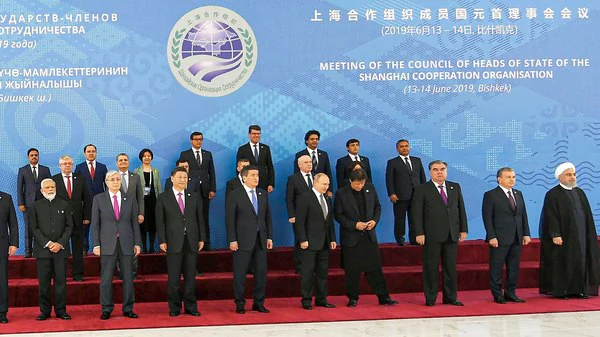
- The 26th Meeting of the Council of Heads of State of the Shanghai Cooperation Organisation (SCO) was held in Bishkek, Kyrgyz Republic.
- The summit adopted the Bishkek Declaration and marked the 25th anniversary of the SCO.
- Prime Minister Narendra Modi represented India and highlighted terrorism, the spillover of conflicts and connectivity as key concerns.
About the SCO
- The Shanghai Cooperation Organisation (SCO) is a Eurasian grouping focused on regional security, economic cooperation and connectivity.
- It has 10 members: India, China, Russia, Pakistan, Iran, Belarus, Kazakhstan, Kyrgyzstan, Tajikistan and Uzbekistan.
- India became a full member in 2017.
- Combating terrorism, separatism and extremism remains a core area of SCO cooperation.
Key Highlights of the Bishkek Declaration
- Counter-Terrorism
- The declaration condemned terrorism in all its forms and manifestations and rejected double standards in counter-terrorism efforts.
- It called for stronger international cooperation against terrorism, including action against the cross-border movement of terrorists.
- It reaffirmed the central role of the United Nations and called for implementation of relevant UN Security Council resolutions and the UN Global Counter-Terrorism Strategy, in accordance with the UN Charter and international law.
- It opposed the use of terrorist, separatist or extremist organisations for political or other narrow interests.
- Cyber and Information Security
- SCO members called for preventing the misuse of the internet and cyberspace for terrorist, separatist and extremist activities.
- They supported greater cooperation on information security, information protection and emerging forms of crime.
- West Asia
- The declaration expressed concern over the situation in West Asia and supported a political and diplomatic approach to resolving conflicts.
- It reaffirmed respect for Iran’s sovereignty and territorial integrity and called for de-escalation.
- Global Governance
- The declaration supported efforts to strengthen the global governance system.
- It favoured the peaceful settlement of disputes and opposed bloc-based and confrontational approaches in international affairs.
India’s Position at the Summit
- Counter-Terrorism
- Prime Minister Modi described terrorism as a grave threat to humanity.
- He called for dismantling the entire terror ecosystem, including terror financing, recruitment, radicalisation and safe havens.
- India stressed that terrorism must not be used as an instrument of state policy and called for a united response against those who support or shelter terrorists.
- Conflict and Regional Stability
- India highlighted the spillover effects of conflicts, particularly their impact on energy security, maritime trade and supply chains.
- It emphasised dialogue and diplomacy as the preferred means of addressing regional conflicts.
- Connectivity
- India supported robust and reliable connectivity to facilitate trade, connect markets and promote economic growth.
- It stressed that connectivity initiatives must respect the sovereignty and territorial integrity of the countries concerned.
India’s SCO Vision
- India’s approach to the SCO is based on three priorities:
- Security – addressing common security threats and strengthening regional stability.
- Connectivity – improving regional linkages to facilitate cooperation and economic activity.
- Opportunity – expanding avenues for cooperation and creating tangible benefits for member states.
- India has promoted initiatives such as the SCO Startup Forum, Young Authors’ Conclave and Young Scientists’ Forum.
- The SCO Civilisation Dialogue Forum, proposed by India, is scheduled to hold its first session in India in 2026.
Significance for India
- The SCO provides India with an important multilateral platform for counter-terrorism diplomacy and regional security engagement.
- Its membership enables India to maintain institutional engagement with Central Asian countries and major Eurasian powers.
- The organisation allows India to pursue security, economic and developmental interests through a single multilateral framework.
FAQs
Q1. What is the significance of the Bishkek Declaration for counter-terrorism?
It reinforces the SCO’s collective opposition to terrorism and emphasises international cooperation, UN mechanisms and rejection of double standards.
Q2. Why is cyberspace relevant to counter-terrorism?
Terrorist, separatist and extremist groups can misuse cyberspace for their activities. SCO cooperation therefore includes information security and prevention of such misuse.
Q3. Why is sovereignty important in India’s connectivity policy?
India supports connectivity for trade and development, while maintaining that such initiatives must respect the sovereignty and territorial integrity of the countries concerned.
Q4. How does the SCO contribute to India’s Eurasian engagement?
It provides an institutional platform for India to engage with Central Asian states and other major Eurasian countries on shared regional concerns.
Q5. When did India become a full member of the SCO?
India became a full member in 2017, along with Pakistan.
Q6. What are the three priorities of India’s SCO approach?
They are Security, Connectivity and Opportunity.