Context
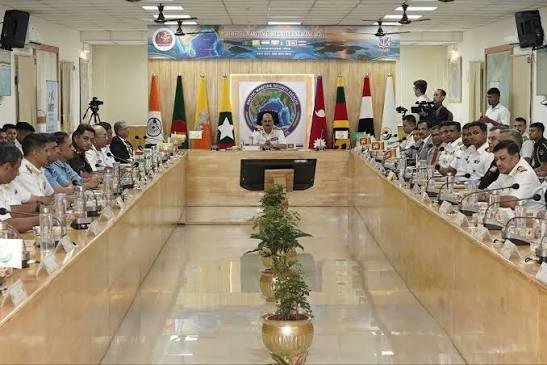
The inaugural BIMSTEC Maritime Security Exercise is being conducted in the Bay of Bengal to strengthen maritime cooperation, improve operational coordination and enhance regional security among the seven member countries of BIMSTEC. The exercise reflects the growing importance of collective maritime security in the Bay of Bengal and the wider Indo-Pacific region.
About the BIMSTEC Maritime Security Exercise
- It is the first-ever maritime security exercise conducted under the framework of BIMSTEC (Bay of Bengal Initiative for Multi-Sectoral Technical and Economic Cooperation).
- The exercise was announced by the Prime Minister of India at the 6th BIMSTEC Summit held in Thailand.
- The inaugural exercise is being conducted in the Bay of Bengal.
- All seven BIMSTEC members — Bangladesh, Bhutan, India, Myanmar, Nepal, Sri Lanka and Thailand.
- Objective: To strengthen maritime cooperation and enhance regional security through practical collaboration among member countries.
Major Focus Areas
- Operational Coordination: Improve coordination and cooperation among the maritime agencies of member countries.
- Maritime Security: Strengthen collective mechanisms to address emerging maritime security challenges.
- Information Sharing: Promote cooperation and information exchange for better maritime domain awareness.
- Regional Stability: Support a secure, open and inclusive maritime environment in the Bay of Bengal.
- Vision: “Shared Seas, Shared Security and Shared Prosperity.”
Significance of the Exercise
- Strengthening Regional Security: Promotes collective efforts to address maritime threats such as piracy, maritime terrorism, illegal fishing and trafficking.
- Enhancing India’s Maritime Diplomacy: Strengthens India’s engagement with neighbouring countries and reinforces its role in promoting security in the Bay of Bengal.
- Improving Maritime Domain Awareness: Encourages information sharing and coordinated surveillance to improve awareness of activities across regional maritime spaces.
- Securing Sea Lines of Communication (SLOCs): Supports the protection of important maritime trade routes and energy supply chains passing through the Bay of Bengal.
- Strengthening Indo-Pacific Cooperation: Contributes to a free, open, inclusive and rules-based maritime order in the Indo-Pacific.
- Promoting Regional Integration: Builds mutual trust and facilitates cooperation among South Asian and Southeast Asian countries.
About BIMSTEC (Bay of Bengal Initiative for Multi-Sectoral Technical and Economic Cooperation)
- Establishment: BIMSTEC was established on 6 June 1997 through the Bangkok Declaration.
- Nature: It is a regional organisation connecting countries in South Asia and Southeast Asia through cooperation in the Bay of Bengal region.
- Membership: It consists of seven countries — Bangladesh, Bhutan, India, Myanmar, Nepal, Sri Lanka and Thailand.
- Headquarters: Dhaka, Bangladesh.
- Objective: To promote economic growth, social progress and regional cooperation through joint initiatives in trade, connectivity, security, technology and other sectors.
Historical Evolution of BIMSTEC
- Formation of BIST-EC (1997): The organisation was established as BIST-EC, comprising Bangladesh, India, Sri Lanka and Thailand.
- Entry of Myanmar (1998): Myanmar joined the grouping, following which it was renamed BIMST-EC.
- The grouping adopted its present name, BIMSTEC, reflecting its broader regional cooperation framework.
- The permanent BIMSTEC Secretariat was established in Dhaka, Bangladesh in 2014.
Working Mechanism of BIMSTEC
BIMSTEC follows a structured institutional mechanism to facilitate cooperation among its member countries.
- Summit: The highest decision-making body, comprising the Heads of State or Government of member countries. Summits are held once every two years.
- Ministerial Meeting: Consists of Foreign Ministers of member countries and provides policy guidance. It is held annually.
- Senior Officials’ Meeting: Facilitates coordination and implementation of decisions taken at higher levels. It is held twice a year.
- BIMSTEC Secretariat: Located in Dhaka, Bangladesh, it coordinates the organisation’s activities and supports cooperation among member states.
Major Areas of Cooperation under BIMSTEC
BIMSTEC promotes cooperation across seven broad sectors, with individual member countries taking the lead in coordinating specific areas.
| Sector | Lead Country |
| Trade, Investment and Development | Bangladesh |
| Environment and Climate Change | Bhutan |
| Security | India |
| Agriculture and Food Security | Myanmar |
| People-to-People Contact | Nepal |
| Science, Technology and Innovation | Sri Lanka |
| Connectivity | Thailand |
Challenges Facing BIMSTEC
- Political Differences: Bilateral disputes and political instability among member countries can affect regional cooperation.
- Limited Connectivity: Inadequate transport, port and cross-border infrastructure restricts regional trade and movement.
- Implementation Deficit: Delays in implementing agreements and regional projects weaken the effectiveness of the organisation.
- Economic Asymmetry: Differences in economic capabilities and development levels create challenges in equitable cooperation.
- Geopolitical Competition: Strategic competition among major powers in the Indo-Pacific can influence regional priorities.
- Institutional Limitations: Limited financial and institutional capacity can constrain the implementation of ambitious regional initiatives.
Way Forward
- Strengthening Institutional Capacity: Provide adequate resources and institutional support to the BIMSTEC Secretariat for effective coordination.
- Enhancing Connectivity: Accelerate regional transport, port, energy and digital connectivity projects.
- Deepening Security Cooperation: Expand joint exercises, intelligence sharing and maritime surveillance mechanisms.
- Promoting Economic Integration: Improve trade facilitation, investment flows and regional supply-chain connectivity.
- Ensuring Effective Implementation: Establish clear timelines and monitoring mechanisms for implementing BIMSTEC agreements.
- Strengthening People-to-People Ties: Promote tourism, educational exchanges, cultural cooperation and institutional partnerships.
Conclusion
The BIMSTEC Maritime Security Exercise represents an important step towards translating regional cooperation into practical maritime security arrangements. By strengthening operational coordination, information sharing and mutual trust, BIMSTEC can contribute to a secure and prosperous Bay of Bengal.
Q1. What is the BIMSTEC Maritime Security Exercise?
Ans: It is the inaugural maritime security exercise under BIMSTEC, aimed at strengthening maritime cooperation, improving operational coordination and enhancing regional security among its seven member countries.
Q2. Where is the inaugural BIMSTEC Maritime Security Exercise being conducted?
Ans: The inaugural exercise is being conducted in the Bay of Bengal.
Q3. Which countries are participating in the BIMSTEC Maritime Security Exercise?
Ans: All seven BIMSTEC members — Bangladesh, Bhutan, India, Myanmar, Nepal, Sri Lanka and Thailand — are participating.
Q4. When and how was BIMSTEC established?
Ans: BIMSTEC was established on 6 June 1997 through the Bangkok Declaration, initially under the name BIST-EC.
Q5. Where is the BIMSTEC Secretariat located?
Ans: The BIMSTEC Secretariat is located in Dhaka, Bangladesh.
Q6. Which BIMSTEC member country leads the Security sector?
Ans: India is the lead country for the Security sector under BIMSTEC’s cooperation framework.
Q7. Which two BIMSTEC members belong to Southeast Asia?
Ans: Myanmar and Thailand are the two Southeast Asian members of BIMSTEC.