Context
Recently, the Indian Council of Agricultural Research (ICAR) recommended the use of ammonium sulphate for paddy cultivation as a low-cost fertilizer option to help farmers improve crop nutrition and maintain soil fertility.
About Ammonium Sulphate
- Ammonium sulphate is an inorganic sulphate salt formed through the reaction of ammonia with sulphuric acid.
- It is widely used as a fertilizer because it supplies essential nutrients required for plant growth and soil health.
- The compound contains nearly 21% nitrogen and 24% sulphur, making it an important source of nutrients for crops.
- It is particularly beneficial for alkaline soils as it improves nutrient availability and supports better crop productivity.
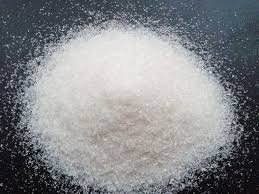
- Ammonium sulphate is a white, odourless crystalline substance that is highly soluble in water and has a high melting point.
- It is also produced as a by-product in steel plants through the recovery of coke oven gas, along with certain chemical and metallurgical industries.
Applications of Ammonium Sulphate
- Water Treatment: Used in water purification and treatment-related processes.
- Food Industry: Acts as a food additive and dough-conditioning agent.
- Pharmaceutical Industry: Applied in various pharmaceutical and biochemical processes.
- Textile and Leather Sector: Used in dyeing, printing and leather-processing activities.