Context
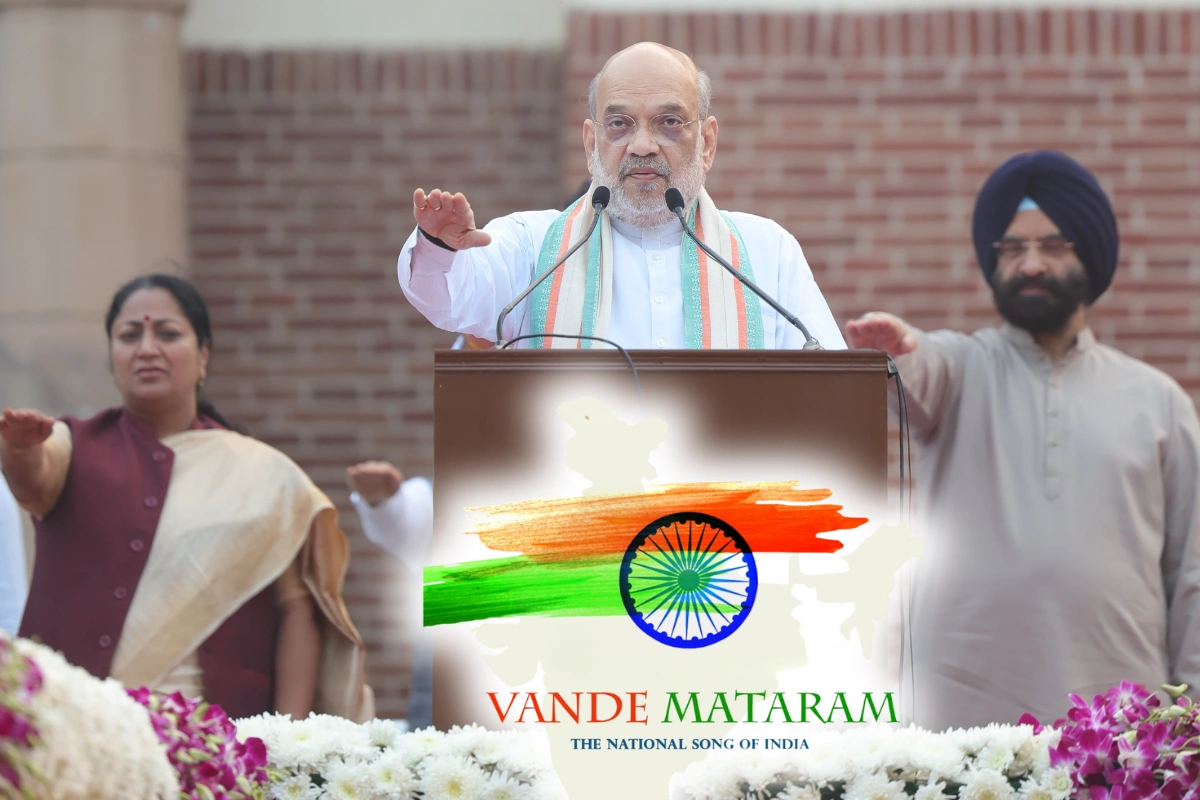
The year 2025 marks the 150th anniversary of Vande Mataram, composed by Bankim Chandra Chattopadhyay in 1875. The song continues to symbolise India’s unity, spiritual heritage, and patriotic devotion.
About Vande Mataram
- Vande Mataram was first written in Bankim Chandra Chattopadhyay’s novel Anandamath.
- It became a spiritual and national anthem of India’s freedom struggle, awakening national consciousness and inspiring unity among Indians against British rule.
- The song praises the motherland as a living, nurturing force, a symbol of both devotion and duty.
Historical Significance
- During the Swadeshi Movement (1905) against Bengal Partition, it became a rallying cry for freedom.
- It inspired revolutionaries and leaders like Rabindranath Tagore, who set it to music.
- The song blended religion, culture, and patriotism into a single stream of emotion.
- It was adopted as the National Song by the Constituent Assembly on January 24, 1950.
Philosophical and Cultural Meaning
- Vande Mataram represents the collective consciousness of India, rising above caste, creed, or religion.
- It treats the nation as a divine mother, deserving of reverence, service, and protection.
- Patriotism, according to the song, is not a temporary emotion but a lifelong act of devotion and discipline.
Contemporary Relevance
- Even today, it serves as a symbol of unity and pride for a diverse India.
- The song inspires citizens to express patriotism through service, innovation, and hard work.
- Some groups have questioned the universality of Vande Mataram, but such claims are seen as undermining India’s cultural unity and shared heritage.
- Under initiatives like Ek Bharat, Shreshtha Bharat, its message of harmony remains deeply relevant.
Conclusion
Vande Mataram is more than a song, it is India’s spiritual heartbeat, reminding every generation of their duty, devotion, and pride in serving the motherland.
| Ensure IAS Mains Question
Q. Vande Mataram is not merely a song but the soul of India’s national consciousness. Discuss its historical, cultural, and contemporary significance. (150 words) |
| Ensure IAS Prelims Question
Q. With reference to Vande Mataram, consider the following statements: 1. It was first written by Rabindranath Tagore in the novel Gitanjali. 2. It was adopted as the National Song by the Constituent Assembly in 1950. 3. It was a major inspiration during the Swadeshi Movement of 1905. Which of the above statements are correct? a) 2 and 3 only b) 1 and 2 only c) 1 and 3 only d) 1, 2, and 3 Answer: a) 2 and 3 only Explanation: Statement 1 is incorrect: Vande Mataram was written by Bankim Chandra Chattopadhyay in Anandamath (1882). Statement 2 is correct: It was adopted as the National Song on January 24, 1950. Statement 3 is correct: It inspired the Swadeshi Movement (1905) and freedom struggle. |