Context
A recent policy debate over rising cash transfers and universal subsidies in Indian States has highlighted concerns about fiscal sustainability. It has proposed introducing a Social Detailed Project Report (DPR) to evaluate welfare schemes before implementation, ensuring a balance between poverty reduction, social protection and fiscal responsibility.
Rising Fiscal Cost of Cash Transfers in India
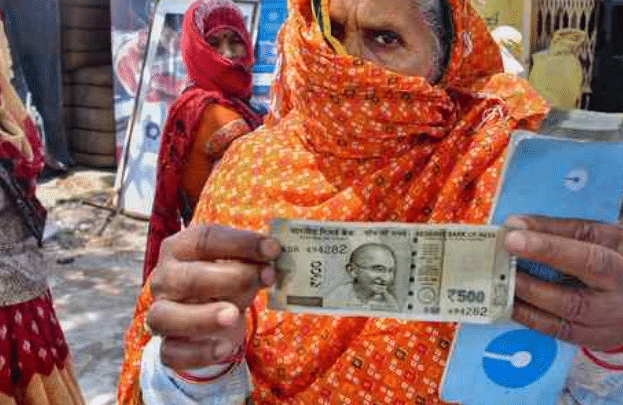
- Women-Centric Cash Transfers: According to PRS Legislative Research, 12 States allocated about ₹1.68 lakh crore (0.5% of GDP — Gross Domestic Product) for unconditional cash transfers to women in 2025–26, up from under 0.2% of GDP two years earlier.
- Rising Subsidy Burden: The RBI (Reserve Bank of India) State Finances: A Study of Budgets 2025–26 shows States’ total subsidies rose from ₹1.87 lakh crore (2018–19) to ₹4.26 lakh crore (2025–26 Budget Estimates).
- Sticky Recurring Liabilities: Regular cash transfers create hard-to-reverse financial commitments that strain future budgets.
Conceptual Debate: Universal Basic Income (UBI) vs. Targeted Welfare
1. Meaning & Core Principles: UBI (Universal Basic Income) proposes regular, unconditional cash payments to every individual regardless of income or work, resting on universality (open to all), unconditionality (no work or behavioural strings), and individual entitlement (direct transfer to each person).
2. Arguments in Favour of UBI:
- Poverty Reduction & Choice: Ensures a minimum income floor for basic needs while giving beneficiaries freedom to choose how to spend.
- Administrative Efficiency & Financial Inclusion: Cuts delivery costs, duplication, and leakages while promoting formal bank account usage.
- Social Justice: Supports income security and recognises unpaid household and care work.
3. Concerns Associated with UBI:
- Heavy Fiscal Cost & Inflation: Universal payouts demand massive recurring funds and can fuel price rise where essential goods face supply bottlenecks.
- Weakening Public Services: Replacing in-kind public services with cash risks underfunding public schools, hospitals, and infrastructure.
- Distributional & Gender Gaps: Universal transfers also reach wealthy citizens (while narrow targeting risks exclusion), and cash transfers alone may not guarantee women’s financial control inside the household.
Core Problem: Why Prior Assessment of Welfare Schemes Is Necessary
- Fiscal Sustainability: Poorly planned subsidies widen fiscal deficits, borrowing, and debt pressure.
- Opportunity Cost: Rising revenue expenditure on cash doles can crowd out capital and social spending on education, healthcare, and infrastructure (for instance, Tamil Nadu budgeted around ₹1,000 crore for higher education scholarships in 2026–27, even as government arts and science colleges had 7,198 vacant teaching posts).
- Electoral Clientelism: Schemes launched mainly for short-term electoral gains often skip rigorous appraisal of long-term outcomes.
- Targeting Errors: Poor design causes inclusion errors (ineligible people receiving benefits) and exclusion errors (deserving people left out).
- Limited Capability Building: Cash alone cannot fix gaps in quality schooling, healthcare, jobs, or women’s intra-household decision-making.
- Weak Accountability: Vague goals and missing measurable outcome indicators make scheme evaluation difficult.
Proposed Solution: Social Detailed Project Report (DPR)
- Meaning & Purpose: A Social DPR (Detailed Project Report) is a structured ex-ante (before-implementation) evaluation framework that tests a welfare scheme’s need, affordability, design, and expected social impact before rollout to promote evidence-based planning, transparency, equity, accountability, and fiscal discipline.
- Key Components:
- Needs Assessment & Beneficiary Identification: Pinpoint target social gaps and vulnerable groups, and set clear eligibility rules to curb inclusion and exclusion errors.
- Policy Alternatives: Compare universal vs. targeted, cash vs. in-kind, and conditional vs. unconditional delivery options.
- Cost–Benefit & 10-Year Fiscal Projections: Weigh expected social gains and administrative costs alongside 10-year budget forecasts factoring in inflation, beneficiary growth, and State revenue.
- Outcome Indicators & Monitoring: Fix measurable targets (for poverty, nutrition, education, and financial autonomy) backed by pilot runs, beneficiary feedback, independent audits, and public scorecards.
Way Forward
- Mandatory Ex-Ante Appraisal: Require Social DPRs and fiscal impact assessments before launching major recurring welfare schemes.
- Context-Specific & Piloted Rollout: Tailor benefits by income, region, gender, and vulnerability, and test schemes via pilots among vulnerable groups before full scale-up.
- Balanced Public Investment: Pair targeted cash support with sustained spending on education, healthcare, skill/employment generation, and public infrastructure.
- Better Targeting & Grievance Redressal: Use updated socio-economic data and accessible grievance redressal systems to minimise exclusion errors.
- Sunset Clauses & Fiscal Transparency: Build in sunset clauses (expiry timelines) and periodic reviews, while publicly disclosing multi-year costs and funding sources.
Conclusion
Cash transfers can strengthen income security and poverty reduction, but only when backed by sound financing and smart design. Adopting a Social DPR—combining prior evaluation, pilot testing, and continuous monitoring—can protect essential capital and social investments while ensuring fiscally sustainable welfare.
FAQs
Q1. Why do cash-transfer schemes raise fiscal sustainability concerns?
Ans. Recurring transfers create long-term financial obligations, potentially increasing borrowing and reducing funds for essential public services.
Q2. What is the difference between inclusion and exclusion errors?
Ans. Inclusion errors benefit ineligible individuals, while exclusion errors deny benefits to eligible individuals.
Q3. What is Universal Basic Income (UBI)?
Ans. Regular, unconditional cash payments to every individual to ensure minimum income security and reduce poverty.
Q4. What is ex ante evaluation in public policy?
Ans. Assessment of a policy’s expected costs, benefits, risks and outcomes before implementation.
Q5. How can Social DPRs improve the effectiveness of welfare schemes?
Ans. Through better beneficiary targeting, policy comparison, long-term cost estimation, measurable outcomes and accountability.