Context
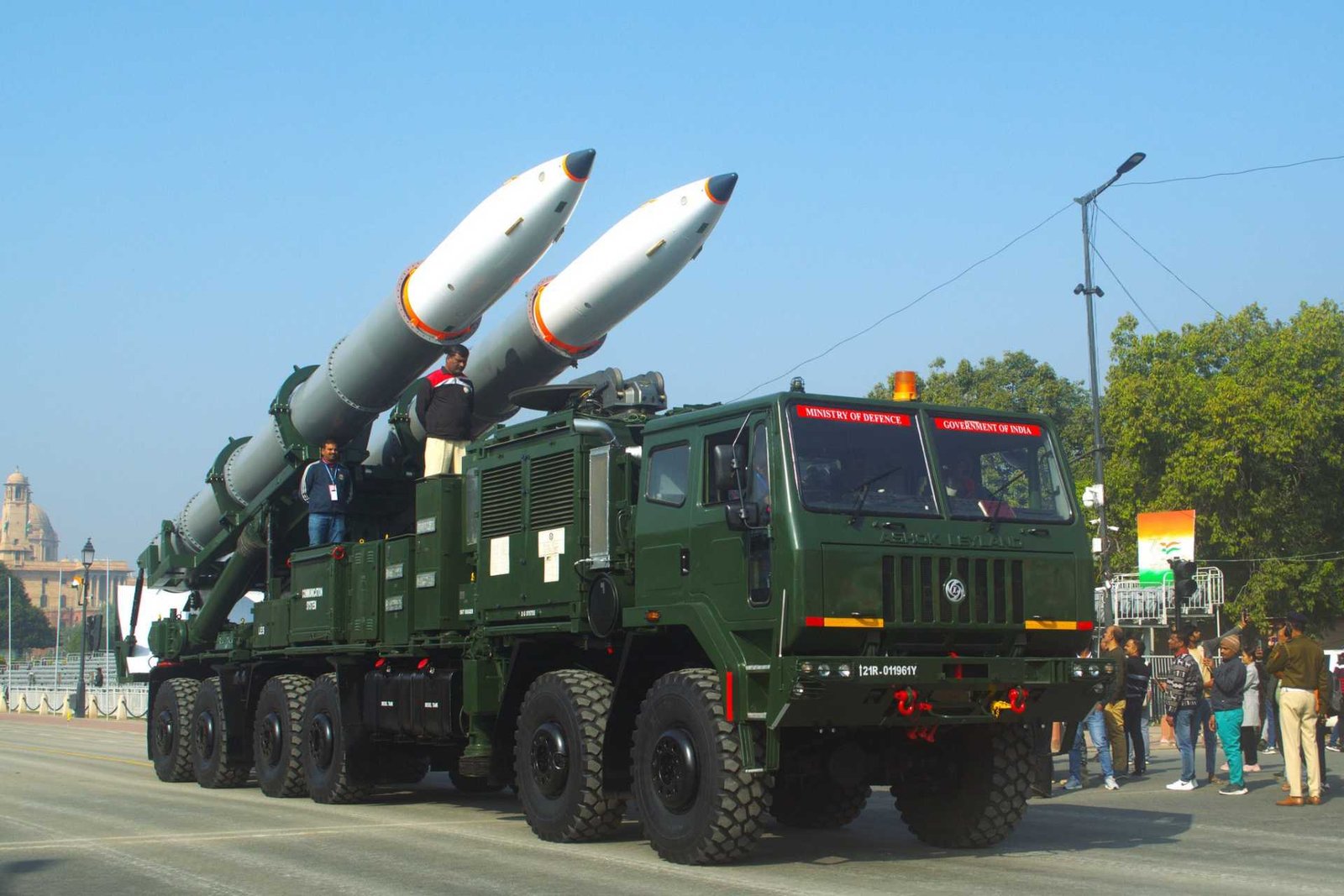
DRDO successfully flight-tested the indigenous Pralay quasi-ballistic missile from Dr APJ Abdul Kalam Island, Odisha, on 5 November 2026, meeting all objectives during user evaluation trials and marking progress towards its induction into the Indian Armed Forces.
About Pralay Missile
- Type: Indigenous short-range, surface-to-surface, solid-fuel, quasi-ballistic missile built to carry conventional (non-nuclear) warheads.
- Developer: Developed by RCI (Research Centre Imarat), Hyderabad, along with other DRDO (Defence Research and Development Organisation) laboratories.
- Production Partner: Manufactured by BDL (Bharat Dynamics Limited).
- Quasi-Ballistic Trajectory: Follows a lower-altitude flight path and can change direction mid-flight, unlike standard ballistic missiles that follow a fixed high arc — making radar tracking and interception much harder.
- Induction Status: Cleared for induction into both the Indian Army and the IAF (Indian Air Force) for deployment along the northern and western borders.
Key Features
- Range: Strike range of 150 km to 500 km (classified as a SRBM — Short-Range Ballistic Missile).
- Payload Capacity: Carries 500–1,000 kg of conventional warheads (such as pre-fragmented high-explosive and runway-denial warheads).
- Propulsion: Powered by a solid-propellant rocket motor, allowing fast launch readiness and easy storage.
- Speed: High supersonic terminal speed (reported around Mach 6.1 during final descent).
- Launch Platform: Fired from canisterised mobile road launchers, enabling quick deployment, concealment, and mobility across difficult terrain.
- Guidance & Accuracy: Uses INS (Inertial Navigation System) paired with terminal seeker guidance for mid-flight course corrections and high target accuracy.
Strategic Significance
- Tactical Strike Capability: Gives India rapid, high-precision conventional strike power against enemy airfields, radar stations, command centres, and logistics hubs.
- Penetrating Air Defences: Low-altitude flight and mid-flight manoeuvrability help bypass modern enemy air and missile defence systems.
- Closing the Conventional Gap: Bridges the tactical gap between short-range Pinaka rockets and strategic nuclear-capable Prithvi/Agni missiles, strengthening conventional deterrence without crossing the nuclear threshold.
- Defence Self-Reliance: Advances Aatmanirbhar Bharat (Self-Reliant India) in indigenous tactical missile design and domestic defence manufacturing.
FAQs
Q1. What is a quasi-ballistic missile?
Ans. A missile with a lower, manoeuvrable flight trajectory, making tracking and interception difficult.
Q2. Which DRDO laboratory developed Pralay?
Ans. Research Centre Imarat (RCI), Hyderabad, along with other DRDO laboratories.
Q3. What payload can Pralay carry?
Ans. 500–1,000 kg of conventional warheads.
Q4. What is the range of Pralay?
Ans. Up to approximately 500 km.