Context
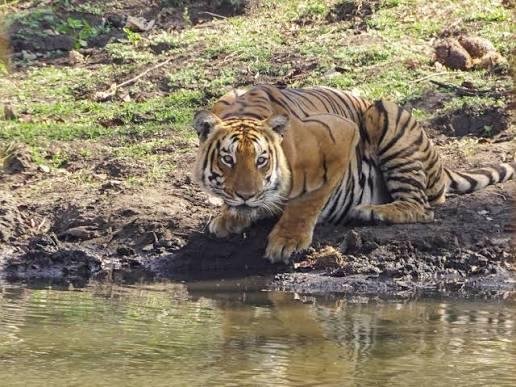
A video allegedly showing a state minister pursuing a tiger inside Mudumalai Tiger Reserve (MTR), Tamil Nadu, has gone viral on social media, raising concerns over wildlife disturbance and violations of protected-area regulations.
About the Reserve
- Location: Nilgiris district, Tamil Nadu, near the tri-junction of Tamil Nadu, Karnataka, and Kerala.
- Establishment: Declared a Wildlife Sanctuary in 1940 and notified as a Tiger Reserve in 2007 under Project Tiger.
- Area: Covers about 688.59 sq km, including 321 sq km of core area.
- Biosphere Reserve: Part of the Nilgiri Biosphere Reserve, India’s first biosphere reserve (established in 1986).
- Neighbouring Protected Areas: Shares boundaries with Bandipur Tiger Reserve (Karnataka) to the north and Wayanad Wildlife Sanctuary (Kerala) to the west.
- Topography & River: Features undulating hills at 960–1,266 metres elevation; drained by the Moyar River, a tributary of the Bhavani River.
Vegetation and Biodiversity
- Forest Types: Tropical evergreen, moist deciduous, dry deciduous, and teak forests, along with grasslands and swamps (vayals).
- Major Flora: Teak, rosewood, bamboo, and elephant grass; also preserves wild relatives of crops like rice, ginger, turmeric, and cinnamon.
- Major Carnivores: Bengal tiger, leopard, and dhole (wild dog).
- Major Herbivores: Asian elephant, gaur, sambar, chital (spotted deer), barking deer, four-horned antelope, and mouse deer.
- Other Wildlife: Supports a rich variety of birds (over 260 species), reptiles, and small mammals.
Conservation Importance
- Wildlife Connectivity: Forms a vital part of the Nilgiri–Wayanad–Bandipur forest landscape, enabling free movement of tigers and Asian elephants across state borders.
- Biodiversity Conservation: Protects key Western Ghats ecosystems and habitats of threatened species.
- Legal Protection: Activities threatening wildlife are strictly regulated under the WPA (Wild Life (Protection) Act), 1972.
FAQs
Q1. Which protected areas share boundaries with Mudumalai Tiger Reserve?
Ans. Bandipur Tiger Reserve (Karnataka) and Wayanad Wildlife Sanctuary (Kerala).
Q2. Which river flows through Mudumalai Tiger Reserve?
Ans. The Moyar River, a tributary of the Bhavani River.
Q3. What are the major vegetation types found in Mudumalai?
Ans. Tropical evergreen, moist deciduous and dry deciduous forests, teak forests, grasslands and swamps.