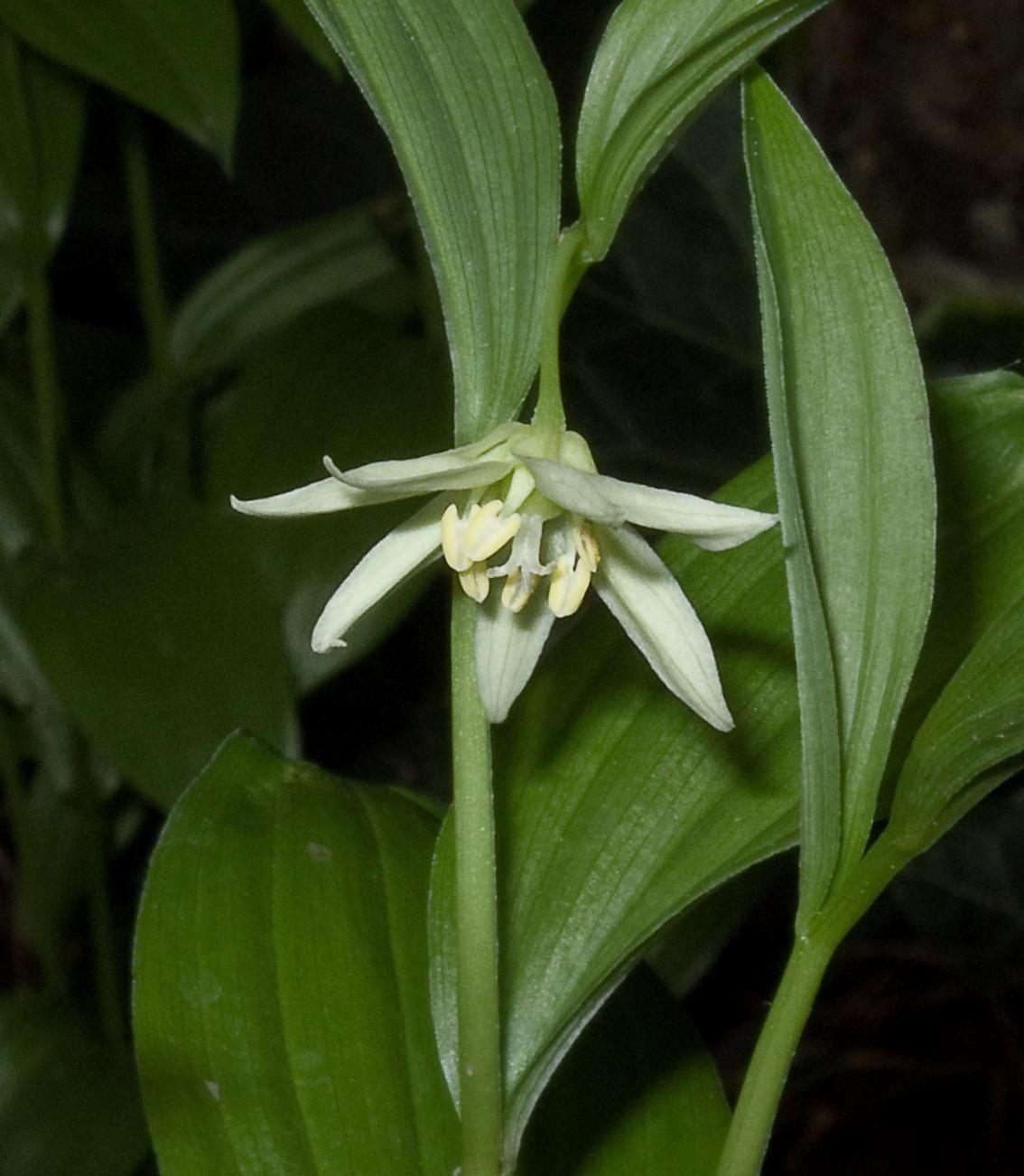
Disporum kamakhasiense
Context
Botanists have identified a new flowering plant species, Disporum kamakhasiense, from Assam and Meghalaya.
About the Species
- Type: A perennial herb belonging to the family Colchicaceae.
- Distribution: Native to Northeast India, recorded across three key locations:
- Garbhanga Reserve Forest (Kamrup district, Assam)
- Laisong (Dima Hasao district, Assam)
- Barapani (Meghalaya)
- Habitat: Grows on cliff faces under bamboo canopies in semi-evergreen forests (elevations: 200–1,100 m).
- Etymology: Named kamakhasiense by combining Kamrupa (ancient Assam) and the Khasi Hills of Meghalaya.
Key Physical Features
- Height & Growth: Reaches up to 180 cm, noticeably taller than its close relative Disporum calcaratum (~100 cm).
- Foliage: Features dark green, glossy leaves with seven parallel veins.
- Floral Traits: Produces white, star-shaped flowers with straight spurs, long flower stalks, and short, thick stamens.
- Phenology: Flowers during June–July, with fruiting occurring in July–August.
Conservation Status & Significance
- Vulnerability: Potentially endangered due to an extremely restricted geographic range and small population size.
- Major Threats: Infrastructure expansion (road widening), deforestation, and plant over-exploitation.
- Ecological Value: Emphasizes the rich plant diversity of Northeast India within the Indo-Burma Biodiversity Hotspot.
- Way Forward: Protect existing habitats, conduct field surveys in adjacent belts, and carry out a formal assessment for the IUCN Red List.
FAQs
Q1. Where has it been recorded?
Ans. Garbhanga Reserve Forest (Kamrup) and Laisong (Dima Hasao) in Assam, and Barapani in Meghalaya.
Q2. How did it get its name?
Ans. From Kamrupa (ancient name for Assam) and the Khasi Hills of Meghalaya.
Q3. What habitat does it prefer?
Ans. Cliffs beneath bamboo forests in semi-evergreen forests at 200–1,100 m elevation.