Context
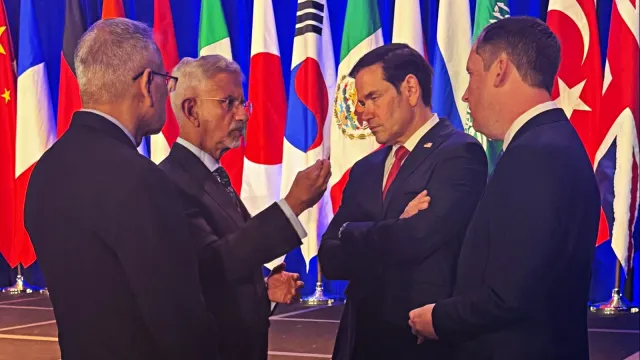
At the G20 Foreign Ministers’ Meeting held in Atlanta, USA, External Affairs Minister S. Jaishankar highlighted the growing challenges facing global energy security. He argued that the current energy crisis is not merely a problem of inadequate production, but increasingly one of unpredictable supplies, geopolitical disruptions, unaffordable prices and unequal access to energy.
Key Energy Sector Challenges Highlighted
- Disruption of Energy Trade and Infrastructure: Deliberate attacks on energy infrastructure, oil and gas facilities, and commercial vessels can disrupt supplies and create uncertainty in global energy markets.
- Sanctions and Market Restrictions: Economic sanctions and restrictions on energy trade can limit the availability of supplies, distort market operations and affect countries dependent on imported energy.
- Strategic Chokepoints: Disruptions along important maritime routes can delay oil and gas shipments, increase transportation and insurance costs, and create supply uncertainty.
- Unpredictability and Unaffordable Costs: Even when global production is adequate, disruptions and market uncertainty can cause price volatility, making energy less affordable for households and industries.
- Unequal Access to Energy: Low-income and developing countries are particularly vulnerable because they have limited financial capacity to absorb price shocks and secure alternative supplies.
- Interdependence of Global Energy Markets: Disruptions in one region can have wider consequences for other countries through changes in fuel prices, shipping costs, fertiliser production and household energy expenditure.
India’s Key Energy Concerns
- Reliable LPG Supplies: India requires stable and predictable supplies of Liquefied Petroleum Gas (LPG) to meet its clean cooking needs. Supply disruptions can affect household energy security and the affordability of cooking fuel.
- Critical Minerals Security: India needs reliable access to minerals essential for renewable energy technologies, electric vehicles, batteries and other strategic industries. The National Critical Mineral Mission covers the value chain from exploration to processing, recycling and recovery.
- Reducing Import Vulnerability: Dependence on imported energy exposes India to geopolitical tensions, international price fluctuations and disruptions in major shipping routes.
- Balancing Energy Security and Transition: India must ensure affordable and reliable energy supplies while advancing its transition towards cleaner energy sources.
Initiatives and Proposals Highlighted
- G20 Critical Minerals Circularity Initiative: India proposed this initiative to promote the recovery, reuse and recycling of critical minerals, strengthen supply chains and reduce dependence on limited sources.
- Energy Storage: Greater investment in energy storage technologies can address the intermittency of renewable energy and improve the reliability of electricity supply.
- Small Modular Reactors (SMRs): These are compact nuclear reactors that can support low-carbon electricity generation and potentially expand access to nuclear energy.
- Green Hydrogen: Promoting green hydrogen can help decarbonise hard-to-abate sectors such as steel, fertilisers and heavy transport.
- Biofuels: Expanding biofuel production can diversify energy sources and reduce dependence on fossil fuel imports.
- Wider Access to Finance: Developing countries need affordable financing and technology support to strengthen energy infrastructure and accelerate clean-energy adoption.
- Jaishankar urged the G20 to demonstrate collective leadership to keep energy markets open, accessible and predictable.
Significance of the G20’s Role
- Global Coordination: The G20 can facilitate cooperation among major economies to reduce disruptions in energy trade and maintain stable markets.
- Protection of Vulnerable Economies: Collective action can help address the disproportionate impact of energy price shocks on developing and low-income countries.
- Resilient Supply Chains: Cooperation can diversify energy and critical mineral supply chains and reduce excessive dependence on a few suppliers.
- Financing the Energy Transition: G20 countries can mobilise finance and promote technology transfer for clean-energy infrastructure.
- Maritime Security: Cooperation can help safeguard important shipping routes and ensure the uninterrupted movement of energy supplies.
Way Forward
- Ensuring Open Energy Markets: Promote transparent and predictable energy trade while avoiding arbitrary restrictions and discriminatory market practices.
- Diversifying Supply Sources: Reduce dependence on concentrated suppliers and strengthen alternative energy supply routes.
- Protecting Critical Infrastructure: Improve the security of energy installations, pipelines, ports and maritime trade routes.
- Strengthening Strategic Reserves: Build adequate petroleum and gas reserves to manage temporary supply disruptions.
- Promoting Critical Mineral Circularity: Encourage exploration, recycling and recovery of critical minerals to strengthen domestic and global supply chains.
- Expanding Clean Energy Investments: Accelerate investments in renewable energy, storage, green hydrogen, biofuels and nuclear technologies.
- Ensuring Affordable Finance: Expand concessional finance and technology access for developing countries to support a just and inclusive energy transition.
Conclusion
Energy security is no longer determined solely by the availability of resources; it also depends on the stability of supply chains, affordability, accessibility and geopolitical conditions. India’s intervention at the G20 highlights the need for open energy markets, diversified supply chains and inclusive clean-energy cooperation to ensure that geopolitical disruptions do not undermine global development.
FAQs
Q1. What was the central concern raised by India’s External Affairs Minister at the G20?
Ans: The global energy crisis is increasingly driven by supply disruptions, geopolitical tensions, sanctions, strategic chokepoints, unpredictable prices and unequal access rather than simply inadequate production.
Q2. Why are energy chokepoints important for global energy security?
Ans: They are strategically important maritime routes through which significant volumes of oil and gas are transported. Disruptions can delay shipments, increase transportation costs and raise global energy prices.
Q3. Why are low-income countries more vulnerable to energy disruptions?
Ans: They have limited financial resources to absorb price shocks, maintain strategic reserves or procure alternative supplies, making their economies more vulnerable to energy insecurity.
Q4. What is the G20 Critical Minerals Circularity Initiative?
Ans: It is an initiative proposed by India to promote the recycling, reuse and recovery of critical minerals, thereby strengthening supply-chain resilience and reducing dependence on limited sources.
Q5. How does energy security contribute to India’s economic development?
Ans: Reliable and affordable energy supports industrial production, agriculture, transportation, household consumption and overall economic growth.