Context
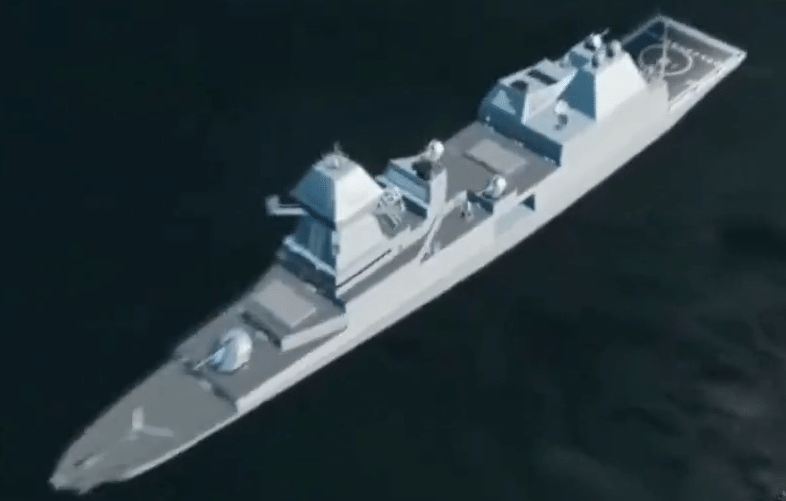
The Defence Acquisition Council (DAC), chaired by the Defence Minister, has reportedly accorded in-principle approval to Project 18A, the Indian Navy’s Next-Generation Destroyer (NGD) programme. Estimated at around ₹80,000 crore, the project aims to develop advanced stealth-guided missile destroyers to strengthen India’s maritime capabilities and strategic presence in the Indo-Pacific region.
About Project 18A
- Nature: Indian Navy’s Next-Generation Destroyer (NGD) programme.
- Objective: Develop large, stealthy and heavily armed guided-missile destroyers.
- Estimated Cost: Approximately ₹80,000 crore.
- Successor: Envisaged as a successor to the Visakhapatnam-class (Project 15B) destroyers.
- Design Authority: Indian Navy’s Warship Design Bureau (WDB).
- Shipbuilding: Expected involvement of Mazagon Dock Shipbuilders Limited (MDL) and Garden Reach Shipbuilders & Engineers (GRSE).
- Indigenous Development: Expected to have approximately 75% indigenous content.
- Strategic Focus: Strengthen India’s ability to protect maritime interests, secure sea lanes and counter emerging threats in the Indian Ocean Region (IOR).
Key Features of Project 18A
- Large Displacement
- Expected displacement of over 13,000 tonnes.
- Significantly larger than the Visakhapatnam-class destroyers (approximately 7,400 tonnes).
- Greater size provides space for advanced weapons, sensors and future technological upgrades.
- May place the vessels in the size category commonly associated with cruisers, although naval classification is not determined by displacement alone.
- Advanced Missile Systems
- Reportedly envisages up to 144 Vertical Launch System (VLS) cells.
- Expected to accommodate multiple missile systems for air defence, anti-ship and land-attack roles.
- Potential systems include BrahMos-NG, Barak-8 ER and Long-Range Land Attack Cruise Missile (LR-LACM).
- Integrated Electric Propulsion (IEP)
- Proposed electric propulsion architecture.
- Can support the power requirements of advanced sensors, electronic warfare and future directed-energy weapons.
- Stealth Technology
- Expected to incorporate an enclosed X-shaped mast, radar-absorbent materials and an optimised hull design.
- Infrared signature suppression may reduce detection through heat-sensing systems.
- Improves survivability by making detection and targeting more difficult.
- Advanced Anti-Submarine Warfare (ASW)
- Expected to incorporate advanced sonar, torpedo and anti-submarine warfare systems.
- Potential features include Varunastra torpedoes, towed-array sonar and anti-submarine rocket systems.
- Enhances the Navy’s ability to detect and counter hostile submarines.
- Advanced Sensor and Radar Systems
- Expected to feature sophisticated radar, surveillance and multi-domain tracking capabilities.
- Improves situational awareness and air and missile defence.
- Close-in Defence Systems
- Reported plans include rapid-fire close-in weapon systems (CIWS) and directed-energy weapons.
- Intended to counter incoming missiles, drones and other close-range threats.
- Unmanned Systems
- Potential integration of unmanned underwater vehicles (UUVs) and drones.
- Can support surveillance, mine detection and anti-submarine operations.
Strategic Significance of Project 18A
- Maritime Security: Strengthens India’s ability to counter submarines, anti-ship missiles and unmanned threats.
- Countering China: Enhances India’s naval capabilities to respond to China’s growing presence in the Indo-Pacific.
- SLOC Protection: Safeguards vital maritime trade routes and energy supply chains.
- Blue-Water Capability: Enables sustained long-range naval operations beyond coastal waters.
- Defence Indigenisation: Promotes domestic development of naval technologies, supporting Aatmanirbhar Bharat.
- Multi-Domain Warfare: Integrates air, surface and underwater combat capabilities through advanced sensors, weapons and unmanned systems.
Challenges Associated with Project 18A
- Technological Complexity: Developing advanced propulsion, stealth systems, sensors and integrated weapons requires sophisticated indigenous capabilities.
- High Capital Cost: The estimated ₹80,000 crore investment may create pressure on defence modernisation budgets.
- Dependence on Critical Technologies: Import dependence for specialised components, propulsion technologies and electronic systems may affect self-reliance.
- Long Gestation Period: Complex design, testing and construction processes may delay operational induction.
- Shipbuilding Capacity: Indian shipyards need adequate infrastructure, skilled manpower and advanced manufacturing facilities to construct such large warships.
- Integration Challenges: Integrating multiple weapons, sensors and communication systems into a unified combat architecture requires extensive testing.
Way Forward
- Strengthening Indigenous R&D: Promote domestic development of advanced propulsion, radar, sonar and weapons technologies.
- Public-Private Partnership: Encourage collaboration between defence PSUs, private shipyards, MSMEs and research institutions.
- Technology Development: Strengthen DRDO-industry collaboration for critical naval technologies and advanced weapons.
- Modernising Shipyards: Upgrade shipbuilding infrastructure, testing facilities and skilled manpower.
- Reducing Import Dependence: Develop domestic supply chains for critical components and specialised naval equipment.
- Ensuring Timely Execution: Adopt phased development, effective project monitoring and timely procurement to minimise cost overruns and delays.
Conclusion
Project 18A aims to strengthen India’s transition towards a technologically advanced and self-reliant blue-water navy. Its successful implementation can enhance maritime deterrence, protect vital sea lanes and safeguard India’s strategic interests in the Indo-Pacific.
FAQs
Q1. What is Project 18A?
Ans: Project 18A is the Indian Navy’s Next-Generation Destroyer (NGD) programme aimed at developing advanced stealth-guided missile destroyers.
Q2. Which class of warships will Project 18A succeed?
Ans: It is envisaged as a successor to the Visakhapatnam-class (Project 15B) destroyers.
Q3. Which organisation is responsible for designing Project 18A warships?
Ans: The Indian Navy’s Warship Design Bureau (WDB).
Q4. What are the major technological features of Project 18A?
Ans: Integrated Electric Propulsion, stealth technology, advanced radar, Vertical Launch Systems (VLS) and anti-submarine warfare capabilities.
Q5. What is a Vertical Launch System (VLS)?
Ans: A VLS is a missile-launching system installed vertically on warships, allowing missiles to be launched in different directions without rotating the launcher.
Q6. What is the strategic significance of Project 18A?
Ans: It aims to strengthen India’s maritime security, blue-water naval capabilities, defence indigenisation and strategic presence in the Indo-Pacific.
Q7. What is the role of the Defence Acquisition Council (DAC)?
Ans: The DAC is the apex decision-making body of the Ministry of Defence for capital acquisitions for the armed forces.