Context
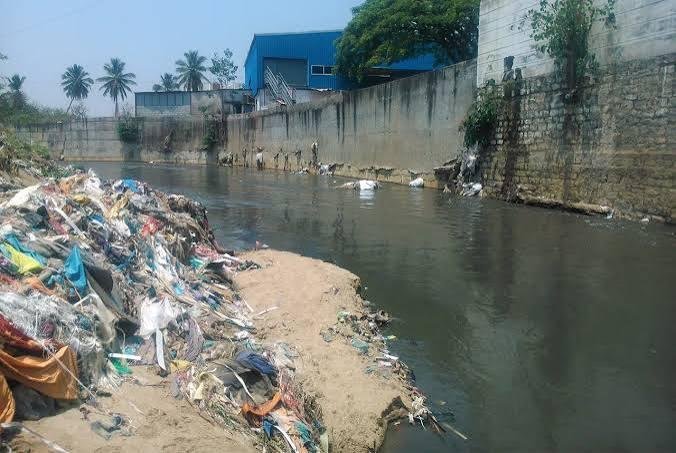
Studies have detected per- and polyfluoroalkyl substances (PFAS), commonly known as “forever chemicals,” in water sources across several Indian states.
What is Water Contamination?
- Water contamination occurs when harmful chemicals, microorganisms or other pollutants enter water and make it unsafe for drinking, agriculture, aquatic life or other uses.
- Major Sources: Industrial discharge, sewage, agricultural chemicals, landfill leachate and poorly treated wastewater can contaminate surface water and groundwater.
- Types: Water contamination may be biological, chemical or physical. PFAS contamination is a form of chemical contamination.
What are PFAS or Forever Chemicals?
- PFAS are a large group of synthetic chemicals containing strong carbon–fluorine bonds that make many of them highly resistant to environmental breakdown.
- Uses: They have been used in water-resistant textiles, non-stick coatings, food packaging, firefighting foams and several industrial products.
- Forever Chemicals: Many PFAS persist in the environment for decades and can accumulate in water, soil and living organisms.
- Long-Standing Concern: PFAS have been used for around six decades, but regulation and monitoring have not kept pace with their widespread use.
- Regulatory Gap: India currently has no specific PFAS limit under its drinking-water standard, although the standard is under revision and the Bureau of Indian Standards (BIS) is examining the issue.
What are the Health and Environmental Concerns associated with PFAS?
- Cancer Risk: In 2025, IARC classified perfluorooctanoic acid (PFOA) as carcinogenic to humans and perfluorooctanesulfonic acid (PFOS) as possibly carcinogenic to humans.
- Potential Health Effects: Exposure to certain PFAS has been associated with adverse health effects, although the actual risk depends on the chemical involved, exposure level and duration.
- Ecological Impact: A February 2026 study found that a mixture of 24 PFAS compounds delayed hatching in zebrafish, reduced offspring growth, accumulated in blood and lowered heart rates.
What is the evidence of PFAS Contamination in India?
- Evidence Across States: A 2025 review in Journal of Hazardous Materials Advances examined studies from Gujarat, Maharashtra, Tamil Nadu and West Bengal, identifying PFAS contamination as a legitimate concern.
- Limited National Data: Overall extent of PFAS contamination in India remains unclear because researchers use different sampling procedures, testing methods & analytical approaches.
- IIT Madras Study (2024): Researchers analysed 14 water samples collected during 2022–23 from groundwater, surface water and four stages of a water-treatment plant.
- Groundwater Contamination: Groundwater near garbage dumps showed the highest PFAS levels among the samples examined.
- Unexpected Treatment Results: PFAS concentrations in treated water were reported to be 5%–103% higher than in raw water in the study, suggesting that treatment may have converted unidentified precursor chemicals into more stable PFAS.
- Limited Testing Coverage: The IIT Madras study tested eight target PFAS compounds, representing only a fraction of the potentially diverse fluorinated chemicals present in water.
Why are existing Water Treatment Systems failing to remove PFAS?
- Limitations of Conventional Treatment: Conventional biological wastewater treatment processes are generally ineffective at removing persistent PFAS.
- Limited Removal Technologies: Adsorption can help capture PFAS, but affordable materials and treatment methods suitable for widespread use remain a challenge.
- Transformation of Precursors: Some PFAS precursor chemicals may transform into more stable PFAS during treatment, making contamination harder to control.
- Incomplete Testing: Testing only a fixed list of known PFAS can miss other compounds and their precursors.
- Advanced Testing Challenges: High-resolution mass spectrometry can help identify previously undetected PFAS, but careful sampling and laboratory procedures are essential to prevent contamination during analysis.
What is India’s Regulatory Response to PFAS Contamination?
- No Specific Manufacturing Ban: The Union Environment Ministry has confirmed that India does not currently have a specific regulation banning PFAS manufacturing.
- Drinking-Water Standards: The existing BIS standard does not specify a PFAS-specific drinking-water limit. The standard is under revision.
- BIS Working Group: The Bureau of Indian Standards has established a Working Group on Emerging Contaminants and Forever Chemicals to examine suitable PFAS limits.
- Standards Under Development: The specific PFAS to be regulated, permissible limits and analytical testing methods are still under consideration.
- National Baseline Data: CSIR–Indian Institute of Toxicology Research (IITR), Lucknow, is participating in a UNEP-funded National Implementation Plan to develop baseline PFAS data and has developed the capability to detect 50 PFAS molecules across multiple classes.
Conclusion
India should adopt a precautionary, science-based approach by developing interim standards, harmonising testing methods, improving treatment technologies and strengthening pollution monitoring. Early action can help protect drinking-water quality without waiting for a complete national assessment of contamination.
Frequently Asked Questions (FAQs)
Q1. What are PFAS or “forever chemicals”?
PFAS are synthetic chemicals with strong carbon–fluorine bonds that make many of them highly resistant to environmental breakdown.
Q2. What are the major uses and health concerns associated with PFAS?
They are used in non-stick coatings, water-resistant textiles, food packaging and firefighting foams. Exposure to certain PFAS is associated with adverse health effects, including cancer risks.
Q3. What evidence of PFAS contamination has been found in India?
Studies have detected PFAS in water samples from several states, including Gujarat, Maharashtra, Tamil Nadu and West Bengal. Groundwater near garbage dumps showed the highest levels in an IIT Madras study.
Q4. Why are conventional water-treatment systems ineffective against PFAS?
Many PFAS resist conventional biological treatment, while some precursor chemicals can transform into more stable PFAS during treatment. Limited testing may also miss unidentified compounds.