Context
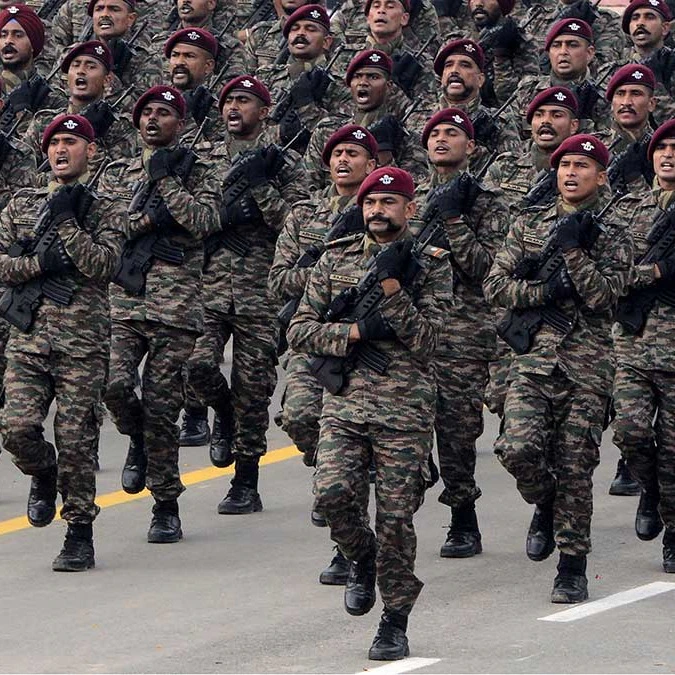
India’s military restructuring remains stalled seven years after the Chief of Defence Staff was tasked with creating unified theatre commands due to inter-service disputes. The Army wants guaranteed air support, the Air Force opposes splitting its limited assets, and the Navy fears maritime priorities will be neglected
Current scenario
- 17 Separate Commands: The Army and Air Force have 7 commands each, while the Navy has 3. Every command report to its own separate service headquarters.
- Mismatched Boundaries: Command borders do not align. A single battle can span across multiple disconnected command areas.
- Divided Planning: Each service draws up its own war plan first, combining them only during later discussions rather than planning together from the start.
- Service Leaders: Commands are led individually by Lieutenant Generals (Army), Air Marshals (Air Force), and Vice Admirals (Navy).
The Proposed Solution
- Unified Theatres: Future plans suggest creating a Northern theatre (China border), a Western theatre (Pakistan border), and a Maritime theatre (Indian Ocean). Some proposals also include an Eastern theatre and a dedicated Air Defence Command.
- Joint Strategy: A theatre command replaces separate plans with a single, joint military strategy from day one.
- 1999 (Kargil Review Committee): First recommended creating a Chief of Defence Staff (CDS) to integrate the military.
- 2016 (Shekatkar Committee): Backed the push for deeper service integration.
- December 2019: The CDS post was officially created to enforce joint operations and build theatre commands.
Existing Joint Models
- Andaman and Nicobar Command (2001): India’s first fully functional tri-service joint command.
- Strategic Forces Command (2003): The joint body managing India’s nuclear weapons.
Significance of Integrated theatre command
- Unified Strategy & Seamless Synergy
- Multi-Domain Warfare: Modern battlefields require simultaneous action across land, air, sea, cyber, and space. An ITC places all three services under a single commander, ensuring they fight as one integrated machine rather than in parallel capsules.
- Eliminating Silos: Instead of the Army, Navy, and Air Force drawing up isolated war plans, it forces a unified, mission-oriented approach to national security.
- Lightning-Fast Decision Making
- Faster Reaction Times: Under the current system, coordinating assets requires bureaucratic clearance through separate service headquarters.
- Nanosecond Responses: In high-tech future conflicts involving drones, missiles, and cyber-attacks, a single theatre commander can deploy assets instantly without systemic delays.
- Smart Resource & Budget Optimization
- Cutting Duplication: Currently, the services maintain separate infrastructure, supply chains, and training facilities. ITCs establish common logistics hubs, freeing up massive defense funds.
- Leaner Military: By sharing assets and rationalizing command structures, the military lowers its overhead costs and achieves superior resource allocation.
- Countering the “Two-Front” Threat
- Matching Adversaries: China reorganized its 2-million-strong military into five integrated theatre commands, with its Western Theatre Command handling the entire Indian border.
- One Border, One Force: Transitioning to ITCs allows India to match this posture by aligning dedicated resources against specific threats—a Northern Command for China and a Western Command for Pakistan.
Steps Already Taken Towards Jointness
- Chief of Defence Staff and the Department of Military Affairs: Both were created in 2019 to bring the services closer and speed up reforms.
- Joint agencies: The Defence Cyber Agency, the Defence Space Agency and the Armed Forces Special Operations Division now bring experts from all three services together.
- Inter-Services Organisations Act, 2023: This law allows commanders of joint organisations to maintain discipline and give orders to personnel of all three services, and its rules were notified in 2025.
- Joint logistics pilots: Joint logistics hubs have been started on a trial basis at Mumbai, Guwahati and Port Blair.
- Tri-service discussions: Seminars and annual events such as the tri-service conference Ran Samwad in Bengaluru give the chiefs a place to discuss the plan.
Concerns of the Three Services
- Air Force Asset Fragmentation: The Indian Air Force (IAF) operates with a limited number of fighter squadrons and strongly opposes dividing these scarce assets among individual regional theatres, arguing it destroys their operational flexibility.
- Army Demands for Air Support: The Army insists on guaranteed, dedicated air assets permanently assigned to its land borders, leading to clashes with the IAF over asset control.
- Navy Land-Centric Bias Fears: The Navy worries that India’s traditionally continental (land-based) focus against China and Pakistan will lead to the Army and Air Force dominating the defence budget, leaving maritime priorities underfunded.
- The “Command Chain” Turf War: Officers from different services resist taking operational orders from a commander belonging to a rival branch, causing friction over who gets to head each specific theatre.
- Dominance of the Army: Critics highlight that the Chief of Defence Staff (CDS) post has traditionally been held by Army generals, fueling anxieties within the Navy and Air Force that their institutional voices are being marginalized.
- Civilian vs. Military Deadlock: Because the military branches cannot resolve these structural disagreements internally, the reform is stalled waiting for the civilian government to enforce a firm top-down solution.
- Deep Cultural Divides: The three services operate with starkly different training doctrines, working styles, and historical customs that make sudden integration highly complex.
- Incompatible Infrastructure: The services currently maintain separate, non-communicating intelligence channels, separate supply logistics, and isolated digital networks rather than unified systems.
- Risk to Active Readiness: Forcing a massive organizational overhaul while facing active, volatile borders with China and Pakistan risks creating temporary operational vulnerabilities if the transition is rushed.
Way Forward for Theatre Commands
- Firm Civilian Guidance: The central government must step in to settle inter-service disputes over roles and resources, mirroring how the U.S. government intervened to reform its own military.
- Mediating Role of the CDS: The Chief of Defence Staff (CDS) must serve as an objective, honest broker to bridge gaps between the branches and sustain momentum.
- National Security Strategy: The government needs a formal, written blueprint outlining India’s security threats and objectives to give the new commands a clear purpose.
- Flexible Air Power: Keep aircraft fleets at existing bases under central control while tasking them dynamically based on regional theatre demands, backed by a senior Air Force officer advising each commander.
- Phased Implementation: Restructure the military gradually using a step-by-step approach, testing readiness at every stage with regular reviews to correct course.
- Customised Indian Model: Design the command architecture tailored specifically to India’s unique geography, resource limitations, and security threats rather than copying the U.S. or UK.
- Shared Infrastructure: Prioritize the development of common communication networks, joint intelligence channels, and unified logistics hubs over simply merging personnel.
- Joint Training Culture: Mandate common war games, shared operational planning, and combined educational courses so officers naturally learn each other’s methodologies
FAQs
Q1. What is a theatre command?
Ans: A theatre command is a joint military command for one region or task, in which forces from the Army, Navy and Air Force work under one commander. This commander plans and runs operations in that area, while the service chiefs focus on training and supplying their forces.
Q2. How is it different from the present system?
Ans: At present, each service has its own commands, and they coordinate with one another by holding discussions. In a theatre command, there is one joint plan and one chain of command from the beginning.
Q3. Why does the Air Force have concerns?
Ans: The Air Force believes that its aircraft are most useful when they can be sent anywhere quickly, and dividing them among theatres could leave some regions short. It suggests keeping control of aircraft central while letting theatres decide how they are used.
Q4. What is the Key West Agreement?
Ans: It was a 1948 agreement in the United States in which the Army, Navy and Air Force agreed on their separate roles after fierce arguments. It showed that civilian leaders must help settle disputes between the services.
Q5. What is jointness?
Ans: Jointness means that the Army, Navy and Air Force plan, train and fight together as one force. It reduces duplication and helps the forces respond quickly.