Context
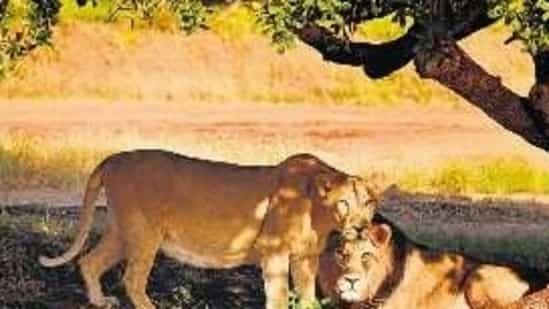
According to a recent study, Asiatic lions have returned to Barda Wildlife Sanctuary in Gujarat after nearly 144 years of absence. Recent reports indicate that the sanctuary is now home to 17 Asiatic lions.
About Barda Wildlife Sanctuary
- Location: Barda Hills, near Porbandar, Gujarat.
- Area: Approximately 192.31 sq. km.
- Established: 1979.
- Local Name: Jam Barda.
- Historical Background: Formerly a private hunting ground for the royal families of Jamnagar and Porbandar.
- Terrain: Predominantly hilly, surrounded by agricultural fields, wastelands and forests.
- Rivers: Bileshvary and Joghri.
- Dams: Khambala and Fodara.
- Tribal Communities: Maldharis, Bharvads, Rabaris and Gadhvis.
Vegetation and Flora
- Forest Types: Southern tropical forest, southern dry mixed deciduous forest and northern tropical thorn forest.
- Floral Diversity: Supports around 650 plant species, including Gorad, Babul, Dhav, Rayan, Ber, Jamun, Amli, Dhudhlo and bamboo.
- Medicinal Plants: The sanctuary’s forested areas support numerous medicinal plant species.
Fauna
- Mammals: Asiatic lions, leopards, wolves, sambar deer, chinkara, hyenas and nilgai.
- Birds: Eagles, owls, crested serpent eagles and partridges, along with other resident and migratory birds.
Significance for Asiatic Lion Conservation
- Gir–Barda Project: Initiated by the Gujarat government in 1979 to develop Barda as a second home for Asiatic lions.
- Satellite Habitat: Barda is an important protected habitat beyond Gir for expanding the lions’ range.
- Conservation Importance: Establishing an additional lion population can help reduce the risks associated with concentrating the species in a single geographical area.
Frequently Asked Questions (FAQs)
Q1. Where is Barda Wildlife Sanctuary located, and when was it established?
Barda Wildlife Sanctuary is located in the Barda Hills near Porbandar, Gujarat. It was established in 1979 and covers approximately 192.31 sq. km.
Q2. What is the significance of the Gir–Barda Project?
Initiated by the Gujarat government in 1979, the project aimed to develop Barda as a second home for Asiatic lions, expanding their range beyond Gir.
Q3. What are the major flora and fauna of Barda Wildlife Sanctuary?
Its flora includes Gorad, Babul, Dhav, Rayan, Ber, Jamun and bamboo. Wildlife includes Asiatic lions, leopards, wolves, sambar deer, chinkara, hyenas and nilgai.
Q4. Why is Barda important for Asiatic lion conservation?
Barda provides an additional protected habitat for Asiatic lions, helping expand their geographical range and reduce the risks of concentrating the population in a single area.