Context
A recent report highlighted conservation concerns for the Himalayan musk deer, noting that recognised Indian zoos reportedly have only two living captive individuals, both males, with no females.
About Alpine Musk Deer
- Scientific Name: Moschus chrysogaster.
- Type: A musk deer species native to Asia.
- Taxonomy: It belongs to the family Moschidae, not Bovidae. Musk deer are not true deer of the family Cervidae.
- Distinctive Feature: Males possess a musk gland or sac used to produce musk, which is commercially valued.
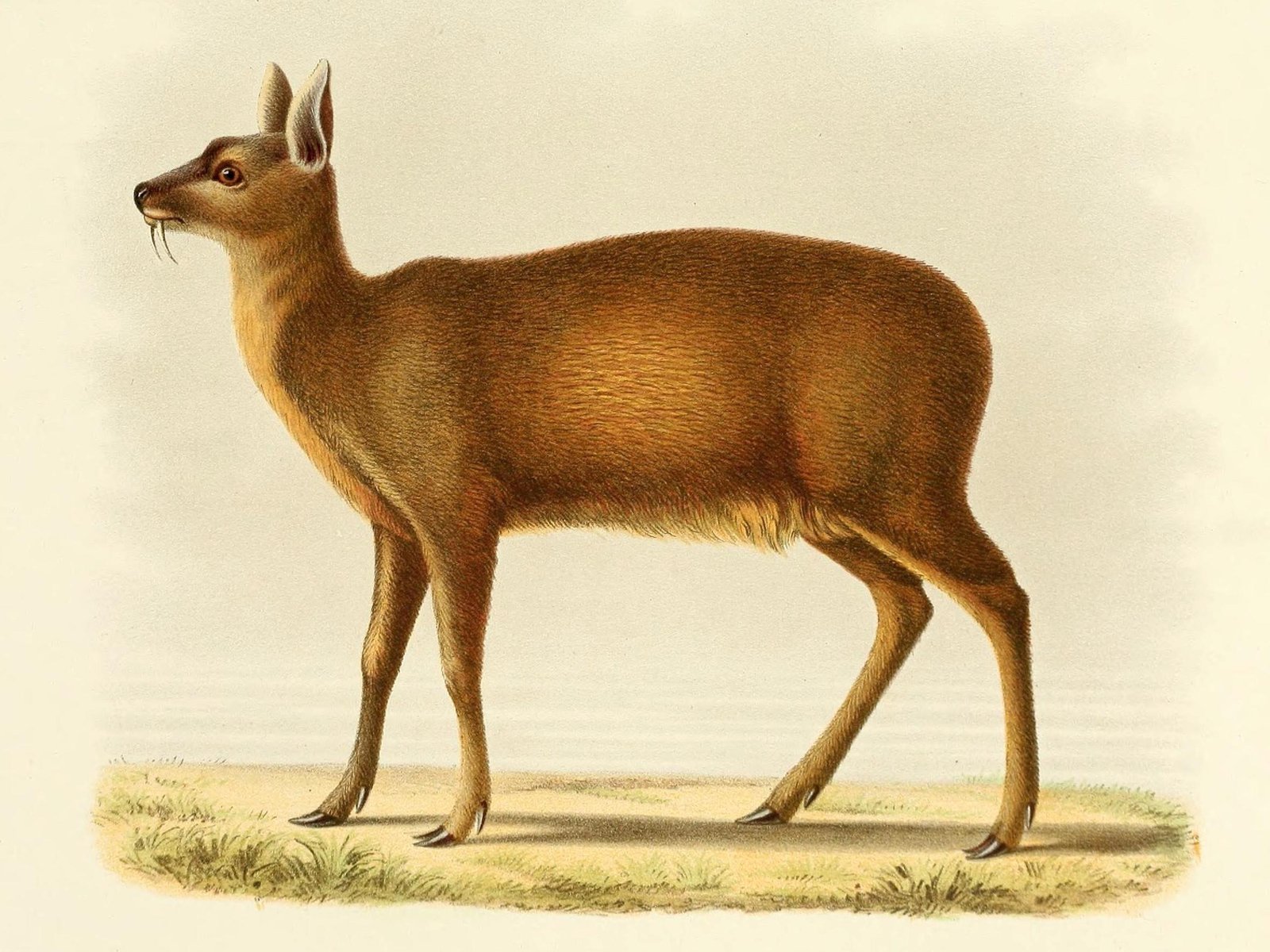
- Canine Teeth: Males have elongated, fang-like upper canine teeth used during competition with other males.
Habitat and Distribution
- Habitat: Coniferous and deciduous forests in mountainous regions.
- Altitude: Generally found at elevations of around 3,000–5,000 metres.
- Distribution: India, Nepal, Bhutan and China.
Characteristics
- Behaviour: Generally solitary and crepuscular, meaning it is most active around dawn and dusk.
- Diet: A ruminant herbivore that browses on forbs, grasses, mosses, lichens, shoots, leaves and shrub twigs.
Major Threats
- Poaching: Hunted for musk, which is used in perfumes and some cosmetic products.
- Habitat Loss: Degradation and fragmentation of mountain forests threaten its survival.
Conservation Status
- IUCN Red List: Endangered (EN).
- CITES: Appendix I.
- Wild Life (Protection) Act, 1972: Schedule I.
Frequently Asked Questions (FAQs)
Q1. What is the Alpine Musk Deer?
The Alpine Musk Deer (Moschus chrysogaster) is an Asian musk deer belonging to the family Moschidae. Unlike true deer, it does not belong to the family Cervidae.
Q2. What are the distinctive features of the Alpine Musk Deer?
Males possess a musk gland used to produce commercially valued musk and elongated, fang-like upper canine teeth used during competition with other males.
Q3. Where is the Alpine Musk Deer found, and what is its habitat?
It occurs in India, Nepal, Bhutan and China, inhabiting mountainous coniferous and deciduous forests at elevations of approximately 3,000–5,000 metres.
Q4. What is the conservation status of the Alpine Musk Deer?
It is classified as Endangered (EN) on the IUCN Red List, listed in Appendix I of CITES and protected under Schedule I of the Wild Life (Protection) Act, 1972.