Context
- In October 2026, the United Nations Environment Programme (UNEP) highlighted changes in the breeding behaviour and nesting locations of the Slaty Egret as an indicator of changing wetland ecosystems in Botswana’s Okavango Delta.
- Researchers observed that some traditional nesting sites had disappeared, while new nesting sites emerged elsewhere, possibly reflecting changes in flooding, vegetation and habitat conditions.
About Slaty Egret
- Scientific Name: Egretta vinaceigula
- Family: Ardeidae (herons and egrets).
- Type: Small, shy waterbird.
- Distribution: Mainly found in south-central Africa, particularly Botswana and Zambia.
- Key Habitat: Seasonal wetlands, marshes, floodplains and shallow waters.
Physical Features
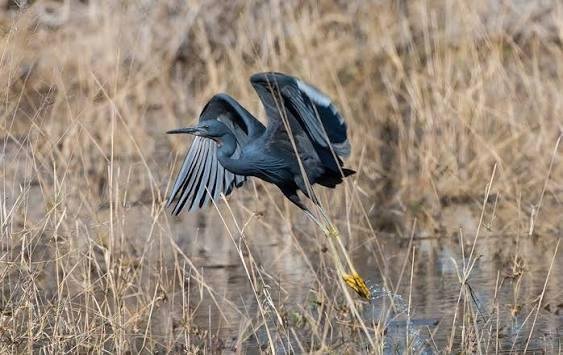
- Appearance: Has slate-grey or bluish-grey feathers, a slender body, long neck and long legs.
- Distinctive Features: It has a dark bill, greenish-yellow legs and a reddish-brown patch on the front of its neck.
- Feeding Behaviour: Catches fish and other small aquatic animals in shallow water.
Habitat and Breeding Behaviour
- Preferred Habitat: Depends on wetlands with suitable water levels and vegetation for feeding and nesting.
- Nesting: Usually breeds in small colonies on islands or in dense vegetation surrounded by water, which helps reduce disturbance by predators.
- Seasonal Behaviour: Breeding is closely linked to flooding patterns in the Okavango Delta, which is influenced by rainfall in the Angolan highlands.
Ecological Significance
- Indicator of ecosystem health: Changes in its distribution and nesting locations can indicate changes in water availability, vegetation and habitat conditions.
- Wetland biodiversity: Forms part of the food web by feeding on fish and other aquatic organisms.
- Conservation relevance: Monitoring its breeding sites helps researchers understand the effects of environmental changes on wetlands.
Threats and Conservation Status
- Major Threats: Wetland degradation, water regulation and abstraction, agricultural expansion, fires, human disturbance and invasive species.
- IUCN Red List: Vulnerable (VU).
- Population: The latest IUCN assessment estimates approximately 2,500–3,000 mature individuals globally, with a declining population trend.
Frequently Asked Questions (FAQs)
Q1. What is the Slaty Egret?
The Slaty Egret (Egretta vinaceigula) is a small, shy waterbird belonging to the family Ardeidae, which includes herons and egrets. It is mainly found in south-central Africa, particularly Botswana and Zambia.
Q2. Why was the Slaty Egret in the news?
In October 2026, the United Nations Environment Programme (UNEP) highlighted changes in its breeding behaviour and nesting locations in Botswana’s Okavango Delta, indicating possible changes in wetland conditions.
Q3. What are the habitat and nesting habits of the Slaty Egret?
It inhabits seasonal wetlands, marshes, floodplains and shallow waters. It usually breeds in small colonies on islands or in dense vegetation surrounded by water. Its breeding is closely linked to flooding patterns influenced by rainfall in the Angolan highlands.