Context
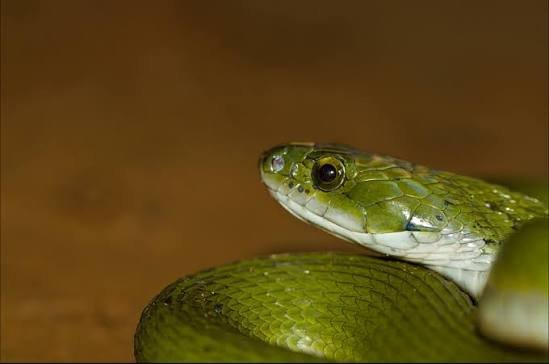
- A Green Keelback snake was recently spotted near Gangawadi village, on the fringes of Biligiri Rangana Betta (BR Hills) in Chamarajanagar district, Karnataka.
- The sighting highlights the rich reptile diversity of the region, which forms an important link between the Western Ghats and the Eastern Ghats.
About Green Keelback
- Scientific Name: Macropisthodon plumbicolor.
- Nature: Non-venomous, semi-aquatic snake.
- Distribution: Found in India, Sri Lanka and parts of South and Southeast Asia.
- Habitat: Prefers moist vegetation near ponds, rivers, streams, marshes and rice fields.
Physical Features
- Size: Generally 60 cm to 1 metre long; some individuals may reach approximately 1.2 metres.
- Colour: Usually green or olive-green, with a yellowish or whitish underside.
- Keel-shaped scales: Its scales have raised ridges that give the body a rough texture; this feature gives the snake its name.
- Defensive behaviour: When threatened, it may flatten its neck, resembling a cobra’s hood. However, it is non-venomous.
Ecological Significance
- Food chain: Feeds mainly on frogs and toads, helping regulate their populations.
- Ecosystem health: Forms part of the food web in moist forest and wetland habitats.
- Biligiri Rangana Betta: The surrounding landscape is important for biodiversity and wildlife movement between the Western and Eastern Ghats.
Frequently Asked Questions (FAQs)
Q1. What is the Green Keelback?
The Green Keelback (Macropisthodon plumbicolor) is a non-venomous, semi-aquatic snake found in India, Sri Lanka and parts of South and Southeast Asia.
Q2. What are the distinctive physical features of the Green Keelback?
It is usually green or olive-green, with a yellowish or whitish underside. Its scales have raised ridges called keels, giving its body a rough texture. When threatened, it may flatten its neck to resemble a cobra’s hood.
Q3. What is the habitat and diet of the Green Keelback?
It prefers moist vegetation near ponds, rivers, streams, marshes and rice fields. It feeds mainly on frogs and toads, helping regulate their populations.
Q4. What is the ecological significance of the Green Keelback?
It contributes to food-web balance in forest and wetland habitats. Its presence in the BR Hills landscape also highlights the biodiversity importance of the region connecting the Western and Eastern Ghats.