Context
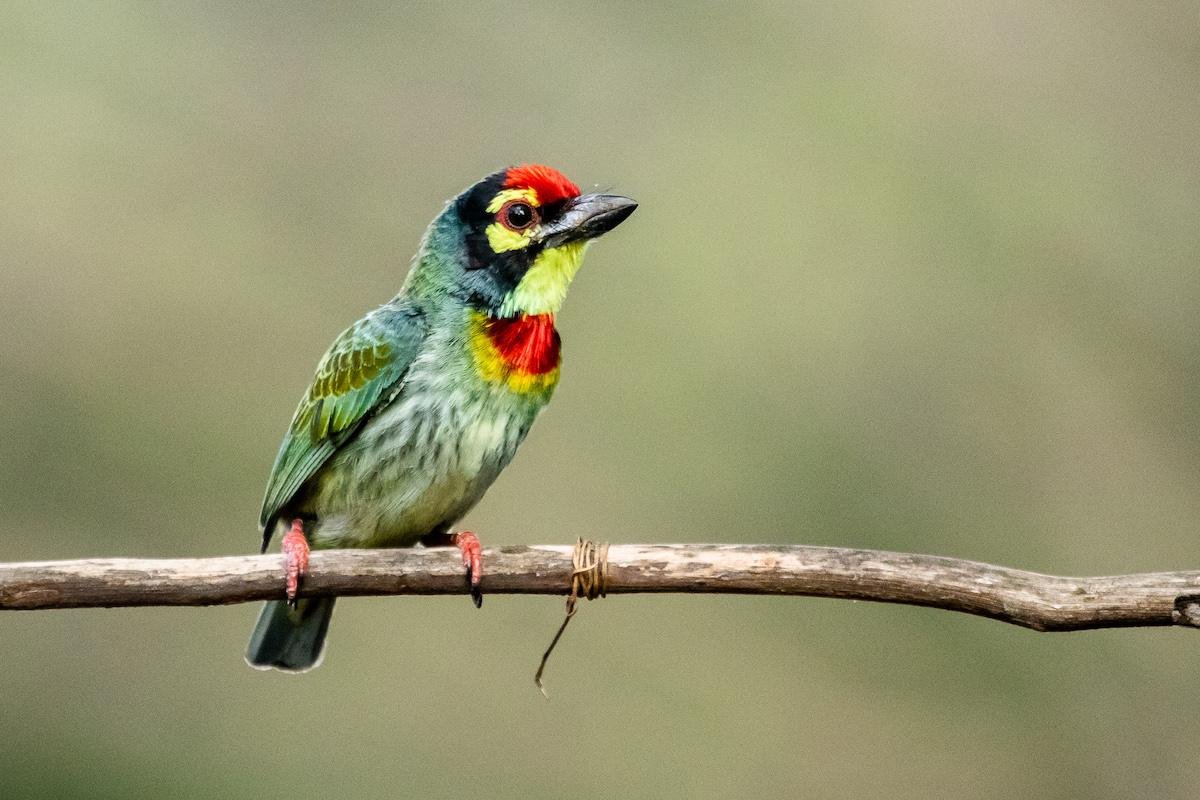
- A rare cream-yellow colour variant of the Coppersmith Barbet was photographed on the outskirts of Hyderabad, Telangana, in September 2026.
- The bird’s unusual colouration is believed to result from leucism leading to xanthochroism, a condition affecting normal feather pigmentation.
- It is not considered an albino bird because its eyes remained dark.
Leucism
Xanthochroism
|
About Coppersmith Barbet
- Scientific Name: Psilopogon haemacephalus
- Family: Megalaimidae (Asian barbets).
- Other Name: Crimson-breasted Barbet.
- It is a small, colourful bird known for its repetitive call, which resembles the sound of a coppersmith striking metal with a hammer.
Habitat and Distribution
- Distribution: Found across the Indian subcontinent and parts of Southeast Asia.
- Habitat: Gardens, groves, parks and open woodlands.
- Nature: It is a resident bird, meaning it generally stays in the same region throughout the year rather than undertaking long-distance seasonal migration.
- Nesting: It excavates holes in tree trunks to build its nest.
Physical Features
- Size: Approximately 17 cm long.
- Colour: Usually has grass-green upperparts and yellowish-green underparts with darker streaks.
- Distinctive markings: A red forehead and throat patch, a yellow face bordered by black markings, a stout black bill and pinkish-red legs.
- Call: Produces a regular, repetitive “tuk-tuk-tuk” sound.
Conservation Status
- IUCN Red List: Least Concern (LC).
- Ecological role: Feeds mainly on fruits and insects. By consuming fruits and dispersing seeds, it contributes to the regeneration of vegetation.
Frequently Asked Questions (FAQs)
Q1. What is the Coppersmith Barbet?
The Coppersmith Barbet (Psilopogon haemacephalus), also called the Crimson-breasted Barbet, is a small Asian bird belonging to the family Megalaimidae.
Q2. Where is the Coppersmith Barbet found, and what are its nesting habits?
It is found across the Indian subcontinent and parts of Southeast Asia. It inhabits gardens, parks, groves and open woodlands. It is a resident bird that excavates holes in tree trunks for nesting.
Q3. What is the conservation status and ecological role of the Coppersmith Barbet?
It is classified as Least Concern (LC) on the IUCN Red List. It feeds mainly on fruits and insects and helps regenerate vegetation by dispersing seeds. Its repetitive “tuk-tuk-tuk” call resembles a coppersmith striking metal with a hammer.