Context
Satellite observations of Masaya Volcano reveal magma movement between underground reservoirs, offering insights to improve volcanic monitoring and assess potential eruption hazards.
About Masaya Volcano
- Location: Nicaragua, Central America, about 20 km southeast of Managua, the capital of Nicaragua.
- Type: Active basaltic, shield-like caldera volcano; basaltic magma has low silica content and flows relatively easily.
- Tectonic Setting: Part of the Central American Volcanic Arc, formed by the subduction of the Cocos Plate beneath the Caribbean Plate.
- Geological Feature: The El Ventarrón caldera (6 × 11.5 km) formed through major explosive eruptions over the past 6,000 years.
Key Features
- Crater System: The caldera contains multiple collapse craters and cinder cones. The active Santiago crater formed between 1850 and 1853.
- Volcanic Activity: Eruptions range from Strombolian (intermittent explosions) to Vulcanian (short, explosive eruptions producing ash).
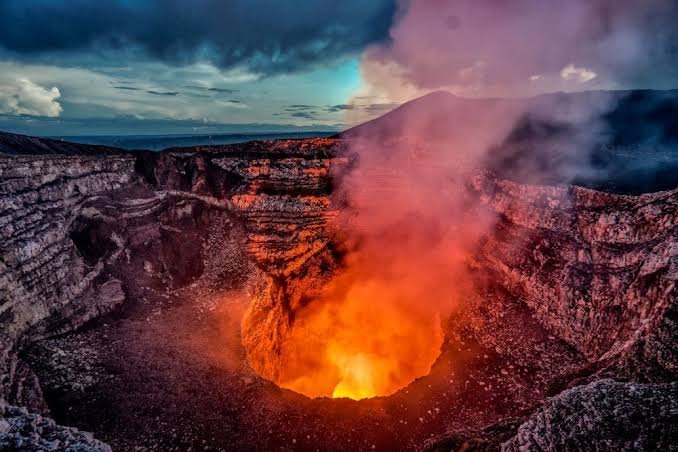
- Lava and Gas: Santiago crater has a convecting lava lake, where molten lava circulates, and releases volcanic gases continuously.
- Sulfur Dioxide (SO₂): Emissions from Santiago crater reached an estimated 500,000 tonnes per year in 1981.
- National Park: Designated Nicaragua’s first national park in 1979, it is officially known as Masaya Volcano National Park (Parque Nacional Volcán Masaya).
FAQs
Q1. Where is Masaya Volcano located?
Ans. It is located in Nicaragua, Central America, approximately 20 km southeast of Managua.
Q2. Which tectonic process is responsible for the Central American Volcanic Arc?
Ans. It is formed by the subduction of the Cocos Plate beneath the Caribbean Plate.
Q3. What is a volcanic caldera?
Ans. A caldera is a large depression formed when a volcano collapses after a major eruption or the withdrawal of magma from beneath it.
Q4. What are Strombolian and Vulcanian eruptions?
Ans. Strombolian eruptions involve intermittent explosions that eject lava fragments, while Vulcanian eruptions are generally more explosive and produce ash and fragmented volcanic material.