Context
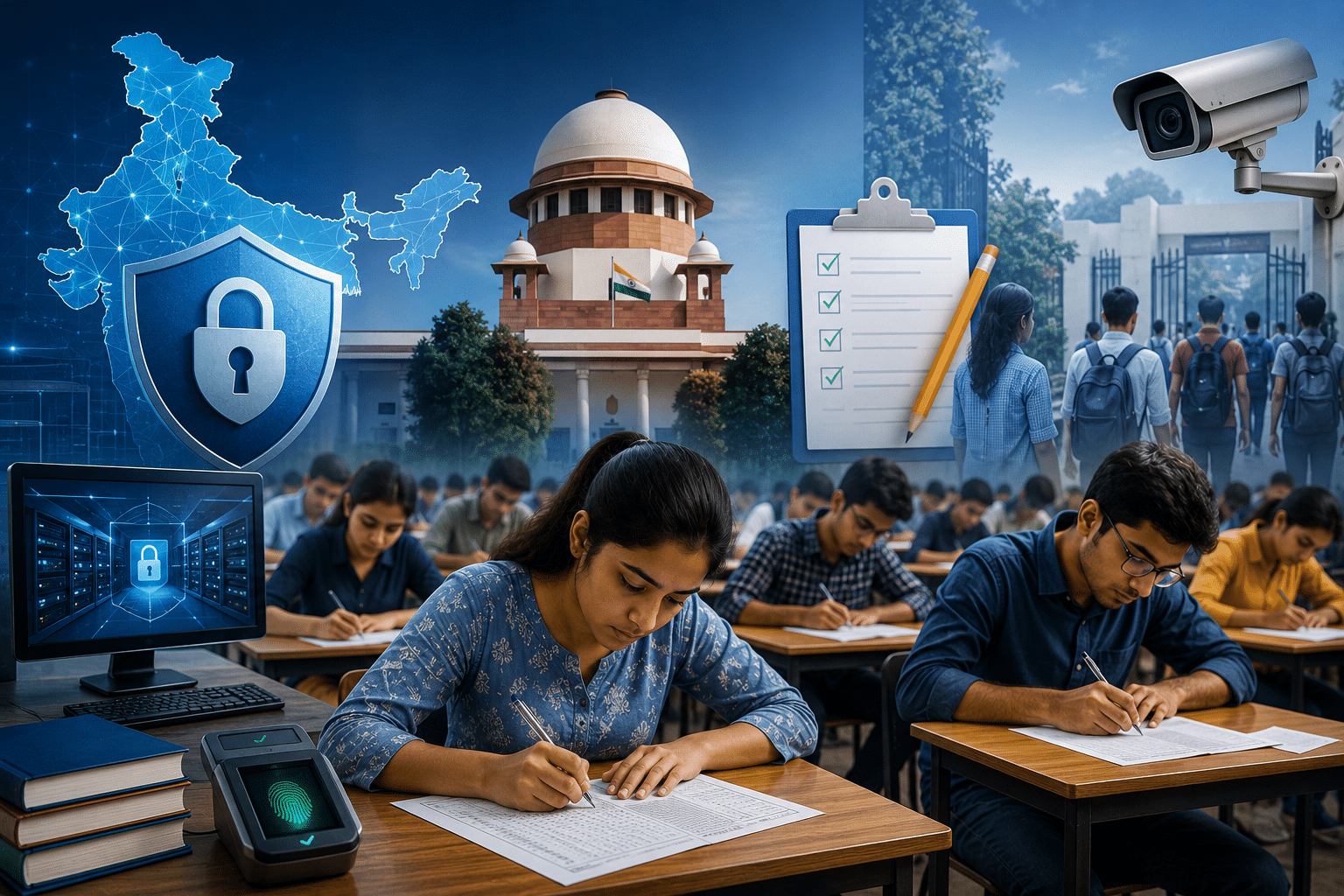
Nandan Nilekani, Chairman of the Government’s High-Powered Task Force on examination reforms, recently proposed technology-driven measures to reduce paper leaks and improve examination integrity. His proposals include large digital question banks, last-minute question-paper generation, AI-assisted selection and wider computer-based testing.
High-Powered Task Force on Examination Reforms
- The Government constituted the High-Powered Task Force (HPTF) in July 2026 under the chairmanship of Nandan Nilekani.
- It is examining reforms related to the conduct, security, design and governance of public examinations.
- Its mandate includes institutional processes, examination security, technology, infrastructure, accessibility and student well-being.
- Nilekani’s technological suggestions are part of this ongoing reform process and should not be treated as an already implemented nationwide system.
Proposed Technology-Based Examination Model
- Digital question bank: Create a large pool of validated questions instead of depending on a single pre-set paper.
- Last-minute paper generation: Assemble the question paper close to examination time, reducing the period during which it can be leaked.
- AI-assisted selection: Questions can be classified according to topic, syllabus and difficulty level and selected through secure systems.
- Computer-based testing: Wider CBT can reduce physical printing, storage, transportation and handling of confidential papers.
- Rapid replacement: A large validated question bank could allow compromised questions or sets to be replaced before the examination.
Risks and Limitations
- Cybersecurity threats: Digital databases, algorithms and delivery systems may themselves be hacked.
- Insider misuse: Individuals with authorised access may misuse credentials or confidential information.
- Question quality: AI-assisted or AI-generated questions require rigorous human validation for accuracy, fairness and syllabus alignment.
- Digital divide: Nationwide CBT requires reliable infrastructure, secure centres, connectivity and technical support.
- Human corruption: Technology cannot eliminate bribery, collusion, organised malpractice or weak accountability.
Institutional and Governance Reforms
- Accountability: Examination authorities must clearly identify responsibility for security failures.
- Independent oversight: External audits and transparent monitoring can strengthen institutional credibility.
- Standard Operating Procedures: Clearly defined SOPs are needed for paper generation, storage, digital access and examination delivery.
- Student protection: Candidates should receive timely information regarding cancellations, re-examinations and remedial measures.
- Transparency: Examination agencies must communicate decisions clearly to students and maintain confidence in the process.
Legal Safeguards
- The Public Examinations (Prevention of Unfair Means) Act, 2024 provides a specific legal framework against paper leaks, organised cheating and examination fraud.
- The 2026 amendment legislation strengthens enforcement through measures such as faster investigation, Special Fast Track Courts, Special Public Prosecutors, time-bound appeals and stricter penalties.
- Legal deterrence complements technological reform by targeting the human and organised networks behind examination malpractice.
FAQs
Q1. Who heads the High-Powered Task Force on examination reforms?
Nandan Nilekani, co-founder of Infosys.
Q2. Why is last-minute question-paper generation being proposed?
To reduce the time during which a confidential paper remains vulnerable to theft or leakage.
Q3. Can AI completely prevent paper leaks?
No. Cyberattacks, insider misuse and human collusion can still compromise the system.
Q4. How can computer-based testing improve examination security?
It can reduce dependence on physical printing, transportation and storage of question papers.
Q5. Which law addresses unfair means in public examinations?
The Public Examinations (Prevention of Unfair Means) Act, 2024, further strengthened through 2026 amendment legislation.