Context
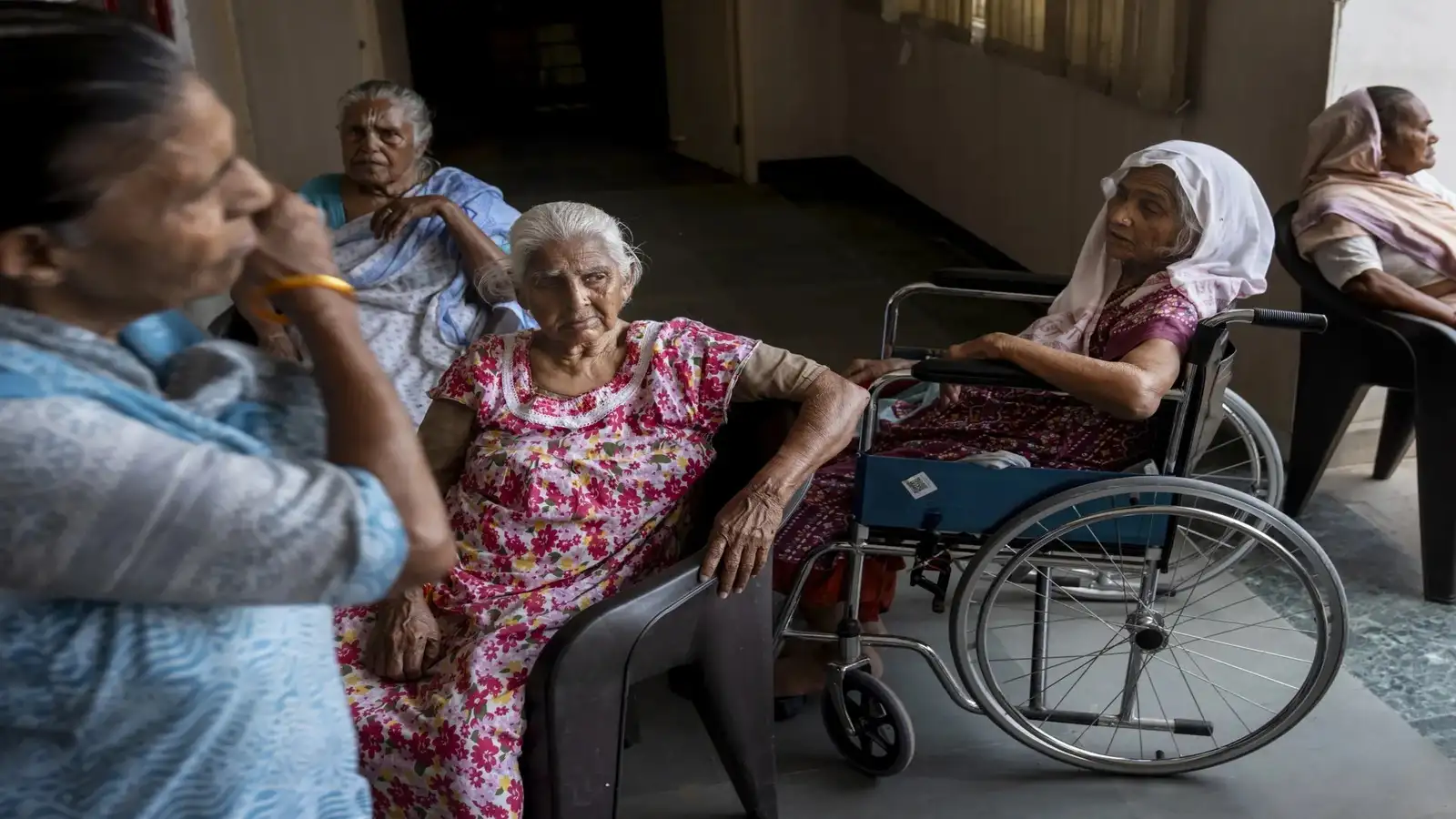
- India’s demographic transition is creating a growing demand for elderly and long-term care.
- The Union Budget 2026–27 and NITI Aayog’s report Reimagining Care: Strategies for Empowering Caregivers in Viksit Bharat@2047 have renewed focus on developing a formal, skilled and inclusive caregiving ecosystem.
India’s Ageing Population
- India had around 149 million people aged 60 years and above in 2022, nearly 10.5% of the population.
- By 2050, this population is projected to reach about 347 million, or 20.8% of the population.
- Increasing longevity is likely to raise the prevalence of chronic diseases, disability and age-related care needs.
- Smaller families, migration and nuclear households are also reducing the availability of traditional family-based support.
Expanding Nature of Elderly Care
- Elderly care extends beyond medical treatment to include daily living assistance and long-term support.
- It includes mobility assistance, nutrition, medicine management and health monitoring.
- Emergency response and rehabilitation become important for elderly persons with declining physical capacity.
- Palliative and emotional care are increasingly necessary for chronic illness, loneliness and end-of-life needs.
- Ageing therefore requires an integrated approach combining healthcare, personal assistance and psychosocial support.
Gender and Informal Care Burden
- Much of India’s caregiving continues to be provided informally within households, often without wages or formal recognition.
- Women perform a disproportionately large share of such work, creating time poverty and employment constraints.
- According to the Time Use Survey 2024, women participating in unpaid domestic services spent around 289 minutes per day, compared with 88 minutes for men.
- In unpaid caregiving services, women spent about 137 minutes per day, compared with 75 minutes for men.
- This unpaid responsibility can reduce women’s labour-force participation, financial independence and career progression.
Government Response and Caregiver Skilling
- The Union Budget 2026–27 proposes strengthening geriatric and allied care services.
- It provides for NSQF-aligned training of about 1.5 lakh multiskilled caregivers in the coming year.
- Training is expected to include core caregiving along with wellness support and operation of medical and assistive devices.
- Community-based models such as Kudumbashree-linked care initiatives demonstrate the potential of decentralised caregiver networks.
- Formal skilling can convert caregiving into a recognised employment pathway while improving quality of care.
Major Challenges
- Scale gap: Current training capacity remains inadequate compared with the projected rise in elderly care demand.
- Lack of standardisation: Training, certification and service quality vary across institutions and regions.
- Affordability: Professional home-care services may remain inaccessible to low-income and rural households.
- Worker vulnerability: Caregivers often face low wages, irregular employment and limited career progression.
- Fragmented governance: Caregiving cuts across health, social justice, disability, labour and skilling, creating coordination challenges.
- Gender imbalance: Continued dependence on unpaid female care reinforces time poverty and economic inequality.
Way Forward
- National caregiving framework: Develop a coordinated institutional framework for standards, regulation and quality assurance.
- National Caregiver Council: Create an institutional mechanism for standardised curricula, certification and professional benchmarks.
- National Caregiver Registry: Build a verified database of trained caregivers to improve trust, placement and monitoring.
- Scale up training: Expand NSQF-aligned programmes, refresher courses and community-based models to meet future demand.
- Support family caregivers: Provide basic training, counselling, respite services and recognition for unpaid caregivers.
- Improve worker welfare: Ensure fair wages, social security, safe working conditions and clear career progression.
- Affordable community care: Expand services in rural and underserved areas through public support and decentralised care networks.
India therefore needs to transform caregiving from an informal household responsibility into a skilled, recognised and gender-equitable care economy, while ensuring dignified and affordable care for its ageing population.
FAQs
Q1. How large could India’s elderly population become by 2050?
Around 347 million people, or 20.8% of the population.
Q2. What does elderly caregiving include?
It includes personal assistance, health monitoring, rehabilitation, emotional support and palliative care.
Q3. Why is caregiving a gender issue in India?
Women perform a disproportionately high share of unpaid domestic and care work.
Q4. What did Union Budget 2026–27 announce for caregivers?
It proposed NSQF-aligned training for about 1.5 lakh multiskilled caregivers.
Q5. What major reforms has NITI Aayog suggested?
A national caregiving framework, National Caregiver Council, standardised certification and a National Caregiver Registry.