Context
The Union Cabinet approved the Mission for Aatmanirbharta in Pulses with an outlay of ₹11,440 crore to increase domestic production, reduce import dependence and improve farmers’ incomes.
About the Mission
- Type: Centrally Sponsored Scheme.
- Duration: Six years, from 2025–26 to 2030–31.
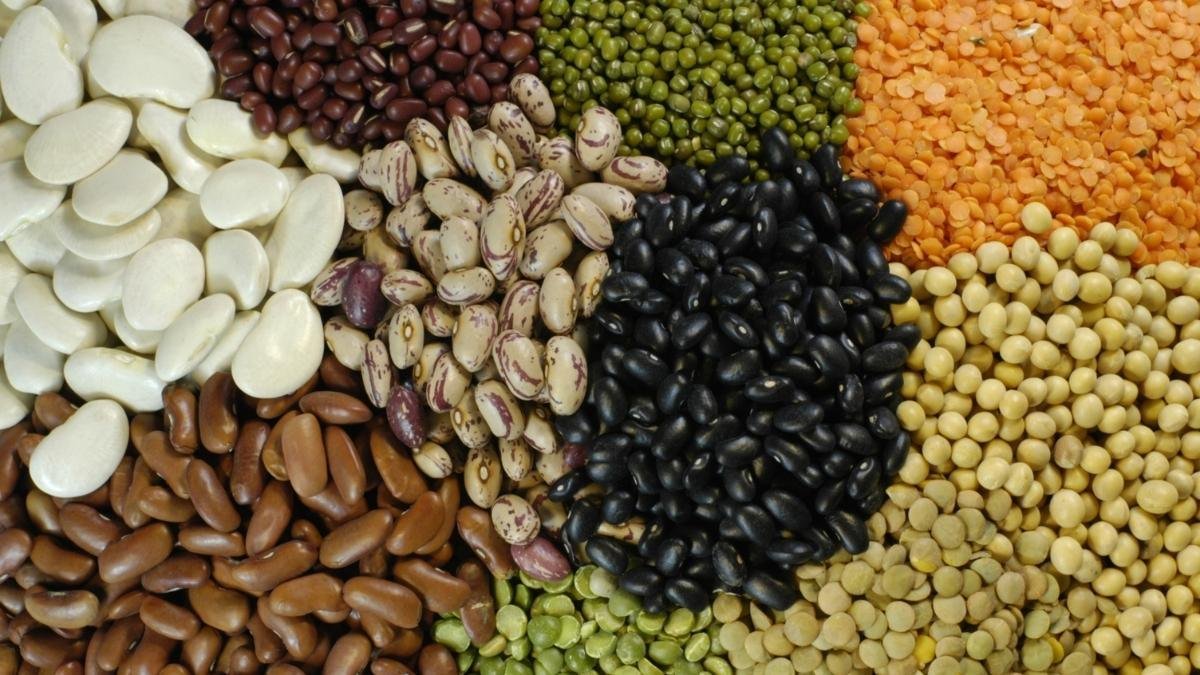
- Focus crops: Tur (pigeon pea), Urad (black gram) and Masoor (lentil).
- Production targets by 2030–31:
- Production: 350 lakh tonnes.
- Cultivation Area: 310 lakh hectares.
- Average Yield: Increase from 881 kg/ha to 1,130 kg/ha.
- Area expansion: Add 35 lakh hectares under pulses by using rice fallows and other suitable lands, along with intercropping and crop diversification.
Key Features
- Quality Seeds: Distribution of 126 lakh quintals of certified seeds and 88 lakh free seed kits. Research will focus on high-yielding, pest-resistant and climate-resilient varieties.
- Seed Planning and Tracking: States will prepare five-year seed production plans, while the Indian Council of Agricultural Research (ICAR) will oversee breeder seed production. The SATHI Portal (Seed Authentication, Traceability & Holistic Inventory) will track seeds through the supply chain.
- Farmer Training: Training and field demonstrations will promote modern farming practices, balanced fertiliser use and improved crop management.
- Processing Units: Establishment of 1,000 processing and packaging units, with subsidies of up to ₹25 lakh per unit, to reduce post-harvest losses and improve value addition.
- Assured Procurement: The National Agricultural Cooperative Marketing Federation of India (NAFED) and the National Cooperative Consumers’ Federation (NCCF) will undertake 100% procurement of Tur, Urad and Masoor under the Price Support Scheme (PSS) of Pradhan Mantri Annadata Aay Sanrakshan Abhiyan (PM-AASHA) for four years from registered farmers who enter into agreements in participating states.
- Cluster-Based Approach: Interventions will be tailored to local farming conditions to improve productivity and expand cultivation.
- Institutional Convergence: The Mission incorporates the pulses component of the erstwhile National Food Security and Nutrition Mission (NFSNM).
Significance
- Nutritional security: Pulses provide protein and help address protein deficiency in diets.
- Economic benefits: Reduces import dependence and foreign exchange outflow while supporting farmers’ incomes.
- Soil Health: Pulses fix atmospheric nitrogen through root-associated bacteria, helping improve soil fertility and reducing dependence on nitrogen fertilisers.
- Sustainable agriculture: Encourages crop diversification, productive use of fallow land and climate-resilient farming.
- Rural development: Processing facilities can generate employment and strengthen agricultural value chains.
FAQs
Q1. What is the duration and financial outlay of the Mission?
Ans. It will run from 2025–26 to 2030–31, with a total outlay of ₹11,440 crore.
Q2. Which pulses receive special attention under the Mission?
Ans. Tur, Urad and Masoor.
Q3. What role does the SATHI Portal play?
Ans. It tracks seeds through the supply chain, supporting seed authentication, traceability and inventory management.
Q4. What is the Price Support Scheme (PSS)?
Ans. Under PM-AASHA, the government procures notified crops from farmers at the Minimum Support Price (MSP), subject to scheme conditions.
Q5. What role do NAFED and NCCF play in the Mission?
Ans. They will procure Tur, Urad and Masoor under the Price Support Scheme for four years from eligible registered farmers in participating states.