Context
- A recent study supported by FSII and NSAI reported a significant spread of unauthorised GM cotton in India.
- The issue highlights the tension between farmer demand for cost-saving technology and India’s biosafety-regulatory framework.
GM Crops and India’s Regulatory Position
- Genetically Modified (GM) crops contain deliberately altered genetic material to introduce traits such as insect resistance, herbicide tolerance or stress tolerance.
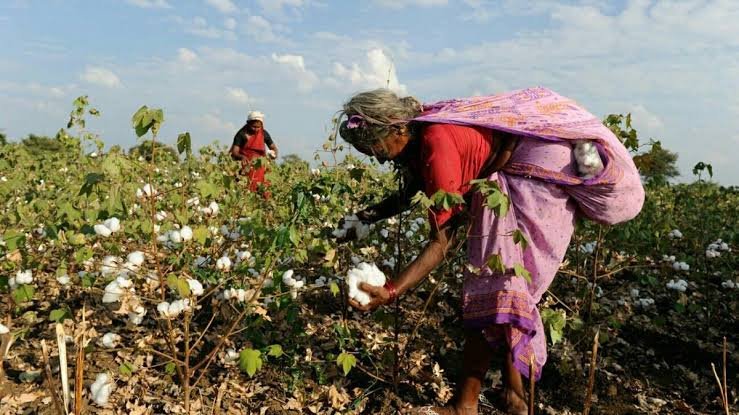
- In India, Bt cotton is the only GM crop commercially approved for cultivation.
- Bt cotton contains genes such as cry1Ac and cry2Ab derived from Bacillus thuringiensis, providing protection against specific bollworm pests.
- GM organisms are regulated under the Environment (Protection) Act, 1986 and Rules, 1989.
- The GEAC under MoEFCC evaluates proposals for environmental release, while the RCGM under DBT oversees research-related biosafety.
Why HTBt Cotton Is Illegal
- HTBt cotton combines Bt-based insect resistance with an additional herbicide-tolerance trait.
- A commonly detected trait is the cp4-epsps gene, which enables the cotton plant to tolerate glyphosate.
- Farmers can therefore spray glyphosate to kill weeds while the genetically modified cotton survives.
- Such herbicide-tolerant GM cotton has not received approval for commercial cultivation in India.
- Its unauthorised cultivation also bypasses formal biosafety assessment, seed-quality regulation and regulatory oversight.
Why Farmers Are Adopting It
- Labour shortage: Manual weeding requires significant labour at critical stages of cultivation.
- Cost advantage: Herbicide-based weed control can be cheaper than repeated manual weeding.
- Convenience: Herbicide tolerance reduces the time and labour required for weed management.
- Pest pressure: Farmers may also seek newer unapproved traits offering broader insect protection.
- Its spread therefore reflects a mismatch between farm-level economic pressures and availability of legally approved technological alternatives.
Policy Concerns
- Biosafety uncertainty: Unapproved traits bypass formal environmental and safety assessment.
- Herbicide resistance: Repeated glyphosate use can encourage the emergence of herbicide-resistant weeds.
- Chemical dependence: Herbicide-tolerant cultivation may increase dependence on a narrow weed-control strategy.
- Seed-quality risk: Illegal seed markets can expose farmers to poor-quality or mislabelled seeds.
- Regulatory gap: Continued unauthorised cultivation points to weaknesses in seed surveillance and enforcement.
Way Forward
- Strengthen seed traceability, field surveillance and action against illegal seed networks.
- Ensure faster, transparent and science-based evaluation of new GM traits without weakening biosafety standards.
- Promote integrated weed management to reduce dependence on a single herbicide.
- Expand affordable farm mechanisation to reduce the labour-cost advantage of illegal HTBt cotton.
- Address both farmer economic needs and biosafety concerns through consultation, awareness and credible legal alternatives.
FAQs
Q1. Which GM crop is commercially approved for cultivation in India?
Bt cotton.
Q2. What does HT in HTBt cotton mean?
Herbicide Tolerant.
Q3. Which gene is commonly associated with glyphosate tolerance in HTBt cotton?
The cp4-epsps gene.
Q4. Which body evaluates the environmental release of GM organisms in India?
The Genetic Engineering Appraisal Committee (GEAC) under MoEFCC.
Q5. Why is HTBt cotton unauthorised in India?
Because its herbicide-tolerance trait has not received approval for commercial cultivation.