Context
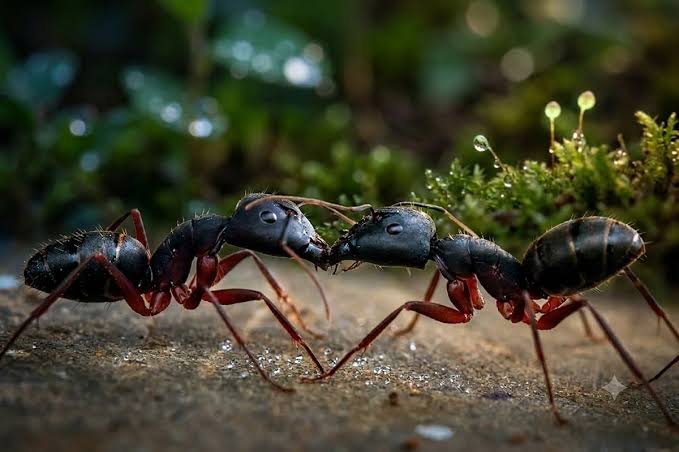
- A 2026 study in Science Advances linked increased activity of transposable elements (TEs) with the rapid diversification of ants after the Cretaceous–Paleogene extinction about 66 million years ago.
Meaning and Types
- Jumping genes, or transposable elements (TEs), are DNA sequences that can move or copy themselves to new locations within a genome.
- They occur in both prokaryotes and eukaryotes and constitute a significant part of many genomes.
- Nearly half of the human genome is derived from transposable elements.
- Retrotransposons generally move through a copy-and-paste mechanism using an RNA intermediate.
- DNA transposons generally move through a cut-and-paste mechanism.
- They may also be autonomous or non-autonomous, depending on whether they carry the machinery needed for movement.
Role in Evolution
- Transposons create mutations, genome rearrangements and new regulatory sequences, increasing genetic variation.
- The ant study found bursts of TE activity in ancestors of several species-rich ant groups.
- Their activity was associated with expansion of odorant-receptor gene families, important for communication, navigation and colony behaviour.
- Such changes may have helped ants exploit new ecological opportunities after the extinction of dinosaurs.
- Thus, TEs can act as drivers of evolutionary innovation, although they were not necessarily the sole cause of ant diversification.
Risks and Regulation
- Transposons may disrupt genes or regulatory regions when they insert at harmful locations.
- Excessive activity can contribute to genomic instability, inherited disorders and some cancers.
- Organisms therefore suppress them through DNA methylation, histone modification and heterochromatin formation.
- Small-RNA pathways such as piRNAs and siRNAs also help silence transposable elements.
- TEs therefore have a dual role: they can damage genome stability while also generating useful genetic diversity.
Scientific Uses
- Transposons are used in mutagenesis to study gene functions.
- They support transgenesis, where new genetic material is introduced into organisms.
- Engineered transposons are being explored as tools for gene delivery and gene therapy.
- Their study also helps scientists understand genome evolution and gene regulation.
FAQs
Q1. What are jumping genes?
They are DNA sequences capable of moving or copying themselves within a genome.
Q2. What are the two major types of transposons?
Retrotransposons and DNA transposons.
Q3. How much of the human genome is derived from transposable elements?
Approximately half of the human genome.
Q4. How may jumping genes have influenced ant evolution?
Their activity was associated with genetic changes and diversification of major ant lineages.
Q5. How do organisms control harmful transposon activity?
Through mechanisms such as DNA methylation, heterochromatin formation and small-RNA-mediated silencing.