Context
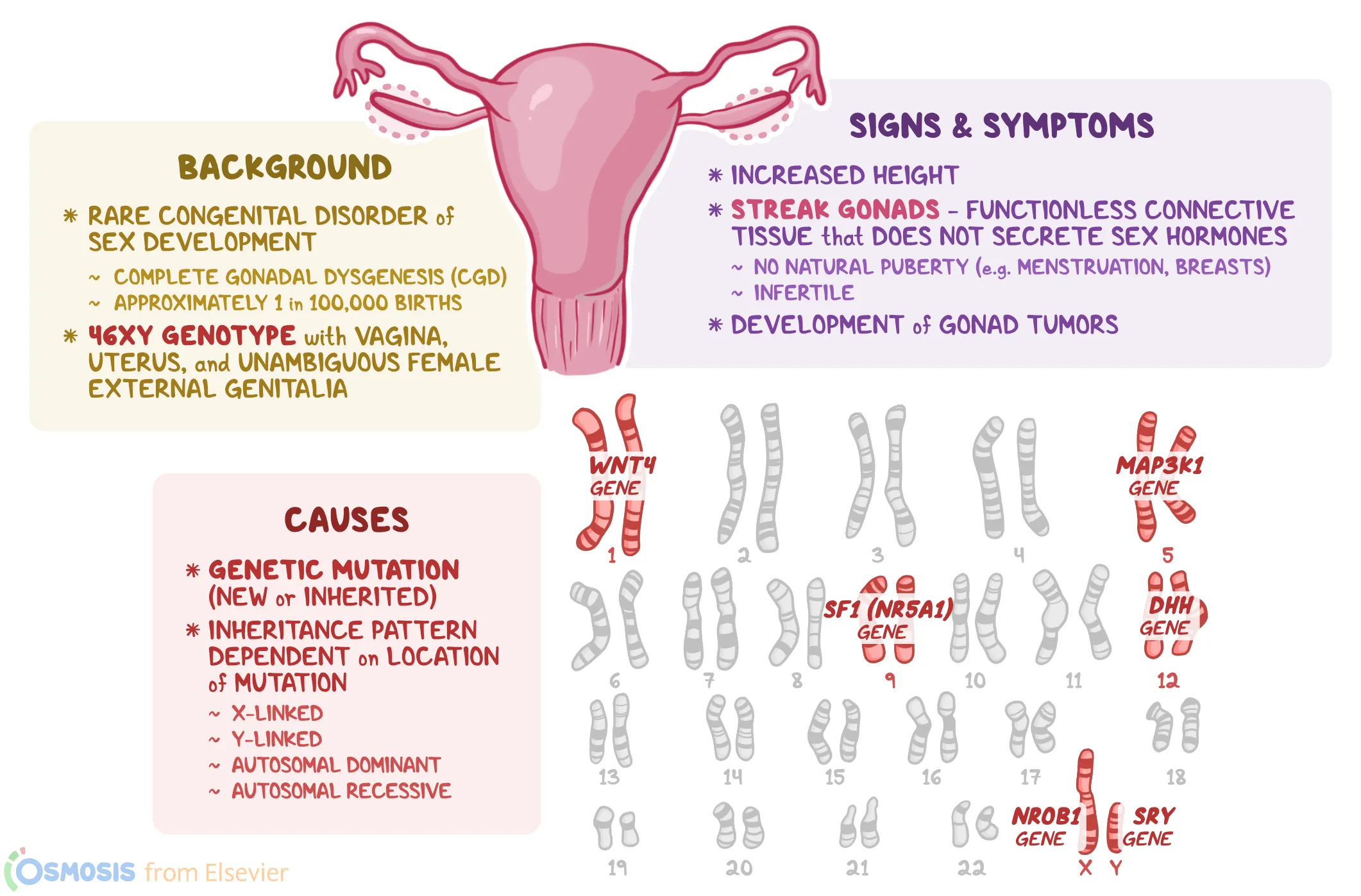
- Swyer syndrome is a rare 46,XY difference of sex development (DSD) in which affected individuals have an XY chromosome pattern but develop female external characteristics due to failure of normal testicular development.
Genetic Basis and Clinical Presentation
- Swyer syndrome is medically known as 46,XY complete gonadal dysgenesis.
- Affected individuals have one X and one Y chromosome, but the genetic pathway required for normal testicular development is disrupted.
- As a result, the gonads fail to develop into functional testes and remain as non-functional or streak gonads.
- Because adequate testicular hormones are not produced, affected individuals typically develop female external genitalia and female-typical reproductive structures.
- The condition often remains unnoticed during childhood and is usually identified during adolescence.
- A common presentation is primary amenorrhoea, meaning menstruation does not begin at the expected age.
- Pubertal development, including breast development, may also be incomplete because of insufficient sex-hormone production.
Diagnosis and Management
- Diagnosis generally involves assessment of chromosomal pattern, hormone levels, internal reproductive structures and gonadal development.
- The underlying 46, XY chromosome pattern cannot be altered, and streak gonads cannot be converted into functioning ovaries.
- Hormone replacement therapy is commonly used to support pubertal development and maintain bone and overall health.
- Streak gonads carry an increased risk of gonadal tumours, so specialist evaluation and removal may be advised.
- With appropriate medical care and long-term follow-up, affected individuals can generally maintain good health.
FAQs
Q1. What is Swyer syndrome?
It is a rare 46,XY difference of sex development caused by failure of normal testicular development.
Q2. What is the chromosomal pattern in Swyer syndrome?
Affected individuals typically have a 46,XY chromosome pattern.
Q3. What is a common sign of Swyer syndrome?
A common presentation is primary amenorrhoea.
Q4. Why do affected individuals develop female external characteristics?
Because the gonads fail to develop into functional testes and do not produce normal levels of testicular hormones.
Q5. How is Swyer syndrome managed?
Management commonly includes hormone replacement therapy and specialist monitoring of streak gonads.