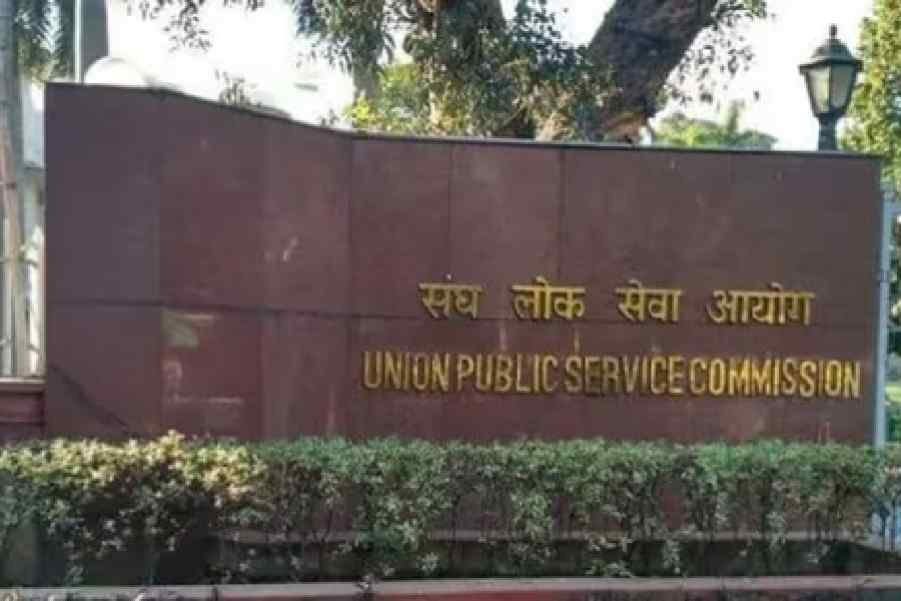
The Union Public Service Commission (UPSC) completed 100 years on 1 October 2026, marking a century-long institutional journey from the first Public Service Commission established in colonial India in 1926 to an independent constitutional body responsible for merit-based recruitment to India’s higher civil services. Press Information Bureau
The centenary provides an opportunity to understand not only the history of the UPSC, but also how India’s system of public-service recruitment evolved from a system shaped by colonial administration into one based on constitutional principles of merit, fairness, equality and impartiality.
1. The Beginning: Why Was a Public Service Commission Needed?
The roots of the Public Service Commission in India can be traced to the evolution of the civil services under British rule.
In 1855, the system of open competitive examination was introduced for recruitment to the Indian Civil Service (ICS), replacing the earlier system of nomination by the East India Company. However, the examination was conducted in London, which made entry extremely difficult for Indians. Press Information Bureau
The idea of creating a permanent institution in India to regulate recruitment and service matters gained momentum after the Government of India Act, 1919.
Section 96C of the 1919 Act provided for establishing a Public Service Commission that would perform functions relating to the recruitment and control of public services as assigned by rules. UPSC
However, the Commission was not immediately established.
2. The Lee Commission and the Road to 1926
The issue was subsequently examined by the Royal Commission on the Superior Civil Services in India, commonly known as the Lee Commission.
In its report dated 27 March 1924, the Lee Commission recommended that the statutory Public Service Commission contemplated under the Government of India Act, 1919, should be established without delay. UPSC
Following these developments, the first Public Service Commission in India was established on 1 October 1926.
It consisted of a Chairman and four Members, appointed by the Secretary of State in Council. Sir Ross Barker, a member of the Home Civil Service of the United Kingdom, became its first Chairman. UPSC
1926 — First Public Service Commission
Date: 1 October 1926
Nature: Advisory body
First Chairman: Sir Ross Barker
Legal basis: Government of India Act, 1919 and related rules
At this stage, the Commission did not possess the constitutional status that UPSC has today. Its role was primarily advisory, particularly concerning recruitment and service matters.
3. What Did the 1926 Commission Do?
The functions of the Commission were governed by the Public Service Commission (Functions) Rules, 1926.
The Commission was consulted on matters including:
- Recruitment to All-India Services
- Recruitment to Central Services
- Examination syllabi
- Qualifications for recruitment
- Promotions
- Disciplinary matters
- Pay and allowances
- Pension and provident-fund matters
- Leave rules
- General conditions of service
Thus, even at its beginning, the Commission’s responsibilities extended beyond simply conducting examinations. UPSC
4. From Public Service Commission to Federal Public Service Commission
The next major stage came with the Government of India Act, 1935.
The constitutional reforms proposed during the 1930s envisaged Public Service Commissions for both the proposed federation and provinces.
The Commission at the central level subsequently became the Federal Public Service Commission in 1937. Press Information Bureau
This represented an important institutional transition.
Evolution
1926 → Public Service Commission
⬇
1937 → Federal Public Service Commission
⬇
1950 → Union Public Service Commission
The evolution reflected the gradual development of a more structured and independent system for public-service recruitment.
5. 1950: UPSC Becomes a Constitutional Body
The most significant transformation occurred with the adoption of the Constitution of India.
When the Constitution came into force on 26 January 1950, the Federal Public Service Commission became the Union Public Service Commission (UPSC).
Unlike its predecessor, UPSC was now established as a constitutional body.
The constitutional provisions relating to Public Service Commissions are contained in Part XIV, Chapter II, covering Articles 315 to 323. Press Information Bureau
Article 315
Article 315 provides for:
Public Service Commissions for the Union and for the States.
It establishes the constitutional framework for the Union Public Service Commission as well as State Public Service Commissions. UPSC
6. Constitutional Framework: Articles 315–323
The UPSC’s constitutional status is primarily governed by Articles 315 to 323.
| Article | Provision |
|---|---|
| Article 315 | Public Service Commissions for the Union and States |
| Article 316 | Appointment and term of office of Members |
| Article 317 | Removal and suspension of a Member |
| Article 318 | Regulations regarding conditions of service |
| Article 319 | Restrictions on holding offices after membership |
| Article 320 | Functions of Public Service Commissions |
| Article 321 | Power to extend functions |
| Article 322 | Expenses of Public Service Commissions |
| Article 323 | Reports of Public Service Commissions |
7. Article 320: The Core Functions of UPSC
Article 320 is particularly important for understanding the role of UPSC.
The Commission conducts examinations for appointments to Union services and also performs other functions assigned under the Constitution and applicable laws and rules.
Today, UPSC conducts examinations for recruitment to various Group A and Group B services of the Government of India. UPSC
Its examinations include major recruitment examinations such as:
- Civil Services Examination (CSE)
- Engineering Services Examination (ESE)
- Combined Defence Services Examination (CDS)
- National Defence Academy & Naval Academy Examination (NDA/NA)
- Combined Medical Services Examination (CMS)
- Indian Forest Service Examination (IFoS)
- Central Armed Police Forces (Assistant Commandants) Examination
- Indian Economic Service / Indian Statistical Service Examination
The Commission also undertakes recruitment through other examinations and selection processes.
8. UPSC and the Civil Services Examination
Among UPSC’s various responsibilities, the Civil Services Examination is perhaps its most widely recognised examination.
The examination is used to select candidates for services including:
- Indian Administrative Service (IAS)
- Indian Foreign Service (IFS)
- Indian Police Service (IPS)
- Indian Revenue Service and other Central Group A services
The examination is conducted through a multi-stage process involving:
Stage 1 — Civil Services Preliminary Examination
A screening examination consisting of objective-type papers.
Stage 2 — Civil Services Main Examination
A written examination designed to assess a candidate’s analytical ability, knowledge, understanding and expression.
Stage 3 — Personality Test
Candidates who qualify the written examination appear before an interview board.
The final selection is based on the prescribed examination rules and the marks obtained in the relevant stages.
9. Why Constitutional Status Matters
The transformation from an advisory Public Service Commission in 1926 to a constitutional body in 1950 was significant.
The constitutional framework provides institutional safeguards concerning:
- Appointment of Members
- Their tenure
- Removal and suspension
- Conditions of service
- Functions
- Financial arrangements
- Reporting requirements
This framework is intended to support an impartial public-service recruitment system.
The UPSC itself describes its role as conducting examinations in a just, fair and impartial manner for merit-based selection to various Group A and Group B services. UPSC
10. UPSC’s Role Goes Beyond Examinations
UPSC is often associated primarily with competitive examinations, but its constitutional responsibilities are broader.
Public Service Commissions can be consulted on matters relating to:
- Recruitment
- Methods of recruitment
- Appointments
- Promotions
- Transfers in certain service matters
- Disciplinary matters
- Service-related issues
Therefore, UPSC is not simply an examination-conducting organisation.
It forms part of the constitutional architecture governing public-service recruitment and personnel administration.
11. From Paper-Based Administration to Digital Transformation
Over its century-long journey, UPSC has also undergone major technological changes.
The Commission’s technology journey includes the introduction of computers in 1978 and, more recently, several digital initiatives.
Recent developments include:
- Digital e-Admit Cards
- Online application systems
- Candidate support mechanisms
- Universal Registration Number
- Technology-enabled examination processes
- AI-based facial authentication
According to the Government, AI-based facial authentication was piloted during selected examinations in 2025 and implemented at scale for the Civil Services Preliminary Examination on 24 May 2026, covering approximately 5.50 lakh candidates. Press Information Bureau
12. UPSC at 100: The Centenary Celebrations
To mark the completion of 100 years, UPSC organised centenary celebrations titled “Manthan” at Bharat Mandapam, New Delhi, on 30 September and 1 October 2026. Press Information Bureau
The celebrations focused on themes including:
- Future-ready civil services
- Public administration
- Innovation
- Technology
- Inclusion
- Constitutional values
- Merit and fairness
- The changing role of civil servants
Prime Minister Narendra Modi participated in the centenary programme on 1 October 2026. A commemorative coin, commemorative stamp and a book titled 100 Landmark Judgements – Shaping the Policies of UPSC and Public Service Commissions in India were released as part of the programme. PM India
13. The Three Guiding Principles for the Next Phase
During the centenary celebrations, UPSC Chairman Dr. Ajay Kumar highlighted three guiding principles for the Commission’s next phase:
Trust
Maintaining public confidence in the recruitment process.
Transparency
Strengthening openness and accountability in examination and recruitment procedures.
Technology
Using technological tools to improve examination security, accessibility and efficiency.
The Chairman also highlighted the importance of assessing candidates for qualities such as reasoning, spontaneous thinking and judgment in situations involving ambiguity, rather than relying solely on predictable or coached responses. The Indian Express
14. UPSC’s Century-Long Journey at a Glance
| Year | Milestone |
|---|---|
| 1855 | Open competitive examination introduced for ICS |
| 1919 | Government of India Act provided for a Public Service Commission |
| 1924 | Lee Commission recommended establishment of the Commission |
| 1926 | First Public Service Commission established |
| 1935 | Government of India Act provided a broader constitutional framework for Public Service Commissions |
| 1937 | Federal Public Service Commission established |
| 1950 | Federal PSC became the Union Public Service Commission |
| 1950 onwards | UPSC functioned as a constitutional body under Articles 315–323 |
| 1978 | Computers introduced in the Commission’s work |
| 2025 | Centenary year began; several digital and outreach initiatives introduced |
| 2026 | UPSC completes 100 years |
The historical milestones are documented by UPSC and the Government of India. UPSC
15. UPSC: From Colonial Administration to Constitutional Governance
The story of UPSC reflects a much larger transformation in India’s public administration.
In 1926, the Public Service Commission was created within a colonial administrative framework and functioned primarily as an advisory institution.
Over subsequent decades, the system evolved through the Federal Public Service Commission and finally into the Union Public Service Commission under the Constitution of India.
The underlying idea also evolved:
From patronage → competitive examination → institutional recruitment → constitutional safeguards → merit-based public service
This transformation placed public-service recruitment within a constitutional framework centred on equality, fairness, merit and impartiality.
16. Significance for UPSC Aspirants
For aspirants, the history of UPSC is important not merely as a chronology but as an example of the evolution of India’s constitutional and administrative institutions.
A frequently asked UPSC-style question could be:
“Trace the evolution of the Public Service Commission in India from 1926 to the present day. Discuss the constitutional provisions governing the UPSC.”
A strong answer would connect:
Government of India Act, 1919
→ Public Service Commission, 1926
→ Government of India Act, 1935
→ Federal Public Service Commission, 1937
→ Constitution of India, 1950
→ Union Public Service Commission
→ Articles 315–323
→ Modern merit-based recruitment and technological reforms
Conclusion
The completion of 100 years of UPSC in 2026 represents more than an institutional anniversary.
From the establishment of India’s first Public Service Commission on 1 October 1926 to its present status as a constitutional body under Articles 315–323, the institution has undergone a major transformation in its structure, responsibilities and methods of recruitment. Press Information Bureau
Its century-long journey mirrors the evolution of India’s public administration—from colonial-era recruitment structures to a constitutional system designed around merit, fairness, transparency and equal opportunity.
As UPSC enters its second century, its challenge is to combine these enduring constitutional principles with technology, changing examination patterns and the evolving requirements of public administration.
100 Years of UPSC — From the Public Service Commission of 1926 to a Constitutional Institution of Independent India.