Context
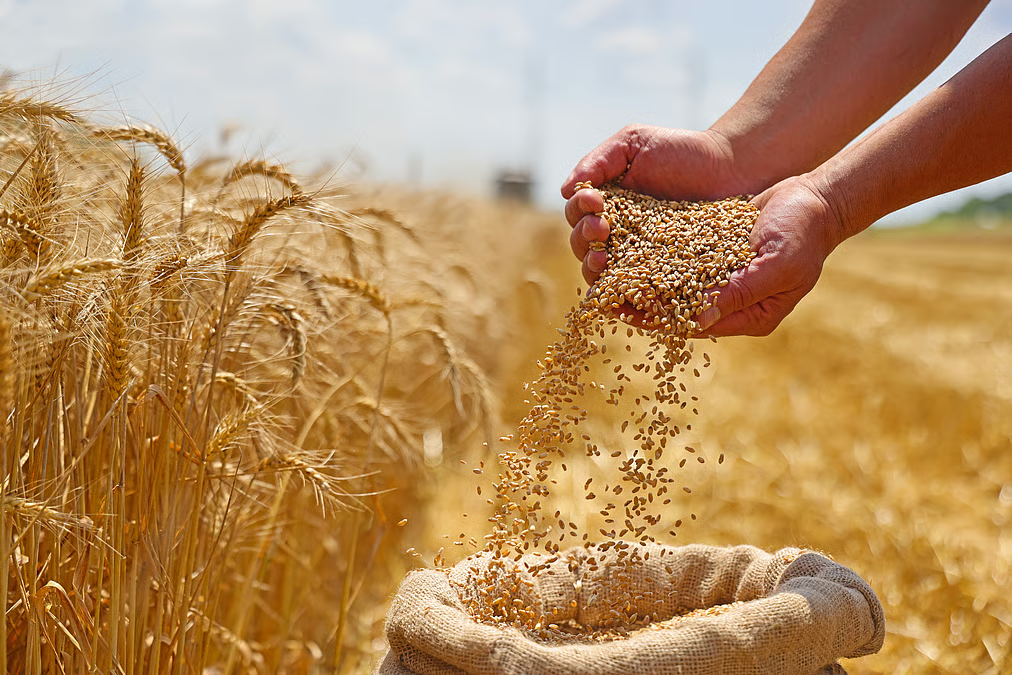
The Draft Seeds Bill, 2025 seeks to strengthen seed quality regulation and curb fake seeds, while the government has assured farmer consultation before finalisation and indicated that around 70% of seeds used by farmers may remain outside its regulatory framework.
Why is a New Law Needed?
- Outdated Law: The Seeds Act, 1966 does not adequately address the complexities of the modern seed sector.
- Quality Concerns: Growing concerns over fake and substandard seeds require stronger regulation and traceability.
- Broader Regulation: The proposed Bill seeks to cover the production, processing, testing, certification and sale of seeds.
Key Features
- Mandatory Registration: Seed varieties, producers, processing units and dealers would require registration.
- QR-Based Traceability: QR codes on seed packets would enable tracking from production to sale.
- VCU Trials: New varieties would undergo Value for Cultivation and Use (VCU) trials before market release.
- Single Licence: Large multi-State entities could obtain a national licence instead of separate State approvals.
- Strict Penalties: Sale of fake or substandard seeds could attract a fine of up to ₹30 lakh and imprisonment up to 3 years.
- Decriminalisation: Minor violations would be decriminalised to reduce litigation and regulatory delays.
- Farmer Exemption: Farmers using their own traditional, farm-saved and unbranded seeds would remain exempt from the main regulatory requirements.
Significance
- Seed Quality: Stronger testing and registration can curb fake and substandard seeds.
- Farmer Protection: Traceability can improve accountability and help identify defective seeds.
- Higher Productivity: Quality seeds can improve crop yield and farm income.
- Ease of Compliance: A single national licence can simplify regulation for multi-State seed businesses.
Challenges
- Farmer Concerns: Excessive regulation may raise costs and affect access to traditional seeds.
- Compliance Burden: Registration and testing may be difficult for small seed producers.
- Weak Testing Capacity: Limited testing laboratories and accreditation infrastructure may hinder effective implementation.
- Regulatory Coordination: Differences in Central and State-level regulations may create implementation challenges.
Way Forward
- Farmer Consultation: Finalise the Bill through wider consultation with farmers, States and seed-sector stakeholders.
- Balanced Regulation: Protect farmer-managed seed systems while regulating commercial seed quality and fraud.
- Stronger Infrastructure: Upgrade testing laboratories, traceability systems and enforcement to ensure effective implementation and strengthen India’s agricultural productivity and seed security.
FAQs
Q1. What is the significance of QR codes under the proposed Bill?
Ans. QR codes would enable end-to-end traceability of seed packets, including their production, testing and distribution.
Q2. What are VCU trials?
Ans. Value for Cultivation and Use (VCU) trials assess the performance and suitability of a new seed variety before its commercial release.
Q3. Are farmers using their own traditional seeds covered by the Bill?
Ans. The proposed framework retains an exemption for farmers using their own traditional, farm-saved and unbranded seeds for cultivation.