Context
- A proposal for issuing a commemorative postage stamp on Gooty Fort has recently been forwarded to the Union Minister of Communications for final approval.
- The proposal seeks to recognise the fort’s historical, architectural and cultural importance.
- Gooty Fort is also a centrally protected monument under the Archaeological Survey of India.
About Gooty Fort
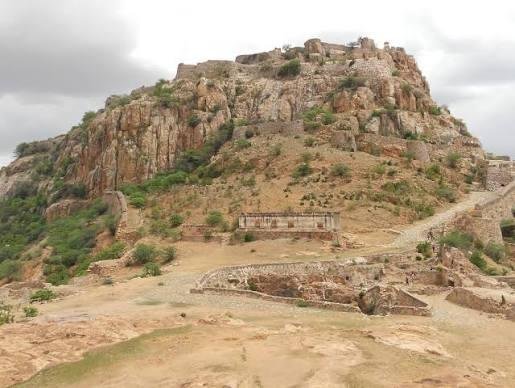
- Gooty Fort, also known as Gutti Kota, is an ancient hill fort located at Gooty in Anantapuramu district, Andhra Pradesh.
- It occupies a rocky hill overlooking the surrounding plains, giving it considerable defensive and strategic value.
- The fort developed over several centuries under different ruling powers, making it a multi-period heritage site.
Historical Evolution
Western Chalukyas
- Inscriptions at the site are associated with the reign of Vikramaditya VI Tribhuvanamalla (1076–1126 CE).
Vijayanagara Empire
- The fort later came under the Vijayanagara Empire, when it gained importance in the political geography of the Rayalaseema region.
Qutb Shahis and Mughals
- After the decline of Vijayanagara power, the fort passed to the Qutb Shahis of Golconda and later came under Mughal influence.
Marathas and Mysore
- In the 18th century, Maratha leader Murari Rao controlled and strengthened the fort.
- Hyder Ali of Mysore later captured it after a prolonged siege in which shortage of water weakened its defence.
British Period
- The fort eventually came under British control as political authority in the region shifted to the East India Company.
Thus, the fort reflects the succession of:
Western Chalukyas → Vijayanagara → Qutb Shahis/Mughals → Marathas → Mysore → British
Architectural Features
- Hill-fort architecture: Its elevated rocky location provided natural protection and wide surveillance.
- Granite construction: Granite formed the principal building material for walls and fortifications.
- Layered defence: The complex contains multiple fortified sections connected by gateways, walls and bastions.
- Water structures: Wells and reservoirs were created within the fort to sustain inhabitants during sieges.
- Murari Rao’s Seat: A pavilion on the cliff edge is traditionally associated with the Maratha ruler Murari Rao.
- Religious structures: The fort contains several Hindu temples as well as a dargah, reflecting its long and layered cultural history.
Why Was Gooty Fort Strategically Important?
- Commanding location: The hilltop position enabled observation of surrounding settlements and movement routes.
- Defensive depth: Multiple fortifications made direct military assault difficult.
- Water security: Internal water-storage structures increased the fort’s ability to withstand sieges.
- Regional control: Successive dynasties valued Gooty because control of the fort strengthened political authority over the surrounding Rayalaseema region.
Heritage Value
- Multi-dynastic history: The monument preserves evidence of several major Deccan powers.
- Composite cultural landscape: Temples, Islamic structures and military architecture coexist within the same complex.
- Military engineering: Its fortifications and water-management systems illustrate the adaptation of architecture to difficult terrain.
- Regional identity: Greater recognition of Gooty Fort can strengthen awareness of Andhra Pradesh’s lesser-known heritage.
Conservation Priorities
- Protect surviving walls, bastions, inscriptions and water structures.
- Undertake systematic archaeological documentation and restoration.
- Improve visitor interpretation without damaging the historic landscape.
- Promote responsible heritage tourism involving local communities.
The commemorative-stamp proposal can therefore support heritage awareness, but long-term value depends on effective conservation.
FAQs
Q1. Where is Gooty Fort located?
At Gooty in Anantapuramu district, Andhra Pradesh.
Q2. Which ruler is associated with inscriptions at Gooty Fort?
Western Chalukya ruler Vikramaditya VI Tribhuvanamalla.
Q3. What was the main construction material of Gooty Fort?
Granite rock.
Q4. Why were wells and reservoirs important inside the fort?
They ensured water availability during prolonged sieges.
Q5. Why is Gooty Fort currently in the news?
A proposal for issuing a commemorative postage stamp on the fort has reached the stage of final approval.