About
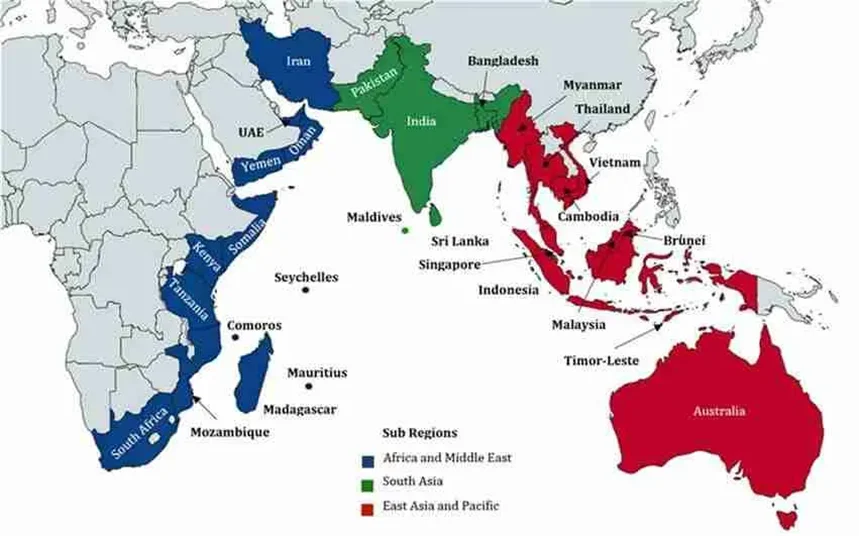
1. BrahMos Belt: An informal network of countries acquiring BrahMos missiles from India; it is not a military alliance.
2. Export Expansion: India is supplying BrahMos to countries with maritime disputes or strategic concerns involving China, particularly in the South China Sea.
3. Key Partners: The Philippines signed a $375 million deal in 2022, while Vietnam and Indonesia are emerging buyers; Malaysia and Thailand are potential future customers.
4. Strategic Impact: These exports strengthen India’s defence partnerships, regional deterrence and strategic cooperation in Southeast Asia
BrahMos and Its Strategic Value
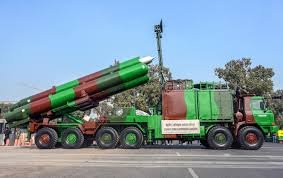
- Joint development: A supersonic cruise missile developed by DRDO (India) and NPO Mashinostroyenia, Russia.
- Speed and range: Flies at around Mach 2.8 with a range of up to 290 km for the standard configuration.
- Fire-and-forget: Uses self-guidance after launch, reducing dependence on the launching platform.
- Multi-platform: Can be launched from land, ships and aircraft; submarine-launched variants also exist.
- Strategic advantage: Its high speed, precision and anti-ship capability enable rapid engagement and strengthen maritime deterrence.
- Defence manufacturing: BrahMos is a major example of India–Russia defence cooperation and supports India’s defence-export and Aatmanirbhar Bharat objectives.
Why the South China Sea Matters
- Competing Claims: China’s nine-dash line overlaps with maritime claims of Vietnam, the Philippines, Malaysia, Brunei and Taiwan.
- Trade and Energy: The region carries major global shipping and energy flows, making its stability important for regional and global economies.
- Natural Resources: Its oil, natural gas and fisheries increase its economic and strategic importance.
- Chinese Militarisation: China has expanded its presence through artificial islands, military infrastructure, naval patrols and coast guard operations.
- Strategic Chokepoints: Nearby Strait of Malacca and Luzon Strait (located between Taiwan and the Philippines) are vital maritime routes. The Malacca Strait handles about 21% of global trade and is crucial for China’s energy imports.
Strategic Significance for India
- Strengthens Deterrence: BrahMos enhances regional capacity to respond to potential maritime coercion.
- Deepens Partnerships: Defence exports strengthen India’s security ties with Southeast Asia.
- Boosts Defence Exports: BrahMos supports India’s defence-manufacturing and export ecosystem.
- Enhances Indo-Pacific Role: India gains strategic influence without direct military deployment in the South China Sea.
- Balances China’s Influence: Defence cooperation provides an indirect response to China’s growing maritime presence and “String of Pearls” strategy in the Indo-Pacific.
India’s Strategic Response to China’s String of Pearls
- China’s String of Pearls: Refers to its network of strategic partnerships and infrastructure across the Indian Ocean, including Bangladesh, Sri Lanka, Maldives and Pakistan.
- India’s Counter-Approach: The BrahMos Belt focuses on defence cooperation and capability-building with regional partners rather than direct territorial encirclement.
- Maritime Presence: India is also strengthening its position through Great Nicobar infrastructure projects and cooperation with Sabang Port, Indonesia, near the Strait of Malacca.
Way Forward
- Boost Defence Exports: Expand BrahMos and other defence exports with responsible export controls to strengthen India’s strategic partnerships.
- Deepen Maritime Cooperation: Strengthen ASEAN and Indo-Pacific security partnerships to enhance regional deterrence.
- Strengthen Maritime Infrastructure: Improve ports, logistics and maritime-domain awareness around key sea lanes.
- Build Defence Self-Reliance: Expand indigenous defence manufacturing and reduce dependence on imported components.
- Adopt an Integrated Strategy: Combine defence diplomacy, economic engagement and maritime cooperation to strengthen India’s position in the Indo-Pacific.
Conclusion
India’s BrahMos diplomacy can strengthen strategic partnerships, regional deterrence and defence exports. Combined with maritime cooperation and infrastructure, it can enhance India’s Indo-Pacific role without direct confrontation.
FAQs
Q1. What is the “BrahMos Belt”?
Ans. It is an informal term for countries acquiring or considering the acquisition of BrahMos missiles from India. It is not a formal military alliance.
Q2. Why is the South China Sea important?
Ans. It is strategically important because of its major sea routes, resources, territorial disputes and proximity to key Indo-Pacific economies.
Q3. Which countries have overlapping claims in the South China Sea?
Ans. Major claimants include China, Vietnam, the Philippines, Malaysia, Brunei and Taiwan.
Q4. What is the String of Pearls strategy?
Ans. The term broadly describes China’s network of strategic infrastructure and partnerships across the Indian Ocean, which is viewed as increasing its maritime influence around India.