Context
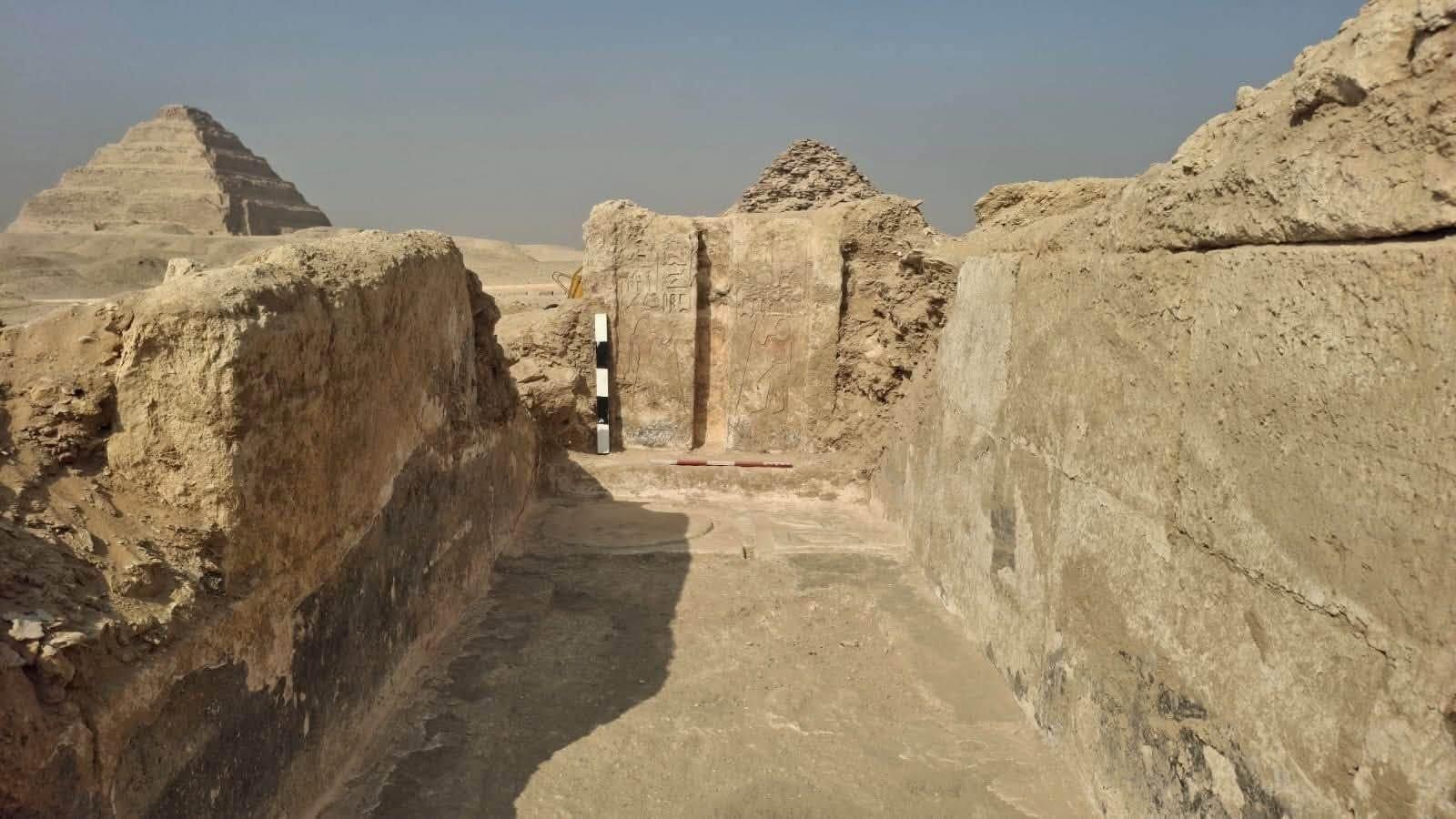
Archaeologists in Egypt recently discovered an ancient tomb at Saqqara, belonging to an official described as the “keeper of the secrets of royal decrees.” The discovery highlights the historical importance of this ancient burial site.
About Saqqara
- Location: Saqqara is an ancient Egyptian necropolis associated with the city of Memphis, located about 24 km southwest of Cairo.
- Extent: The archaeological site stretches for around 8 km along the edge of the desert plateau, between Abu Sir in the north and Dahshur in the south.
- UNESCO Status: Saqqara forms part of the Memphis and its Necropolis UNESCO World Heritage Site, designated in 1979.
- Major Monuments: The site contains numerous pyramids, tombs, mastabas, temples and other funerary structures.
- Mastaba: A traditional Egyptian tomb with a rectangular shape, flat roof and sloping sides.
- Evolution of Pyramid Architecture: Saqqara marks the transition from mastaba-style tombs to the pyramid form.
Why is Saqqara historically important?
- Early Dynasties: Kings and nobles of Egypt’s First and Second Dynasties (c. 3040–2686 BC) were buried here.
- Step Pyramid of Djoser:
- Built around 2686–2667 BC.
- Designed by Imhotep.
- Considered the oldest surviving pyramid.
- Its six-tiered design was an important step in the evolution of Egyptian pyramids.
- Old Kingdom Pyramids: Saqqara also contains pyramids of rulers from the Fifth and Sixth Dynasties.
- Pyramid of Unas: Contains the oldest known pyramid burial chamber decorated with religious texts.
What is the significance of the Serapeum?
- The Serapeum is a network of underground galleries where Apis Bulls were buried.
- The Apis Bull was regarded as an incarnation of Ptah, one of the major gods of Memphis.
- These burials continued from the Eighteenth Dynasty to the Ptolemaic Period (c. 1550–30 BC).