Context
Russia has raised security concerns over the deployment of U.S. Typhon missile systems in Japan, reflecting growing strategic competition in the Indo-Pacific. The system enables long-range strikes against land and maritime targets.
What is the Typhon System?
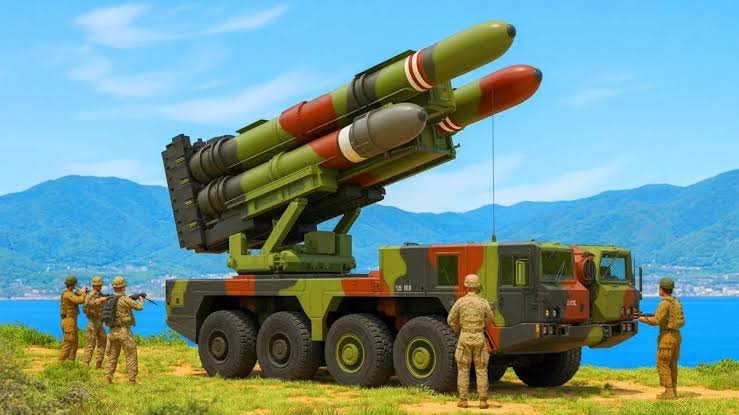
- Typhon, officially known as the Mid-Range Capability (MRC), is a mobile, ground-launched missile system developed for the U.S. Army.
- Developer: Manufactured by U.S. defense firm Lockheed Martin.
- It was created to fill the missile-range gap between shorter-range systems such as the Precision Strike Missile (PrSM) and the Long-Range Hypersonic Weapon (LRHW).
- Instead of developing entirely new missiles, the system integrates existing U.S. Navy missile technologies with a modified Mk 41 Vertical Launch System (VLS) for land-based launches.
Key Missile Systems
- SM-6 (Standard Missile-6):
- Provides anti-air, ballistic missile defense, and surface-target engagement ranges over 320 to 500 km.
-
- A multi-purpose missile capable of air-defence and anti-ship missions.
- Its land-based use gives the Army an additional capability against maritime targets.
- Tomahawk Land Attack Missile (TLAM):
-
- A long-range cruise missile designed primarily for precision strikes against land and maritime threats out to 1,500–2,500 km.
- The Army has successfully demonstrated Tomahawk launches from the MRC platform.
Major Features
- Mobile and transportable: Can be quickly moved and deployed at different locations, improving operational flexibility.
- Multi-mission: Supports land-attack and anti-ship operations.
- Survivable: Mobility and dispersal make it harder to detect and destroy.
- Battery: Includes four launchers along with a Battery Operations Center and supporting vehicles.
Strategic Significance
- Maritime deterrence: Enables land-based anti-ship strikes against hostile naval forces.
- Indo-Pacific security: Strengthens U.S. and allied deterrence in the region.
- Multi-domain warfare: Supports operations across land, sea, air, space and information
- Post-INF era: The termination of the Intermediate-Range Nuclear Forces (INF) Treaty in 2019, which had restricted U.S. and Soviet ground-launched missiles in the 500–5,500 km range, created greater scope for developing such intermediate-range capabilities.
FAQs
Q1. What is the Typhon Missile System?
Typhon, or Mid-Range Capability (MRC), is a mobile, ground-launched missile system of the U.S. Army designed for long-range precision fires.
Q2. Which missiles can Typhon launch?
It is designed to launch the SM-6 and Tomahawk Land Attack Missile using a land-based vertical launch system.
Q3. Why is Typhon strategically important?
It gives the U.S. Army the ability to conduct land-based precision strikes against both maritime and land targets.