Context
- In 2026, Alaska authorities continued using rotenone to remove invasive northern pike (Esox lucius) from affected lakes in South-central Alaska.
- The case shows how a piscicide can support invasive-species control and ecosystem restoration.
What Is Rotenone?
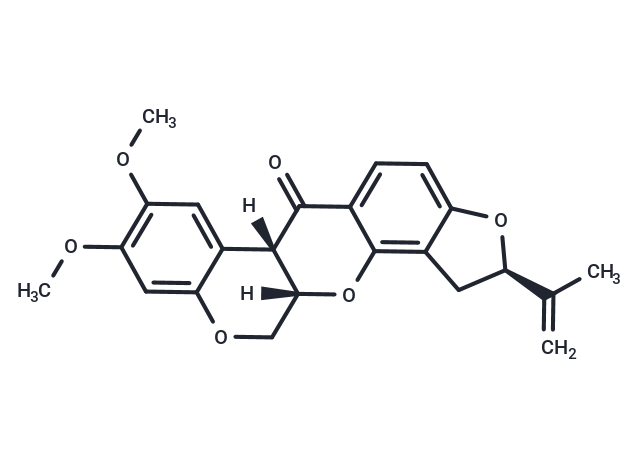
- Rotenone: A naturally occurring chemical obtained from plants such as Derris, Lonchocarpus and Tephrosia.
- It has been used as an insecticide, pesticide and piscicide.
- Rotenone breaks down over time due to light, temperature, oxygen and water conditions.
How Does It Work?
Rotenone enters through gills → disrupts cellular respiration → energy production falls → fish die
- It interferes with mitochondrial energy production inside cells.
- Fish are highly vulnerable because rotenone is readily absorbed through their gills.
Why Is Rotenone Used?
- Complete removal: It can eliminate invasive fish where nets or trapping are insufficient.
- Practical restoration tool: It can be more feasible than draining an entire water body.
- Temporary presence: It breaks down after treatment, allowing native fish to be restored.
- Targeted use: It is generally used in selected water bodies under controlled conditions.
Why Does the Approach Matter?
- Invasive-species management: Severe invasions may require active eradication rather than simple population control.
- Restoration ecology: Removing the invasive species can create conditions for native fish populations to recover.
- Integrated management: Chemical treatment works best when combined with monitoring, restocking and reinvasion prevention.
Risks and Limitations of Rotenone
- Non-target effects: Other aquatic organisms may also be affected.
- Food-web disturbance: Sudden removal of fish can temporarily alter ecosystem balance.
- Dosage sensitivity: Poorly controlled treatment may either fail or cause unnecessary ecological damage.
- Monitoring need: Chemical treatment requires careful risk assessment and post-treatment observation.
Significance for India
- Invasive aquatic species: India also faces threats from introduced fish and other non-native aquatic organisms.
- Restoration lesson: Removal of invasive species should be followed by native-species and habitat recovery.
- Precautionary approach: Chemical control should be used only when ecological benefits clearly outweigh risks.
- Integrated strategy: Prevention, early detection and physical removal should remain the first line of defence.
Key Facts about Northern Pike
- Identity: Northern pike (Esox lucius), family Esocidae, is a large freshwater predatory fish found in lakes, rivers and wetlands.
- Native range: It is widely distributed across the circumpolar Northern Hemisphere, including North America, Europe and Asia.
- Habitat and hunting: It prefers slow-moving, vegetation-rich waters, where it uses ambush predation to capture fish and other aquatic prey.
- Invasive impact: Outside its native range, northern pike can heavily prey on species such as salmon, trout and perch, reducing native fish populations and disturbing food webs.
- Ecological lesson: A species can be well adapted and balanced in its native ecosystem but become harmful when introduced into a new one.
- Conservation status: IUCN Red List — Least Concern.
Way Forward
- Use rotenone only after ecological risk assessment.
- Apply the minimum effective dose under controlled conditions.
- Monitor water quality and non-target species.
- Follow eradication with native-species restoration and reinvasion prevention.
FAQs
1. What is rotenone?
It is a plant-derived chemical used as an insecticide and piscicide.
2. How does rotenone kill fish?
It disrupts cellular respiration, reducing energy production in cells.
3. Why use rotenone instead of nets?
Nets may reduce invasive fish numbers but may not achieve complete eradication.
4. Is northern pike invasive everywhere?
No. It is native in many northern regions but invasive where introduced outside its natural range.
5. What is the main UPSC takeaway?
Rotenone shows how chemical control can support invasive-species removal and ecosystem restoration, but only with strong ecological safeguards.