Context
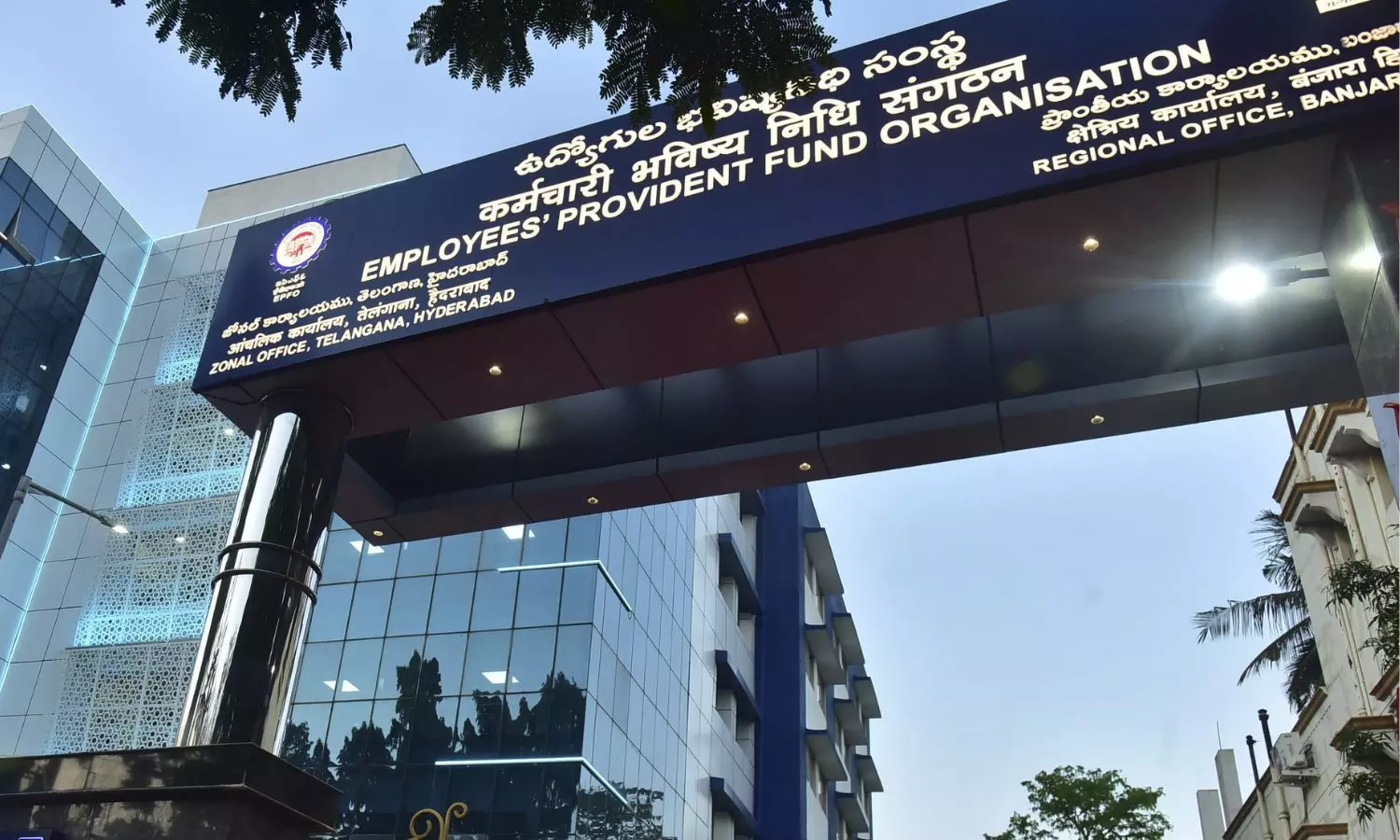
The Ministry of Labour and Employment has raised the EPFO wage ceiling from ₹15,000 to ₹25,000 per month after 12 years, expanding mandatory coverage under Employees’ Provident Fund (EPF), Employees’ Pension Scheme (EPS) and Employees’ Deposit Linked Insurance (EDLI) Scheme.
About Employees’ Provident Fund Organisation (EPFO)
- Statutory Body: EPFO is governed by the Employees’ Provident Funds and Miscellaneous Provisions Act, 1952 and works under the Ministry of Labour and Employment.
- Tripartite Structure: It includes representatives of the Government, employers and employees.
- Central Board of Trustees: The apex decision-making body, chaired by the Union Labour and Employment Minister.
- Role: It provides retirement savings, pension and life-insurance benefits to workers.
Major Schemes
- Employees’ Provident Fund (EPF) Scheme, 1952
- Purpose: Builds a retirement corpus through regular contributions.
- Contribution: Employee and employer each contribute 12% of basic wages + DA + retaining allowance, where applicable.
- Employer Share: 3.67% goes to EPF and33% to EPS.
- Withdrawal: Partial withdrawal is allowed for specified needs.
- Employees’ Pension Scheme (EPS), 1995
- Purpose: Provides a monthly pension, generally from 58 years, after at least 10 years of eligible service.
- Contribution: 8.33% of the employer’s contribution is allocated to EPS.
- Coverage: Includes specified benefits for widows, children, dependants and persons with disabilities.
- Revised Ceiling: Pension contribution for most affected subscribers rises from ₹1,250 to ₹2,083 per month.
- Employees’ Deposit Linked Insurance (EDLI) Scheme, 1976
- Purpose: Provides life-insurance cover in case of death during service.
- Contribution: Funded by the employer, with no employee contribution.
- Benefit: Insurance payout ranges from ₹2.5 lakh to ₹7 lakh, subject to applicable conditions.
What Has Changed?
- New Ceiling: Mandatory coverage now applies up to ₹25,000 monthly wages, up from ₹15,000.
- Workers Covered: Employees earning ₹15,000–₹25,000 are the main beneficiaries; around 51 lakh additional workers are expected to be covered.
- Higher Contribution: EPF contributions are estimated to rise by about ₹600 per worker per month on average.
- Above the Ceiling: Contributions on wages exceeding ₹25,000 remain voluntary, subject to applicable rules.
- Fiscal Impact: Government expenditure is expected to increase by about ₹1,089 crore annually, raising pension support from ₹10,250 crore to ₹11,339 crore.
Significance
- Wider Coverage: Brings more workers under retirement, pension and insurance benefits.
- Wage Alignment: Addresses the gap between the earlier ceiling and statutory minimum wages in several States and UTs.
- Formalisation: Expands workers’ access to the formal social-security system.
- Better Retirement Security: Higher contributions can strengthen retirement savings and pension benefits.
Challenges
- Inadequate Ceiling: All India Trade Union Congress (AITUC) has sought a higher ceiling of ₹30,000, arguing that ₹25,000 may not reflect current wage levels.
- Inflation and Wage Growth: A fixed ceiling can lose relevance unless periodically aligned with inflation, minimum wages and actual earnings.
- Lower Take-home Pay: Higher employee contributions may reduce in-hand salary where the additional cost is adjusted within the existing cost-to-company (CTC).
- Higher Employer Costs: Increased PF, pension and EDLI contributions may raise labour costs, especially for MSMEs and manufacturing.
- Delayed Revision: Long gaps between revisions can make the wage ceiling outdated.
Way Forward
- Regular Revision: Review the wage ceiling periodically to avoid long gaps.
- Indexation: Link revisions to wage growth, inflation and cost of living.
- Balanced Reform: Expand social security while keeping contribution burdens manageable for workers and employers.
- Better Access: Strengthen registration, portability, digital services and worker awareness.
FAQs
Q1. How is the employer’s 12% EPF contribution divided?
Ans: The employer contributes 12% of applicable wages, with 3.67% allocated to EPF and 8.33% to EPS.
Q2. What is the Employees’ Pension Scheme (EPS)?
Ans: EPS provides a monthly pension, generally from the age of 58 years, subject to the required service period.
Q3. What is EDLI?
Ans: The Employees’ Deposit Linked Insurance Scheme provides life-insurance benefits to EPFO members in case of death during service. The contribution is borne by the employer, not the employee.