Context
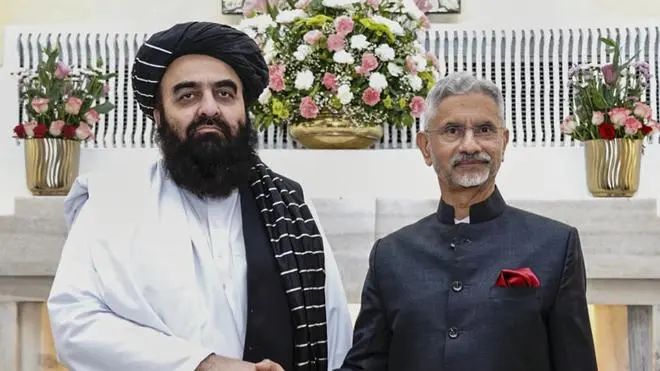
- On 15th August 2026, the Taliban-controlled Afghan Embassy in New Delhi organised an event marking five years since the Taliban returned to power in Afghanistan.
- The participation of Indian officials and foreign diplomats reflected the continuation of India’s official engagement with the Taliban authorities.
- India, however, has not formally recognised the Taliban government.
Evolution of India’s Engagement
- India evacuated its diplomatic personnel from Kabul after the Taliban takeover in August 2021 and later adopted a calibrated approach towards the new authorities.
- Key developments include:
a. August 2021: First official contact between Indian and Taliban representatives in Doha.
b. December 2021: India began providing humanitarian assistance to Afghanistan.
c. June 2022: India sent a technical team to Kabul.
d. January 2025: Foreign Secretary Vikram Misri met Taliban Foreign Minister Amir Khan Muttaqi in Dubai.
e. October 2025: India and the Taliban further expanded diplomatic engagement.
Strategic Drivers
- Security: India seeks assurances that Afghan territory will not be used for anti-India terrorism.
- Pakistan: Growing tensions between Pakistan and the Taliban have created greater diplomatic space for New Delhi.
- China: Beijing’s expanding economic and strategic presence has increased the importance of maintaining an Indian presence in Afghanistan.
- Connectivity: Afghanistan can provide potential access to Central Asia and wider regional markets.
- Development interests: Engagement helps India safeguard its earlier development projects and investments in the country.
Humanitarian and Security Concerns
- India has provided substantial humanitarian assistance, including 50,000 metric tonnes of wheat, medicines and other relief supplies.
- The UN Security Council 1267 Monitoring Team continues to report the presence of terrorist groups in Afghanistan, requiring India to maintain security vigilance.
- Taliban restrictions on women’s education, employment and public participation remain a major human-rights concern.
Conclusion
India’s approach towards the Taliban reflects a pragmatic foreign-policy adjustment to the changing regional environment. Sustaining dialogue while retaining policy autonomy allows New Delhi to protect its long-term interests without compromising its core security concerns.
FAQs
1. Does India recognise the Taliban government?
No. India engages with the Taliban authorities but has not formally recognised their government.
2, When did India resume its presence in Kabul?
India sent a technical team to Kabul in June 2022 to facilitate humanitarian assistance and maintain official communication.
3, Why is Afghanistan important for India?
Afghanistan is important for India’s security, regional connectivity, Central Asian outreach and development interests.
4, What is India’s main security concern?
India seeks to prevent Afghan territory from being used by terrorist groups against India or its interests.
5. What humanitarian assistance has India provided?
India has supplied wheat, medicines and other relief material to support the Afghan population.
6. What is the key challenge in India–Taliban relations?
India must balance strategic engagement with concerns over terrorism, human rights, women’s rights and inclusive governance.